The colour on the tin is not the colour you’ll see once the pool is full. Water soaks up red light first, so every pool paint colour shifts towards blue and green under water, and it gets darker the deeper the water is. That’s why a white pool looks turquoise, a grey pool looks like a lagoon and dark blue looks almost navy.
This guide goes through the common pool paint colours one by one, shows what each looks like under water, and explains how to test a colour before a single coat goes on. If you’re still choosing the type of paint, start with our guide to epoxy pool paint, rubber and acrylic.
Pool paint colours under water: the quick version
- White: bright, pale turquoise, very clear and inviting
- Light or sky blue: clean, bright blue, the classic family pool look
- Mid or pool blue: a deeper, richer blue that still looks fresh
- Dark blue: deep navy, more reflective, like a lake on a still day
- Grey or charcoal: deep blue-green, the natural lagoon look
- Sand or beige: soft tropical turquoise, especially in shallow areas
- Aqua or teal: vivid green-blue, close to emerald in deeper water
Why Pool Paint Colours Change Under Water
Three things change how a colour looks once the pool is filled:
- Depth. The more water above the paint, the darker and bluer it looks. A one-colour pool will always look lighter on the step and darker at the deep end.
- Light. Bright midday sun shows a colour at its most vivid. Early evening, shade from trees and an overcast Cape winter day all make the same pool look darker and duller.
- Reflections. The water reflects the sky, walls, trees and coping. Green garden walls push the colour greener; a white house and blue sky push it bluer.
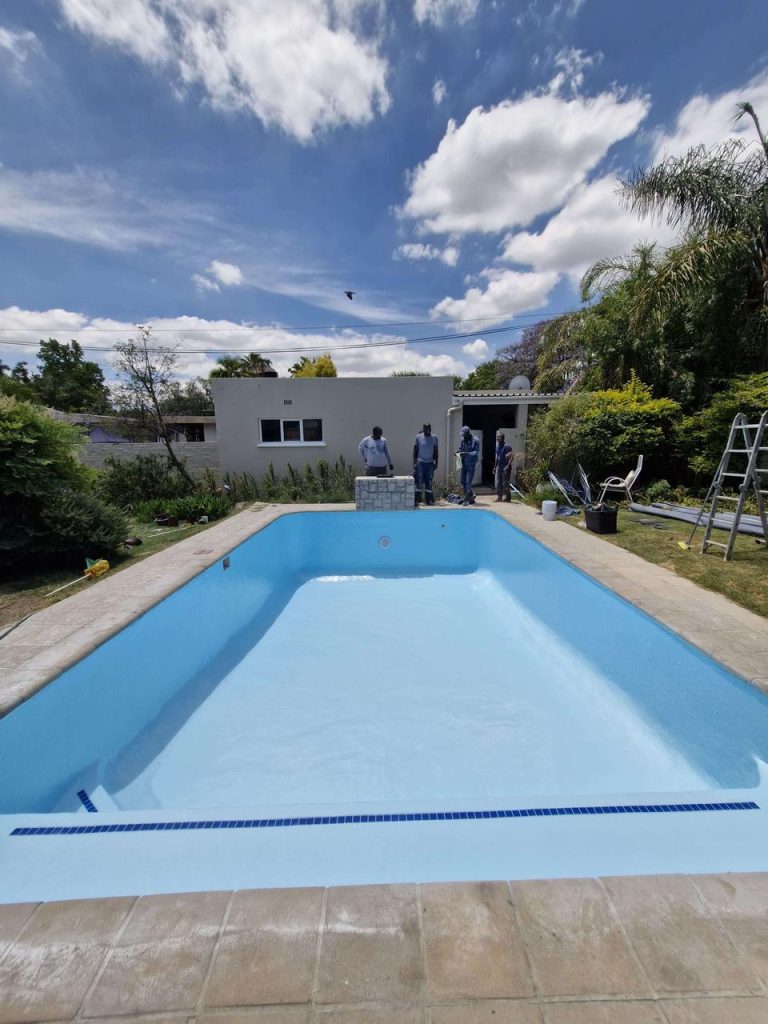
Compare a freshly painted pool before and after filling. Dry, a light blue finish looks soft and almost chalky. Full, the same paint reads as bright, clear turquoise, like the pool at the top of this post.
Swimming Pool Paint Colours Compared
| Colour on the tin | How it looks under water | Shows most | Good to know |
|---|---|---|---|
| White | Pale, bright turquoise | Leaves, dirt and stains | Makes a small pool look bigger and brighter |
| Light or sky blue | Clear, bright blue | Very little | The safest choice and easiest to live with |
| Mid or pool blue | Rich classic blue | A little dust | Looks good in all light |
| Dark blue | Deep navy, reflective | Dust, sand and white scale marks | Fades faster in strong sun |
| Grey or charcoal | Deep blue-green lagoon | Scale and chalking | Suits modern houses and natural gardens |
| Black | Almost a mirror | Every speck of dust and scale | Dramatic, but the hardest to keep looking good |
| Sand or beige | Soft tropical turquoise | Stains and leaf marks | Lovely on beach entry and freeform pools |
| Aqua or teal | Vivid green-blue | Very little | Can read quite green in shady gardens |
How Each Pool Paint Colour Looks in Real Pools
White
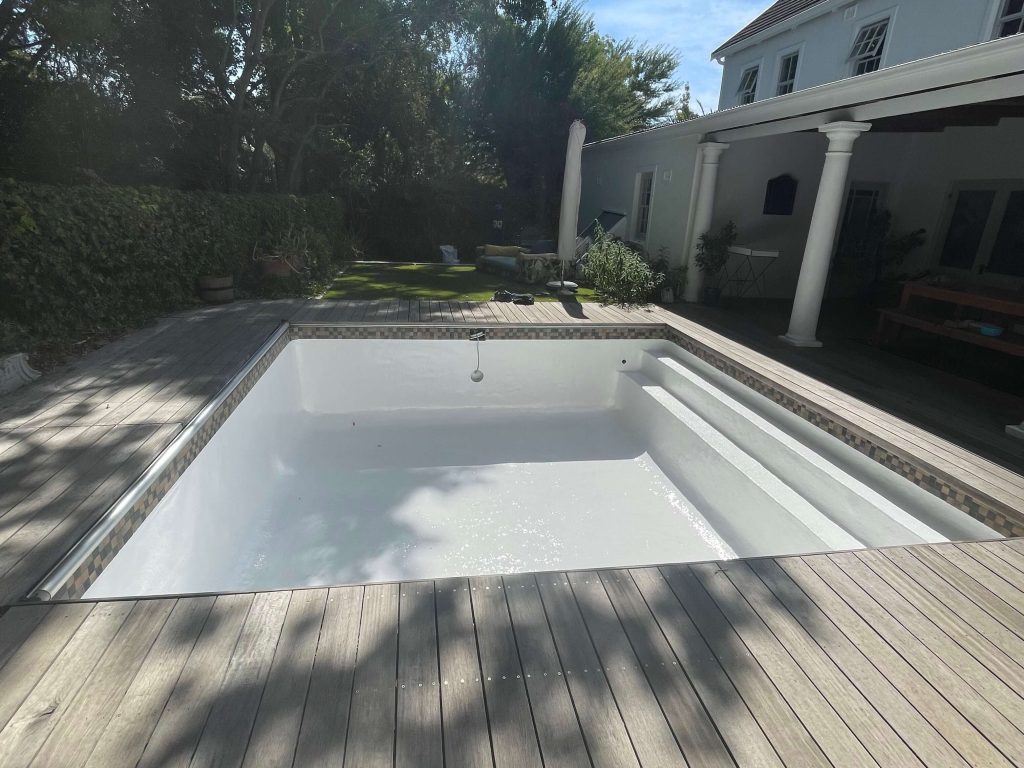
White pool paint gives the brightest, most tropical water you can get. Under water it reads as pale turquoise, and it makes a small pool feel bigger. The downside is that everything shows: leaves on the floor, a dirty waterline, rust spots from hairclips. It suits owners who don’t mind brushing and a pool that gets a good weekly clean.
Light, sky and pool blue
Light blue and sky blue are still the most popular colours on South African pools for a reason. They look clean and bright, hide a bit of dust and fade gracefully. Mid or pool blue gives a richer colour that still looks fresh. If you’re unsure, a light or mid blue is very hard to regret.

Dark blue and black
Dark blue swimming pool paint turns the water a deep navy and makes it more reflective, so the pool mirrors the sky and the garden. It looks striking around modern houses. It also shows dust, sand and the white crust that hard water leaves on the walls, and dark colours fade and chalk faster in our summer sun. Black goes further still: almost a mirror, but every speck shows.
Grey and charcoal
Grey and charcoal are the colours people choose for a natural, lagoon look. Under water they turn a deep blue-green that sits well with stone coping, timber decking and indigenous planting. Mid grey is more forgiving than charcoal, which behaves much like dark blue for showing marks.
Sand, beige, aqua and teal
Sand and beige give the soft turquoise you see in tropical resort photos, and they’re lovely on beach entry pools where the shallow water shows the colour off. Aqua and teal go a vivid green-blue. In a shady garden surrounded by trees, teal can read greener than you expect, so test it in your own light.
How to Read a Pool Paint Colour Chart (and Test It Properly)
A pool paint colour chart is a starting point, not a promise. Colours on a screen are rarely accurate, and a small chip held in your hand looks nothing like a whole pool under water. Epoxy pool paint colours also come in a smaller range than house paint, and the names differ from one supplier to the next, so compare actual samples, not names.
- Ask for a physical colour chip or a small tin, not just a picture.
- Paint a sample onto an offcut tile or board and let it dry properly.
- Put it in a white bucket of water, or hold it under the water at the shallow end of your pool.
- Look at it in midday sun, late afternoon and on a cloudy day.
- Remember the deep end will look darker than your sample, and the shallow end lighter.
Changing colour? Check the paint first
Going from a dark colour to a light one usually needs an extra coat so the old colour doesn’t show through. And the paint type matters as much as the colour: epoxy can’t go over rubber or acrylic paint without stripping, so your colour choice may decide which paint system you can use.
Painting a fibreglass pool? The rules are different. See our guide on fibreglass swimming pool paint first.
Choosing Pool Paint Colours for Western Cape Conditions
Lighter colours suit you if
- You have big trees and leaves land in the pool often
- The pool is in full sun and you want the colour to last
- Your water is hard and leaves white scale on the walls
- You want a small pool to look bigger and brighter
- You’d like the water to look clear even when it’s slightly off
Darker colours suit you if
- You want a reflective, natural or modern look
- The garden around the pool isn’t sandy or dusty
- You’re happy to keep the water well balanced to avoid scale
- The pool gets some shade, which slows fading
- You accept repainting a bit sooner in strong sun
- Hard water. In parts of the Boland, calcium scale leaves a white line at the waterline and white marks on steps. On dark paint it stands out; on light paint you hardly see it.
- Coastal sun and wind. UV and blown sand chalk the surface faster near the sea. Lighter colours hide it better.
- Warmth. Darker colours absorb a little more sun, so the water can feel slightly less cold on a still day. Don’t choose a colour for this alone; the difference is small.
- The surround. Pick the paint with your pool coping and pool paving in mind. Warm sandstone suits blues and sand tones; charcoal paving suits greys and dark blue.
At night, lighting changes everything again. A white or light pool shows LED colours far more vividly than a dark one. Our guide to pool lights led upgrades covers that side.
When Pool Paint Colours Aren’t the Real Question
A new colour won’t fix a surface that’s coming apart. If the walls are rough, hollow or peeling every season, read the signs that point to pool resurfacing instead, or consider pool relining, which comes in its own range of colours. For plastered pools, our post on marbelite pool colours covers how those finishes compare, and our guide to the pool renovation process explains how long the work takes.
Can’t decide on a colour?
Our team can bring samples to test in your own pool and light, tell you how each will look under water, and quote for the preparation and painting.
Call 074 378 6623, WhatsApp us, or email info@poolsreno.co.za.
Pool Paint Colours: Frequently Asked Questions
Light blue and mid or pool blue are still the most popular colours on South African pools. They look bright and clear, hide a little dust and fade gracefully. White and grey have become more popular on modern homes.
White and sand or beige paint give the most turquoise water, especially in shallow areas and bright sun. Aqua gives a stronger green-blue.
Slightly. A dark surface absorbs more sunlight, so the water can feel a little less cold on a still, sunny day. The difference is small, so choose a colour mainly for how it looks and how much upkeep you want.
A grey pool turns a deep blue-green under water, often called a lagoon look. Lighter greys look brighter and more turquoise, while charcoal looks dark and reflective.
Light and mid blues hide dirt, dust and scale best. White shows leaves and stains, and dark blue, charcoal and black show dust, sand and white hard water marks.