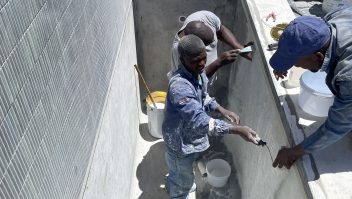
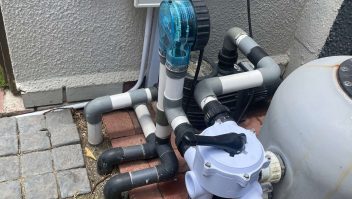
Your pool needs resurfacing when the surface itself has worn out: it feels like sandpaper, it won’t come clean, it’s cracked or hollow in places, or the grey plaster underneath is starting to show. A tired-looking pool isn’t always one of these. Sometimes it’s a water balance or cleaning problem that a good service will sort out for far less.
Marbelite, the classic South African pool plaster, usually gives 10 to 15 years before it needs serious attention, and well looked-after pools can go 20 or more. Below are the signs our team looks for, and how to tell a surface that needs a repair from one that needs replacing.
Signs at a glance
- Rough walls and floor that snag costumes and scrape toes
- Chalky dust that clouds the water every time you brush
- Stains that don’t shift with brushing or a stain treatment
- Cracks that keep opening, or hollow, drummy patches
- Flaking, peeling or grey patches showing through
- Algae that keeps coming back in the same pitted spots
- Water loss through cracks in the surface
8 Signs Your Pool Needs Resurfacing
1. The surface feels rough
New marbelite is smooth to the touch. Over the years, water that’s out of balance eats into the surface and leaves it etched and gritty. When kids come out with scraped toes and costumes start to bobble, the surface has worn thin.
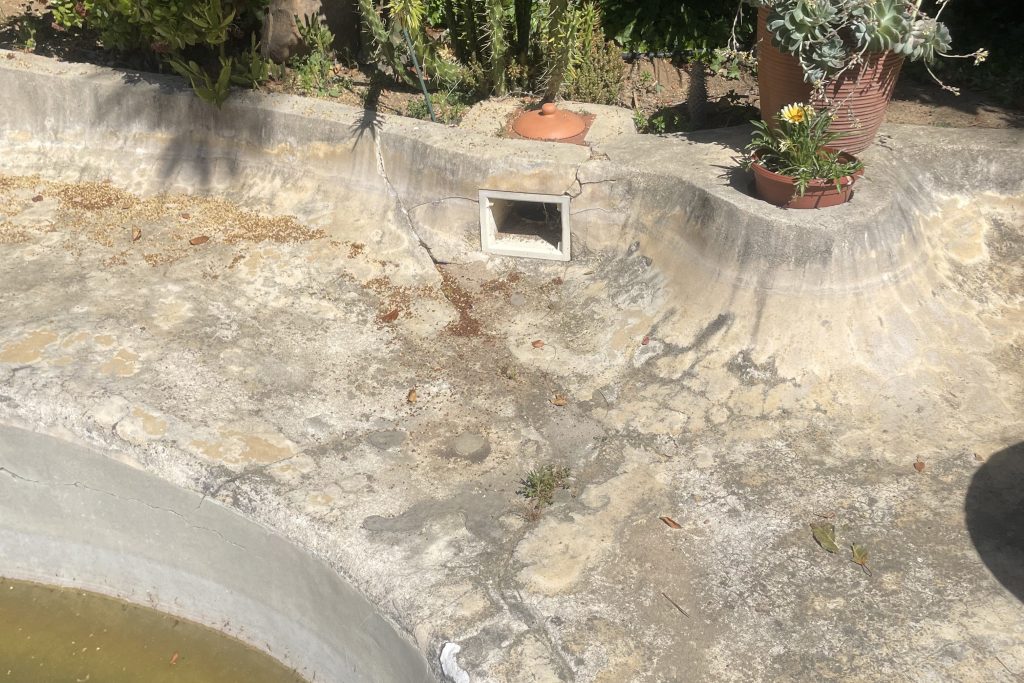
2. Chalky dust after brushing
If the water goes milky every time you brush the walls, the surface is breaking down and washing into the pool. It also clogs the filter and makes your chemicals harder to keep in range.
3. Stains that won’t lift
Rust spots, brown leaf stains and dark mineral patches can often be treated. If they come back quickly, or the colour has gone blotchy all over, the stain is inside a porous surface. Try a treatment first. Our guide on how to remove stains from marbelite pool surfaces explains the options. If nothing works, the surface is the problem.
4. Cracks that keep coming back
Fine surface crazing, like a network of hairlines, is mostly cosmetic. Longer cracks that you can catch a fingernail in, or cracks that reopen after being patched, are a different story. They let water behind the surface and can leak. See how to fix a pool crack for how we tell the two apart.

5. Hollow or flaking patches
Tap the wall with the handle of a brush. A dull, hollow sound means the surface has lifted off the shell underneath. Those patches eventually flake away. Our article on pool plaster delamination covers why it happens.
6. Grey patches showing through
Steps, benches and the waterline wear first. When grey shell or old plaster shows through the colour, the finish is gone in that area, and the rest isn’t far behind.
7. Algae that always comes back in the same spots
Black algae roots itself in pits and cracks. If you’ve treated it properly and it keeps reappearing in the same places, the rough surface is giving it somewhere to hide.
8. Water loss through the surface
A pool that keeps losing water may be leaking through cracks in the surface, but it could just as easily be a pipe or fitting. Find out before you resurface. Proper pool leak detection comes first, because a new surface won’t fix a broken pipe.
How Long Does Marbelite Last?
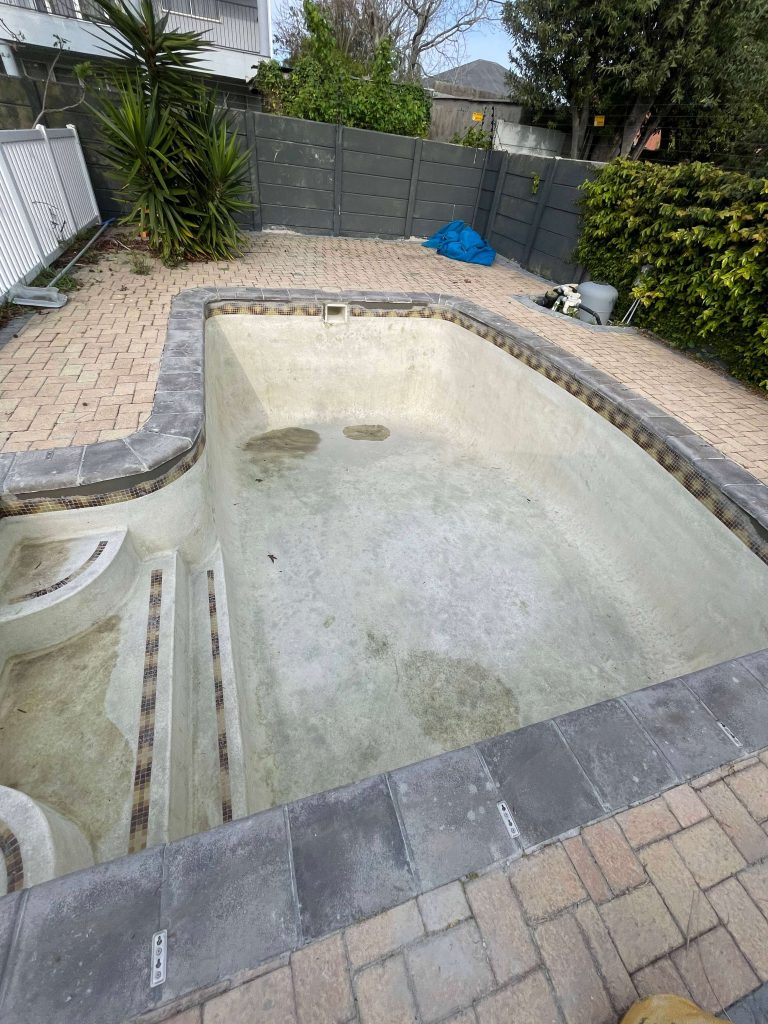
Manufacturers say a properly applied and maintained marbelite finish can last more than 20 years. In real Western Cape pools, most need resurfacing somewhere between 10 and 15 years. The difference comes down to how the water has been looked after and how the surface was applied and cured in the first place.
| Finish | Typical lifespan | Notes |
|---|---|---|
| Marbelite (well looked after) | 15 to 20+ years | Balanced water, gentle cleaning, no repeated acid washes |
| Marbelite (typical) | 10 to 15 years | Some etching and staining along the way |
| Marbelite (poor water balance) | As little as 5 to 8 years | Low pH or soft water etches it fast |
| Fibreglass relining | 15 years or more | Smooth and non-porous, often chosen for older cracked pools |
| Epoxy pool paint | Around 4 to 7 years | A cheaper refresh on a surface that’s still sound |
What Shortens Marbelite’s Life in the Western Cape
- Soft, aggressive water. Water that’s low in calcium pulls calcium out of the plaster. Many local supplies are on the soft side, so calcium hardness needs watching.
- Winter rain. Heavy rain dilutes the pool and drops the pH, and an acidic pool etches marbelite quickly.
- Hard borehole or Boland water. The opposite problem: scale builds up and roughens the surface.
- Too many acid washes. Each one removes a thin layer of the surface. Done every year or two, it wears marbelite out early.
- Leaving the pool empty. Marbelite is meant to stay wet. A pool left empty in summer sun can crack and lift.
- A rushed start. The first few weeks after plastering decide a lot. Poor curing and start-up chemistry shorten the life of a new finish.
How Often Should You Resurface a Pool?
There’s no fixed calendar. A marbelite pool typically needs resurfacing every 10 to 15 years, a fibreglass reline every 15 years or more, and a painted pool every 4 to 7. Go by the signs above, not by age alone. A 20-year-old surface in good condition doesn’t need replacing just because of its birthday.
When Your Pool Needs Resurfacing and When a Repair Will Do
A repair is usually enough if
- The damage is in one or two small areas
- Cracks are fine surface crazing, not structural
- Stains respond to treatment
- The rest of the surface is smooth and solid
- The pool holds its water level
Resurfacing makes sense if
- The whole surface is rough or chalky
- There are hollow patches in several places
- Patches keep failing or cracks keep reopening
- Grey shell is showing through in more than one spot
- You’re about to spend on new coping or tiles anyway
Patching an old marbelite surface is often possible, but new patches rarely match the old colour. If the pool has several problems at once, one resurface is usually better value than a string of repairs.
Your Options When a Pool Needs Resurfacing
Once you’ve decided it’s time, there are three main routes:
- New marbelite. The old surface is chipped back where needed and a fresh coat of marbelite goes on. It’s the natural choice for a sound concrete or gunite marbelite pool.
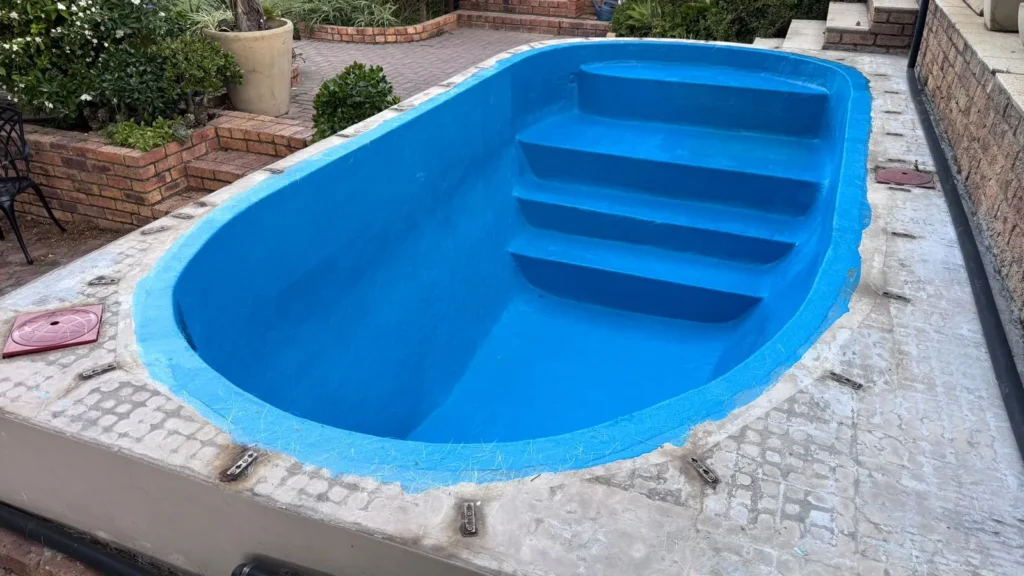
- Fibreglass relining. A new layer of fibreglass and resin over the old surface. It’s popular for older pools with cracks or leaks because it’s smooth, waterproof and less prone to algae. Our pool relining page explains how it’s done.
- Painting. The cheapest refresh, but only on a surface that’s still sound. Our pool paint comparison covers the types and what they cost.
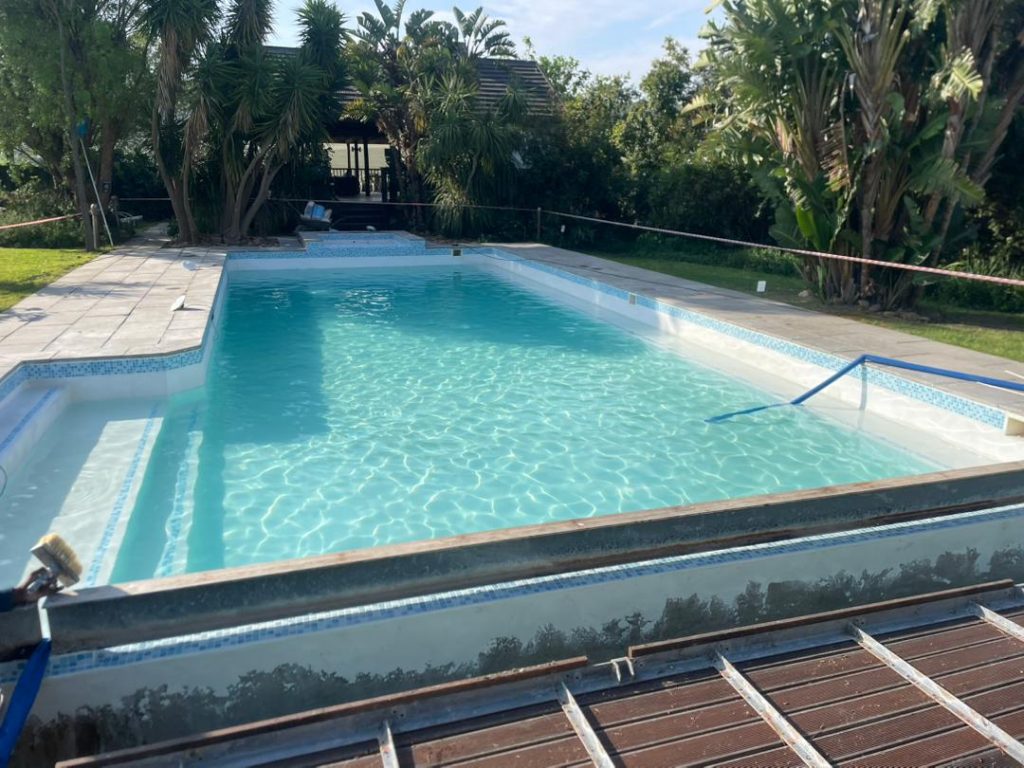
For prices, our guide to pool resurfacing cost gives current ranges. Every pool is different, so the best figure is a quote after an inspection.
Not sure if your pool needs resurfacing?
Send us a few photos or book an inspection. Our team will tell you honestly whether a repair will do or the surface needs replacing, and give you a written quote for either.
Call 074 378 6623, WhatsApp us, or email info@poolsreno.co.za. See our pool resurfacing and renovation services for marbelite and fibreglass.
Pool Needs Resurfacing? Frequently Asked Questions
The main signs are a rough or chalky surface, stains that won’t lift, cracks that keep reopening, hollow or flaking patches and grey shell showing through. If several of these show up across the pool, it’s usually time to resurface rather than patch.
Most marbelite surfaces last around 10 to 15 years, and a well-maintained one can last 20 years or more. Poor water balance, frequent acid washing and leaving the pool empty can shorten that to well under ten.
Typically every 10 to 15 years for marbelite, 15 years or more for a fibreglass reline, and every 4 to 7 years for a painted pool. The condition of the surface matters more than its age.
No. Marbelite, fibreglass and paint all need a drained, clean, dry or properly prepared surface to bond. Some small repairs can be done underwater with special products, but a full resurface needs the pool empty.
It depends on the pool. Fibreglass is smoother, waterproof and suits older pools with cracks or leaks, but costs more up front. New marbelite suits a sound concrete pool and keeps the classic look. We’ll recommend the one that fits your pool’s condition.