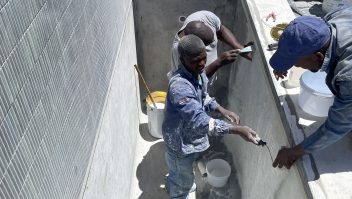
How long does a pool renovation take? For most of the pools our team renovates, the work on site takes 5 to 10 working days. A small family pool in dry weather sits at the shorter end. A larger pool, or one with a lot of crack repair, takes longer. Big jobs that change the structure, add steps or put in a water feature can run to several weeks.
The pool is out of use for a little longer than the time we’re on site, because it has to be drained, the new finish has to cure, and the water needs refilling and balancing. Here’s how it usually runs, week by week.
A typical pool renovation timeline
- Before we start: site visit, leak checks if the pool is losing water, written quote, booking and a plan for the water.
- Day 1: drain the pool and inspect the shell.
- Next few days: clean, grind or sand the old surface, repair cracks and prime.
- Middle of the job: the new surface goes on: fibreglass lining, marbelite or paint.
- Final days: topcoat or finishing, curing, then refilling.
- First weeks after: water balancing and, on marbelite, regular brushing while it settles.
How Long Does a Pool Renovation Take for Each Type of Job?
The type of job makes the biggest difference. These are the ranges we work to. Your site visit gives you a plan for your pool.
| Job | Time on site | Pool out of use | What usually adds time |
|---|---|---|---|
| Repainting a sound pool | A few working days | About 1 to 2 weeks with curing | Stripping old paint, damp walls, rain |
| Marbelite resurfacing | Within 5 to 10 working days | Filled once the marbelite is on, then brushed for weeks | Hollow plaster to hack off, crack repairs |
| Fibreglass relining | 5 to 10 working days | About 2 to 3 weeks in total | Pool size, crack repairs, wet weather |
| Renovation with new steps, coping or features | Longer, often several weeks | Depends on the scope | Structural work, plumbing, electrics |
If you’re still weighing up the cost of each option, our swimming pool renovation cost guide sets out the prices.
Before Work Starts: Inspection, Leak Checks and Booking
The quickest renovations are the ones that are planned properly. Before any water comes out, our team will:
- Look at the shell for cracks, hollow patches, old paint and loose tiles, so the quote covers what’s really there.
- Check for leaks if the level keeps dropping. It’s far better to know before draining. Our post on how to check a pool for leaks shows the simple bucket test, and our pool leak detection pins down anything bigger.
- Agree the finish, whether that’s pool relining, new swimming pool marbelite or pool paint, plus colour, coping and tiles.
- Plan the water. Some owners keep their old water in a pool water storage bladder on the lawn. Others refill from the mains.
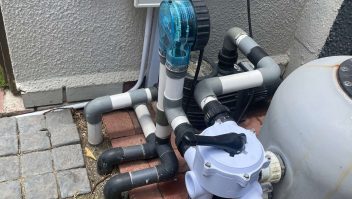
- Check access for people, materials and equipment, and where the pump and electrics sit.
Getting the order right at this stage saves days later. If the coping is being changed to swimming pool bullnose coping or new waterline tiles are going in, that work is done before the new surface, not after it.
Week One: Draining, Cleaning and Preparing the Shell
Day 1: drain and inspect
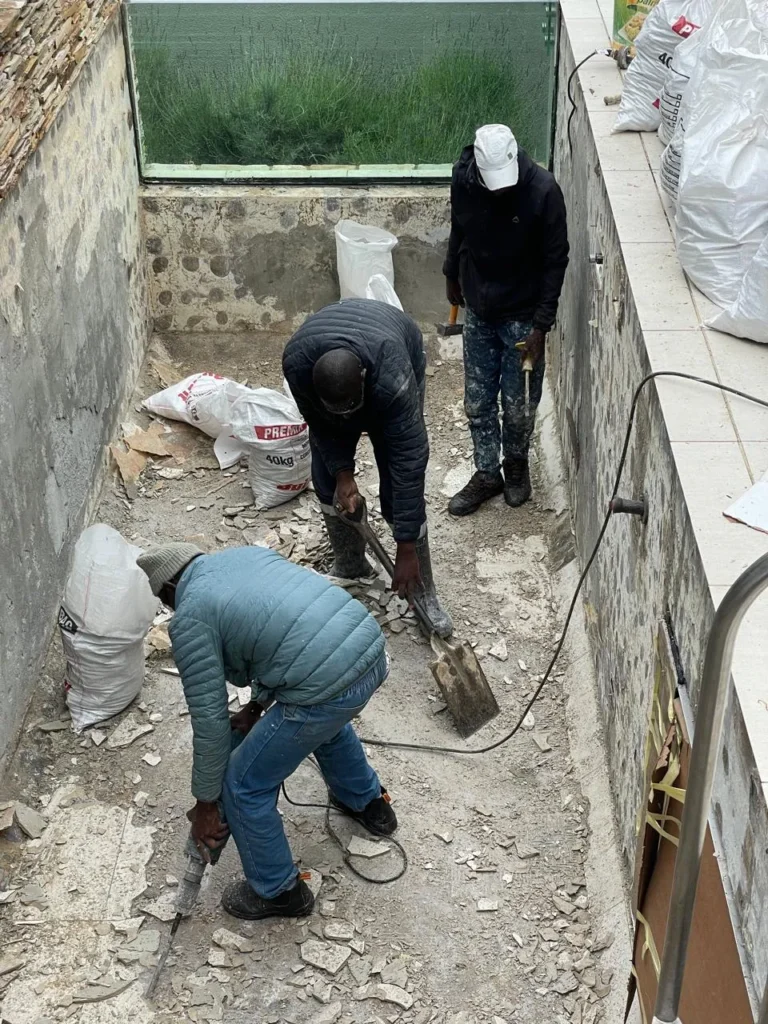
The pool is drained and we take a close look at the empty shell. This is where hidden problems show up: hollow marbelite that sounds drummy when tapped, cracks that were invisible under water, or a waterline that has lifted. If we find more than the quote allowed for, we tell you before carrying on.

The next few days: clean, sand, repair and prime
- Algae, scale and dirt are cleaned off. Bare marbelite or concrete may be acid washed so the new surface can grip.
- The old surface is ground or sanded to a sound, rough base. Loose plaster and flaking paint come off.
- Cracks are opened up and repaired, and damaged areas patched. Repairs need time to cure before anything goes over them.
- Coping, steps and waterline tiles are fixed or replaced if they’re part of the job.
- The shell is primed, ready for the new surface.
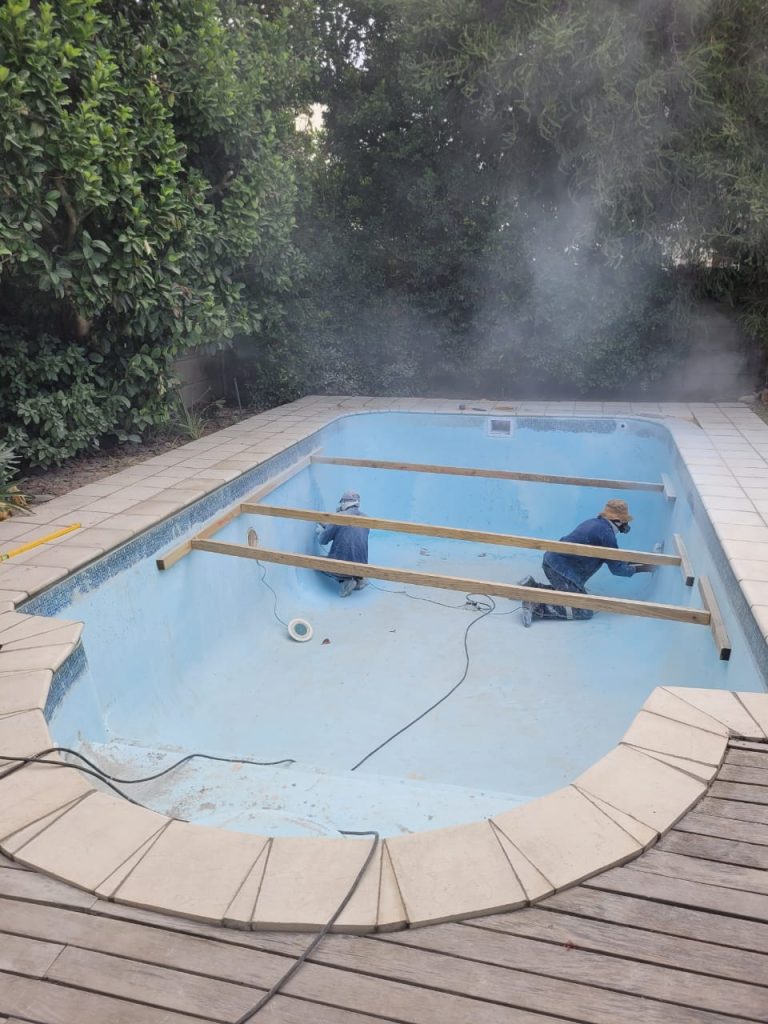
One thing we keep an eye on: an old marbelite or plaster shell shouldn’t sit empty and drying out for long, because it can crack. We plan the job so the pool isn’t left standing empty any longer than it has to be.
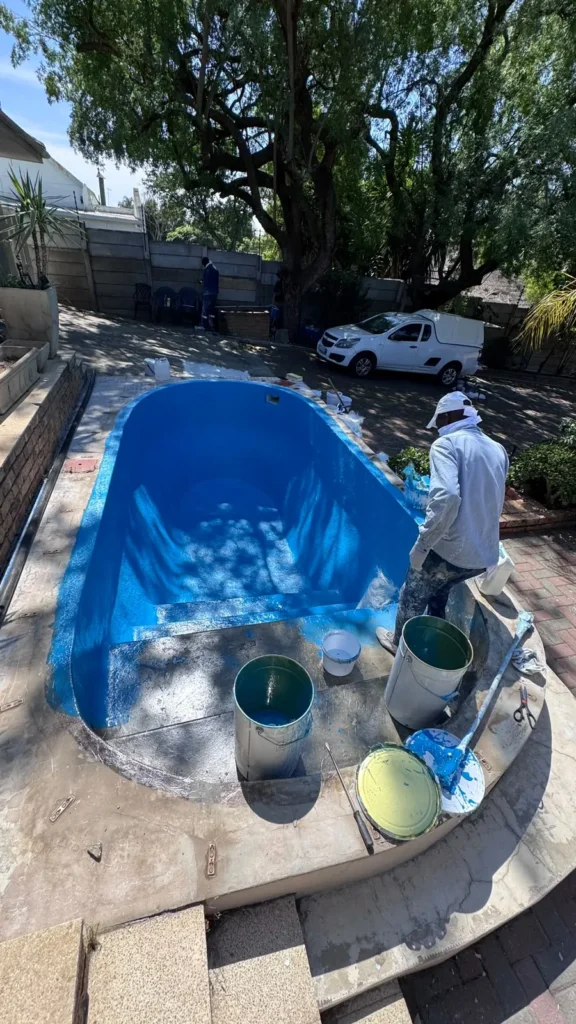
Week Two: The New Finish Goes On
What happens next depends on the finish you chose.
- Fibreglass relining. Layers of fibreglass matting and resin are laid over the prepared shell, worked in and left to harden, then finished with a gelcoat or topcoat. This is the longest part of a reline.
- Marbelite. The marbelite is trowelled on by hand, normally in a single day so there are no joins, and the pool is filled straight afterwards.
- Paint. Two or three coats go on with drying time between them. Epoxy then usually needs about a week to cure before the pool can be filled.

This is also where weather matters most. Rain on a fresh coat or a damp shell means waiting, and we’d rather lose a day than redo work.
Refilling and Handing the Pool Back
Once the finish has cured, the pool is filled. With fibreglass, the hose goes on the floor of the deep end and the pool fills in one go up to the middle of the skimmer opening. Stopping and starting can leave a line on the new surface. Filling from a garden hose can take a day or more on a family pool, depending on your water pressure.
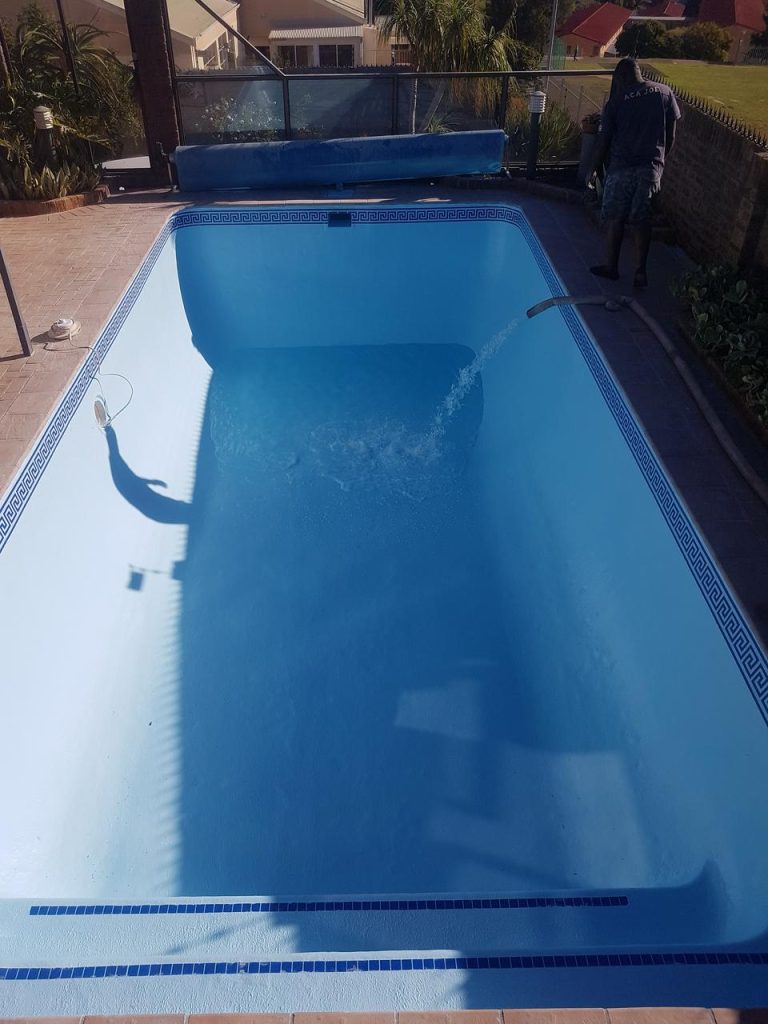
Then the water is tested and balanced before anyone swims. A new marbelite surface releases fine dust for the first few weeks and needs regular brushing. Our guide to pool plaster dust explains why. Fibreglass needs less, but the water still has to be kept in balance from day one.
What Makes a Pool Renovation Take Longer
Things that stretch the timeline
- Rain, especially on paint and fibreglass days
- Groundwater pushing damp through the walls
- More cracks or hollow plaster than expected
- Old paint that has to be stripped
- Extra work: steps, coping, tiles, lights or features
- Tight access for materials and equipment
Things that keep it on track
- A leak check before the pool is drained
- Decisions on colour, coping and tiles made up front
- Clear access to the pool and the pump
- Equipment repairs booked into the same job
- Booking ahead of the busy summer months
- A written plan you’ve seen before work starts
How Long Does a Pool Renovation Take in Winter?
The work itself is the same, but Cape winters add waiting days. Paint and fibreglass need a dry surface, so a wet week can push the end date out. Low-lying gardens can also have groundwater pushing up behind the pool walls after heavy rain. On the other hand, our diary usually has more space outside the summer rush. We’ll tell you honestly which dates suit your pool.
Before you book anyone, it’s worth reading our list of questions to ask swimming pool contractors about timelines, and seeing what’s included in a full pool renovation with our team.
Want a realistic date for your pool?
Our team will look at your pool, tell you how long the work should take and what could change it, and give you a written quote and plan before anything is drained.
Call 074 378 6623, WhatsApp us, or email info@poolsreno.co.za.
How Long Does a Pool Renovation Take? Your Questions
Most of the renovations our team does take 5 to 10 working days on site. Larger pools, extra repairs and wet weather push that out, and renovations with structural changes or new features can take several weeks.
Usually 5 to 10 working days on site. Allow roughly two to three weeks in total before you swim, once draining, curing, refilling and water balancing are included.
Not straight away. The water must be filled and balanced first, and a new marbelite surface needs careful brushing and chemistry for its first weeks. We’ll tell you when it’s ready to swim in.
As short a time as possible. An old marbelite or plaster shell can crack if it dries out for too long, and in some gardens groundwater can push on an empty shell. That’s why we plan the job before the pool is drained.
It can. Paint and fibreglass need a dry surface, so rain on a coating day means waiting. Draining, cleaning and repairs can often carry on between showers.