If your old pool light keeps blowing, glows a tired yellow, or hasn’t worked since the last power surge, LED pool lights are the obvious replacement. They use a fraction of the power, last many times longer and come in white, blue or colour-changing.
In most pools the upgrade is simpler than people expect. An LED retrofit lamp usually fits the existing light niche, so the pool doesn’t need draining and the wall doesn’t need breaking. The light runs on 12 volts from a transformer, and that side of the job is always done by a qualified electrician.
LED pool lights at a glance (prices at the time of writing)
- LED retrofit lamp, single colour: from around R900 to R1,700
- LED retrofit lamp, colour-changing: from around R1,600 to R3,500
- Complete surface-mount LED light: from around R1,500 to R3,400
- 12V pool light transformer: from around R400 to R1,400
- Fitting and electrical work: quoted on site, depending on the cable, niche and transformer
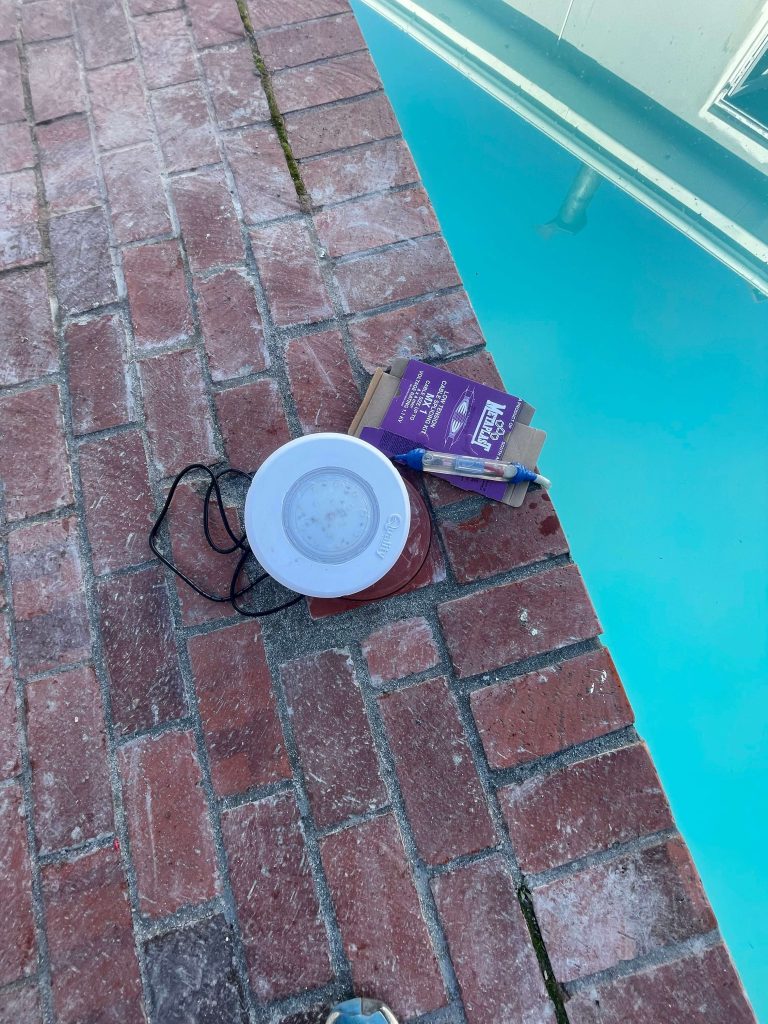
LED Pool Lights vs Halogen: What Changes
Most older South African pools have a 12V halogen or incandescent lamp, usually 50W to 100W. An LED replacement typically draws somewhere between 4W and 20W for similar or better light.
| Old halogen lamp | LED pool light | |
|---|---|---|
| Typical power draw | 50W to 100W | About 4W to 20W |
| Lamp life | A few thousand hours at best | Often rated for tens of thousands of hours |
| Heat | Runs hot, which ages seals and lenses | Runs cool |
| Colour | Warm white to yellow | White, blue or colour-changing |
| Upfront cost | Cheaper lamp | Costs more, replaced far less often |
Let’s be straight about savings. A 100W halogen on for four hours a night uses about 12 units a month, roughly R50 at R4 a unit. A 10W LED uses about a tenth of that. You’ll save something, but the bigger wins are not buying lamps every year, fewer call-outs and much better light. If electricity is your main worry, the pump matters far more; see our guide to pool pump prices and running costs.
Your Options for Upgrading to LED Pool Lights
LED Retrofit Lamp in the Existing Niche
This is the most common upgrade. The LED unit replaces the old lamp inside the existing housing, which in many pools is the standard 140mm size. It’s the cheapest route and usually the quickest. It only works if the niche, the cable and the seal are still sound.
Complete Surface-Mount LED Light
A slim LED light that mounts on the pool wall. It’s used where the old niche is cracked, corroded or leaking, or where a pool never had a light. It costs more and needs a cable route, but it avoids breaking out the old fitting.
12V LED Pool Lights and the Transformer
Pool lights in South Africa run on 12 volts through a transformer. They must never be connected to 220V at the pool. An old transformer sized for a halogen lamp may not suit an LED, so the electrician checks the transformer and the earth leakage protection as part of the upgrade. A dedicated pool pump timer or a separate light timer means the lights aren’t left on all night.
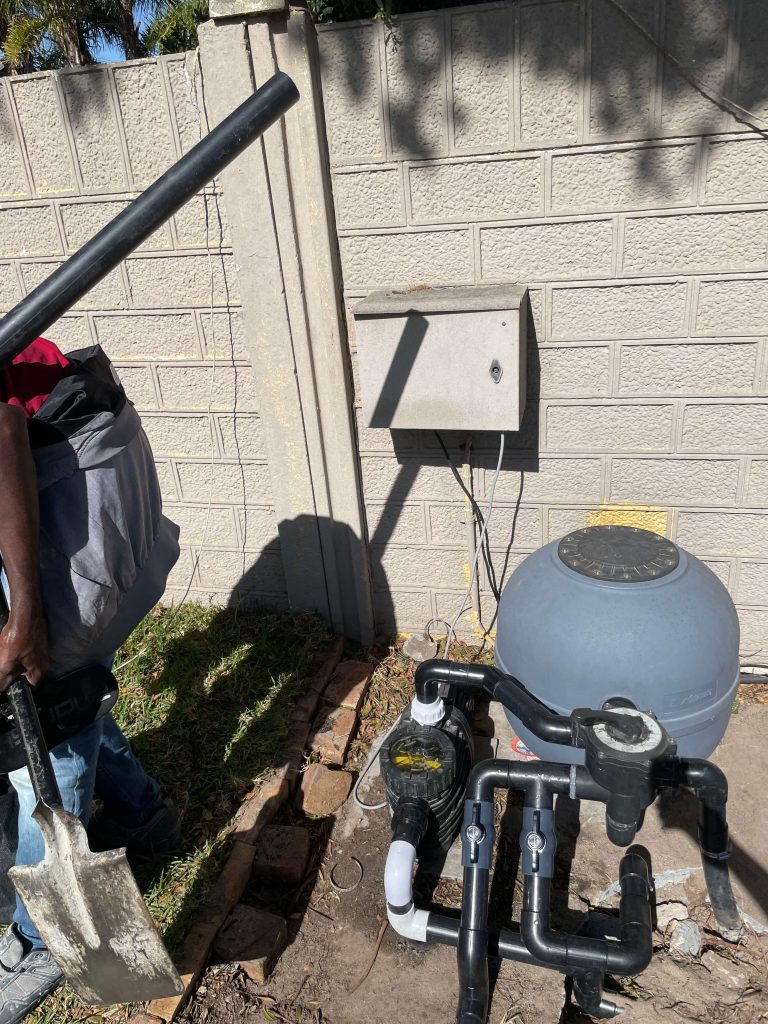
Electrical work is for a qualified electrician
Underwater lights combine mains power, a transformer and water. Don’t open the light, the junction box or the transformer yourself, and don’t try to rewire anything. Our team arranges the electrical side with a qualified electrician, and the circuit must have working earth leakage protection.
What LED Pool Lights Cost to Buy and Fit
The price depends on the type of light, whether you want colour, and what the electrician finds. These are typical South African prices for the parts at the time of writing:
| Item | Typical price range | Notes |
|---|---|---|
| Single-colour LED retrofit (white or blue) | From around R900 to R1,700 | Fits most standard niches |
| Colour-changing LED retrofit | From around R1,600 to R3,500 | Better units have more colours and remote control |
| Complete surface-mount LED light | From around R1,500 to R3,400 | For damaged niches or pools without a light |
| 12V pool light transformer | From around R400 to R1,400 | Must match the LED’s rating |
| Fitting, testing and electrical work | Quoted on site | More if the cable, niche or transformer needs replacing |
Two things push the fitted price up. A cable that’s perished or too short to lift the light out, and a niche that’s cracked or leaking. If the old light has water inside it, find out why before fitting a new one, or the LED will fail the same way.
Signs Your Pool Light Needs Replacing
- The lamp blows every season, or flickers when the pump starts
- Water or condensation inside the lens
- The light trips the earth leakage when it’s switched on
- A cracked lens, a loose fitting or rust around the rim
- Light so dim and yellow the pool looks murky at night
If your light has simply stopped working, start with our guide to swimming pool lights not working. It covers the safe checks, like the timer and the breaker. Our older guide to swimming pool light replacement explains how a lamp swap works. Any work on the light itself should still be done with the power isolated, by someone qualified.
Getting the Most From New LED Pool Lights
A small pool or splash pool usually needs one light. A typical 8m x 4m family pool looks good with one bright LED, or two on a long pool. Light placed at the deep end, facing away from the house, avoids glare from the patio.
- Surface colour matters. White and light blue reflect LED light best. Dark finishes soak it up. If you’re choosing pool paint colours as well, keep the lighting in mind.
- Warm white or cool white. Cool white makes water look crisp and blue. Colour-changing is fun but most people end up leaving it on one colour.
- Light the edges too. Low LED lighting under the pool coping or in the paving makes steps and edges safer at night.
- Features. A lit swimming pool water feature looks great at night, and the light can share the transformer if it’s sized for both.
Western Cape Conditions and Pool Lighting
- Coastal salt air corrodes transformer boxes, junction boxes and light rims. Sealed, marine-grade boxes last much longer near the sea.
- Winter rain fills pump pits and junction boxes, and damp is a common reason lights trip. Boxes should sit above any standing water.
- Power surges after outages are hard on transformers and old lamps. A light that dies after the power returns often needs the transformer checked.
Upgrading Pool Lights During Other Work
The cheapest time to replace a light niche or add a new light is when the pool is already empty for relining, resurfacing or repairs. If you’re planning a swimming pool renovation, add the lights to the same quote. For faults on an existing light, our swimming pool repair services team can check the fitting and arrange the electrician. If you have a regular service visit, ask the technician to mention any water in the light lens; spotting it early saves a bigger repair. Our pool service and cleaning guide lists what else a visit should check.
Ready to swap halogen for LED?
Send us a photo of your current pool light and the transformer box, and our team will tell you whether a retrofit will fit and give you a price for the light and the electrical work before anything starts.
Call 074 378 6623, WhatsApp us, or email info@poolsreno.co.za.
LED Pool Lights FAQs
At the time of writing, an LED retrofit lamp costs from around R900 for a single colour to R3,500 for a good colour-changing unit. Fitting and electrical work come on top and depend on the cable, niche and transformer. Ask our team for a fitted quote.
Often, yes. Many LED retrofit lamps are made to fit the standard 140mm housing used in South African pools. The transformer may also need checking or replacing so it suits the LED.
They need a 12V transformer that matches the light’s rating, and some LEDs don’t work properly on older transformers sized for halogen lamps. A qualified electrician should check and connect it.
Usually not. Most pool lights have enough cable to lift the fitting onto the deck. Draining is only needed if the niche is cracked or the light has to move.
Good LED pool lights are often rated for tens of thousands of hours, against a few thousand for halogen. Water getting into the fitting is the most common reason they fail early.
For most pools, yes. They use far less power, rarely need replacing and give better light. The electricity saving alone is modest, but fewer blown lamps and call-outs make up the difference.