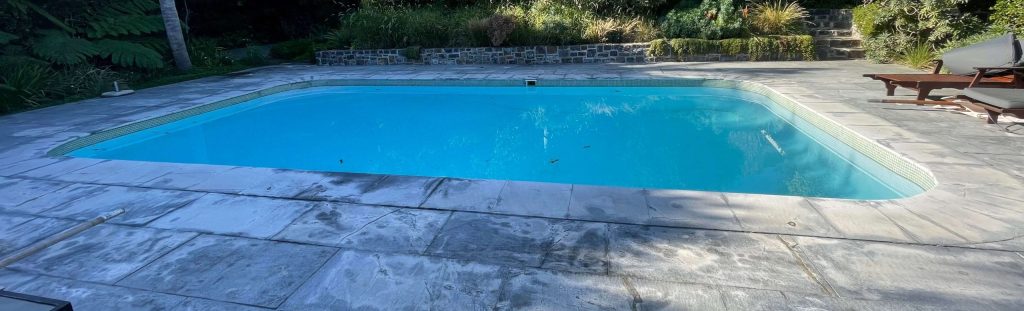
Marbelite pool colours change how your whole pool looks, far more than most people expect. A white marbelite pool turns the water a pale, clear turquoise. Sky blue gives that bright holiday blue. Darker blues read as deep ocean, and grey or charcoal turn the water a deep green-blue lagoon colour.
Colour also changes how the surface ages, how much dirt and staining you’ll see, and how forgiving the finish is if the water chemistry slips. Our team resurfaces marbelite pools across the Western Cape, and this is how the main options compare.
| Marbelite colour | How the water looks | Mottling | Shows most |
|---|---|---|---|
| White | Pale, crisp turquoise | Least, fairly even | Leaves, rust and dirt stains |
| Sky blue | Bright, clear blue | Some, gentle | Calcium marks and fading over time |
| Pool blue and darker blues | Deep, rich blue | Noticeable | White calcium streaks and fading |
| Grey | Soft blue-green, natural | Noticeable | White scale and calcium marks |
| Charcoal and black | Dark lagoon green-blue | Most, like natural stone | Any white residue, very clearly |
How Marbelite Pool Colours Work
Marbelite is a cement plaster with crushed marble in it, trowelled on by hand in a single day. The colour is pigment mixed right through the plaster, not a coat painted on top. That’s why a marbelite colour lasts for years, and also why it never looks as uniform as paint.
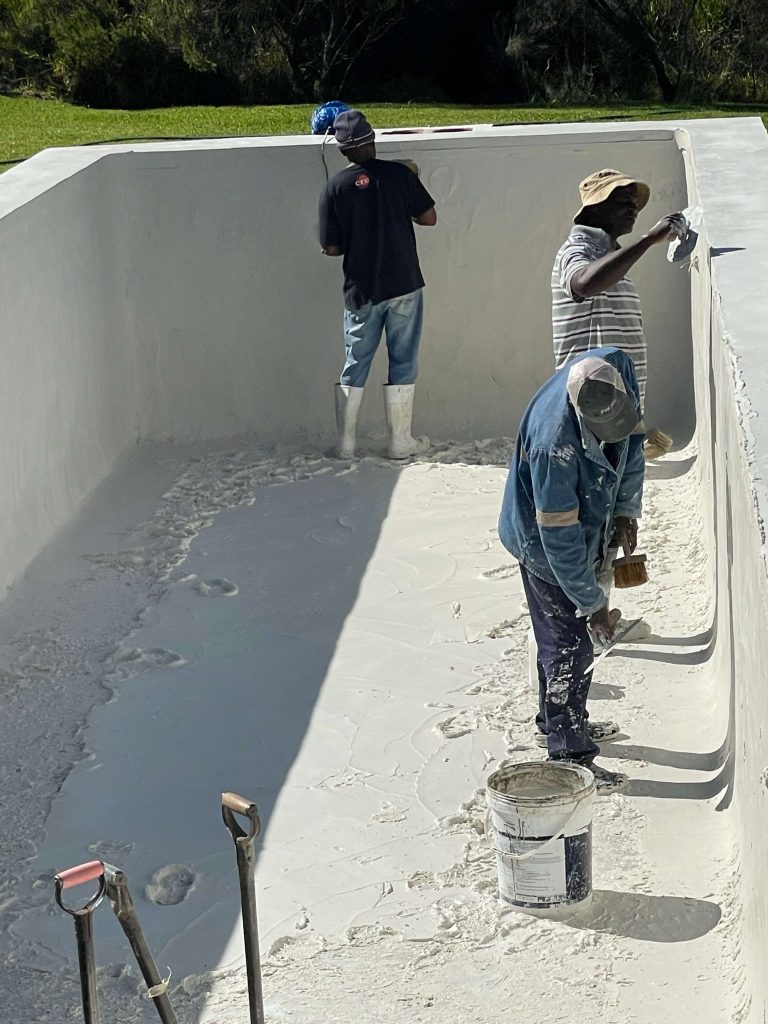
White marbelite comes out fairly even. Coloured marbelite has a softer, stone-washed look up close, with lighter and darker patches that makers describe as a natural marble effect. From a few metres away, and under water, that variation is part of the appeal. If you want a perfectly flat, even colour, marbelite isn’t the finish for you.
Expect the colour to settle. A freshly finished pool often looks lighter and a little chalky for the first weeks while the plaster cures and sheds its dust. Brushing and careful water balance during that start-up period make a big difference to the final colour.
White Marbelite Pool: The Classic Choice
White is the standard marbelite colour and still the most popular in older Cape pools. Under water it gives that crisp, light turquoise that most people picture when they think of a swimming pool.
- Looks: bright, clean and classic. It suits almost any garden and makes a small pool feel bigger.
- Shows: leaves, rust spots from metal objects, and dirt sitting on the floor. You’ll see when it needs a brush.
- Hides: the white calcium marks that stand out on darker colours.
- Repairs: easiest to patch later, because a white patch is easier to blend than a coloured one.

If a white surface does pick up stains, our guide on how to remove stains from marbelite pool surfaces explains what can be lifted. For the material itself, see our page on marbelite pool surfacing.
Sky Blue Marbelite Pool and Darker Blue Marbelite Colours
A sky blue marbelite pool is the most common step away from white. The water reads a clearer, brighter blue, and the surface hides everyday dirt a little better than white. Pool blue and the darker blues push that further, towards a deep sea colour.
Why owners choose blue
- Brighter, more vivid water than white
- Hides light dirt and leaves better than white
- Still looks fresh and familiar in a family garden
- Sky blue has only gentle mottling
What to keep in mind
- Darker blues mottle more noticeably
- White calcium streaks show up against the colour
- Colour can fade over the years in strong sun
- Harder to patch invisibly later
Pool lighting changes the picture at night too. Lighter colours reflect light well, while dark blue soaks it up. If you’re also upgrading to 12v led pool lights, factor that into your colour choice.
Grey and Charcoal Marbelite Pool Colours
Grey and charcoal are the modern options. They give a natural, lagoon-like look, with water that reads green-blue rather than bright blue. A charcoal marbelite pool next to dark paving or natural stone can look striking.
- Strongest mottling. Dark colours show the most variation, which many owners like and some don’t.
- White marks show clearly. Lime in the cement and calcium from the water can leave white streaks. On charcoal they stand out.
- Hides dirt. Leaves and dust on the floor are much less obvious, so it can look clean when it isn’t.
- A little warmer. A dark surface absorbs more sun, so the water may feel slightly warmer on bright days.
- Depth is harder to judge. With very dark finishes, a contrasting tile line on the step edges is worth adding.
How Marbelite Pool Colours Change Over Time
Every marbelite colour changes as it ages. The differences between colours are mostly about which changes you’ll notice.
| What happens | Why | Which colours show it most |
|---|---|---|
| Fading | Sun, years of chlorine and water that’s out of balance | Blues and darker colours |
| White streaks and scale | High pH, high alkalinity or high calcium, and lime coming out of the cement | Blues, grey and charcoal |
| Bleached patches | Chlorine floaters parked in one spot, or chlorine dumped straight onto the floor | All colours, worst on dark ones |
| Brown or rust stains | Metal objects, leaves left for weeks, or metals in borehole water | White and light blue |
| Rough, etched surface | Low pH or soft, aggressive water over a long time | All colours |
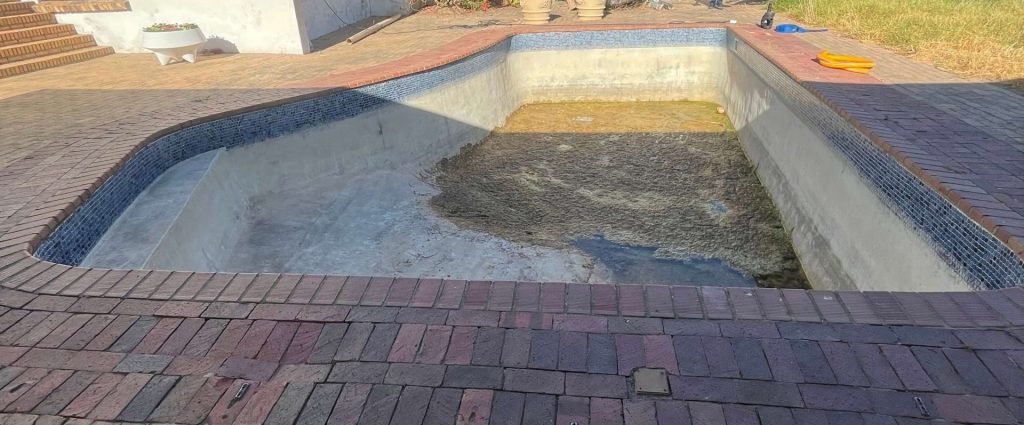
Most of that comes back to water balance. Keep the pH and calcium in range, add chemicals to water and never the other way round, follow the product label, and dissolve granular chlorine before it goes in. In the Boland, where water is hard, scale on a dark finish is the thing to watch. Once a surface is rough, patchy and stained all over, no amount of balancing will bring the colour back. That’s when pool resurfacing is the answer.
Choosing Marbelite Pool Colours for Your Garden
Start with how you want the water to look, then check it against how the pool is used and what’s around it.
- Trees overhead: on white, every leaf shows. A blue or grey hides more between cleans.
- Surrounds: look at the pool coping and paving. Light sandstone suits white and sky blue. Dark slate and grey paving suit grey and charcoal.
- Young swimmers: lighter colours make the depth and steps easier to see.
- How fussy you are: if mottling or white streaks would bother you, stay with white or sky blue.
- Light: bright coastal summer light makes every colour look more vivid than it does on a grey winter day.
Ask to see a finished pool in the colour you’re considering, not only a dry sample. Dry marbelite looks very different from the same plaster under a metre and a half of water.
Marbelite Colours Compared With Other Finishes
If none of the marbelite colours appeal, or you want a very even colour, there are other routes. Pool paint comes in a wide range of even colours but needs recoating every few years. A pool relining in fibreglass gives a smooth, sealed surface with a uniform gelcoat colour. Our team can show you all three side by side.
Do Marbelite Pool Colours Cost More?
White is the standard and usually the most affordable. Coloured marbelite usually costs a little more, and darker or less common colours can take longer to get hold of because suppliers mix them to order. The colour is a small part of the total price. The bigger factors are the size of the pool, how much old surface has to come off and any repairs underneath. Ask our team for a current quote on the colour you like as part of a full pool renovation.
Choosing a new marbelite colour?
Send us a photo of your pool and its surrounds, and our team will show you how white, blue and grey would look in your garden. We’ll quote for the resurfacing, including the colour, before any work starts.
Call 074 378 6623, WhatsApp us, or email info@poolsreno.co.za.
Marbelite Pool Colours: Frequently Asked Questions
White is the standard. Most suppliers also offer sky blue, pool blue and darker blues, grey and charcoal, and some offer black, turquoise, greens and sandstone. Darker and less common colours are often mixed to order.
A white marbelite pool gives pale, clear turquoise water. From a distance it reads as a crisp light blue, which is why it’s still the classic choice.
It can fade over the years, mostly from strong sun and water that’s out of balance. Some of what looks like fading is actually a build-up of white calcium on the surface, which good water balance and brushing help prevent.
Some variation is normal, especially on coloured marbelite, which has a stone-washed look by design. Patchiness that gets worse over time usually comes from calcium build-up, bleaching from chlorine floaters, stains or an etched, worn surface.
A dark surface absorbs more sun, so the water can feel slightly warmer on bright days. It isn’t a heating system, though, and the difference depends on sun, wind and how long the pump runs.