Yes, you can paint a fibreglass pool. A faded, chalky shell takes a good epoxy pool paint well, as long as the surface is properly prepared and the fibreglass underneath is still sound. Where people get caught out is painting a shell that’s blistering, cracking or leaking. Paint hides those problems for a season, then peels off with them.
So the real question isn’t whether paint will stick. It’s whether your pool needs a new colour or a new skin. This guide covers both options, what each costs, and the quick checks our team uses to decide.
The short answer
- Paint it if the gelcoat is just faded, chalky or a bit rough, with no blisters, cracks or water loss.
- Reline it if you see blisters, hairline cracks, soft spots, bulges, or the pool loses water.
- Expect paint to last roughly 4 to 7 years on fibreglass. A proper reline usually lasts well over 15.
- Never drain a fibreglass pool to paint it without checking the groundwater first. More on that below.
Why People Want to Paint a Fibreglass Pool in the First Place
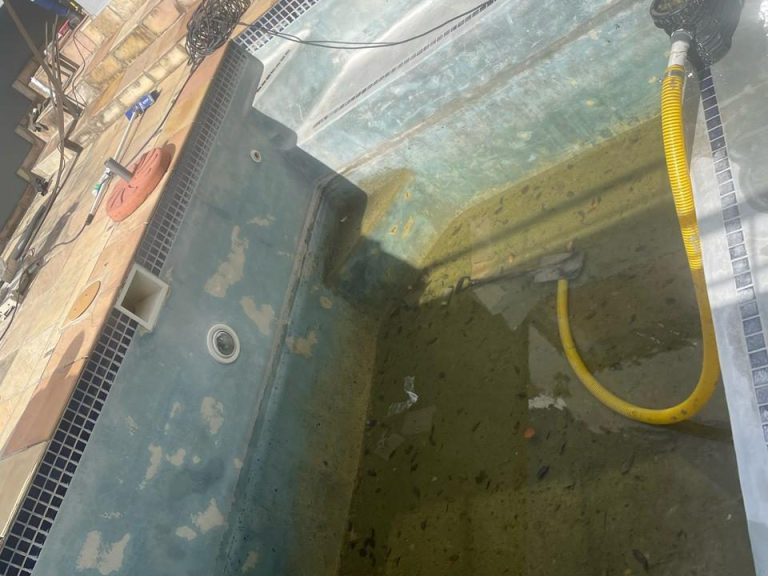
A fibreglass pool, whether it’s a one-piece shell or a concrete pool that was lined years ago, is finished with a gelcoat. That’s the smooth, coloured top layer you see and touch. Over 10 to 15 years the gelcoat wears in predictable ways:
- Fading and chalking. UV and chlorine break down the colour. Rub your hand on the wall and it comes away powdery.
- Roughness. The surface loses its gloss and starts holding dirt and algae.
- Staining. Metals in the water and leaves sitting on the floor leave marks that won’t brush off.
- Osmosis blisters. Small raised bubbles, often on the floor and steps, where water has got into the laminate.
- Cracks. Fine spider cracks at the steps and corners, or longer cracks where the shell has moved.
The first three are cosmetic. Paint fixes them. The last two are signs the laminate itself is breaking down, and paint can’t fix that.
Paint vs Relining: How They Compare
Painting puts a coloured coating on top of the old gelcoat. Relining sands the old surface back and builds a new layer of fibreglass matting and resin over it, then finishes it with a fresh topcoat. They look similar on the day. They’re very different jobs.
| Painting the fibreglass | Relining with new fibreglass | |
|---|---|---|
| What it fixes | Faded, chalky or stained surface | Blisters, cracks, leaks, rough or failing gelcoat |
| What goes on | Primer if the system needs it, then 2 to 3 coats of epoxy pool paint | Repairs, fibreglass matting and resin, then a gelcoat or topcoat |
| Typical lifespan | Around 4 to 7 years | Usually 15 years or more |
| Pool out of use | About 1 to 2 weeks with curing | About 2 to 3 weeks |
| Rough cost | From around R10,000 to R30,000 done professionally | From around R45,000 to R120,000+ |
| Best for | A sound shell that just looks tired | A shell with structural or leak problems |
Our full breakdown of pool relining cost explains why relining quotes vary so much between pools of the same size.
When It Makes Sense to Paint a Fibreglass Pool
Paint is the right call more often than people expect. If your pool holds water, the shell feels solid underfoot and the problem is mainly how it looks, a good paint job gives you a bright, smooth pool for a fraction of the price of a reline.
Paint is a good fit if
- The gelcoat is faded or chalky but intact
- There are no blisters, bulges or soft spots
- Any cracks are tiny surface crazing, not structural
- The water level stays steady
- You want a new colour on a budget
Reline instead if
- Blisters keep appearing on the floor or steps
- There are cracks you can catch a fingernail in
- The pool is losing water
- Old paint is already peeling in sheets
- The shell has bulged or moved
Choosing the right product matters. Fibreglass needs a paint made for it, which usually means a two-part epoxy system. Some systems need a fibreglass primer and some don’t, so follow the manufacturer’s instructions for the product you use. Our guide to epoxy pool paint compares epoxy, rubber and acrylic paints and where each one belongs.
How to Paint a Fibreglass Pool Properly
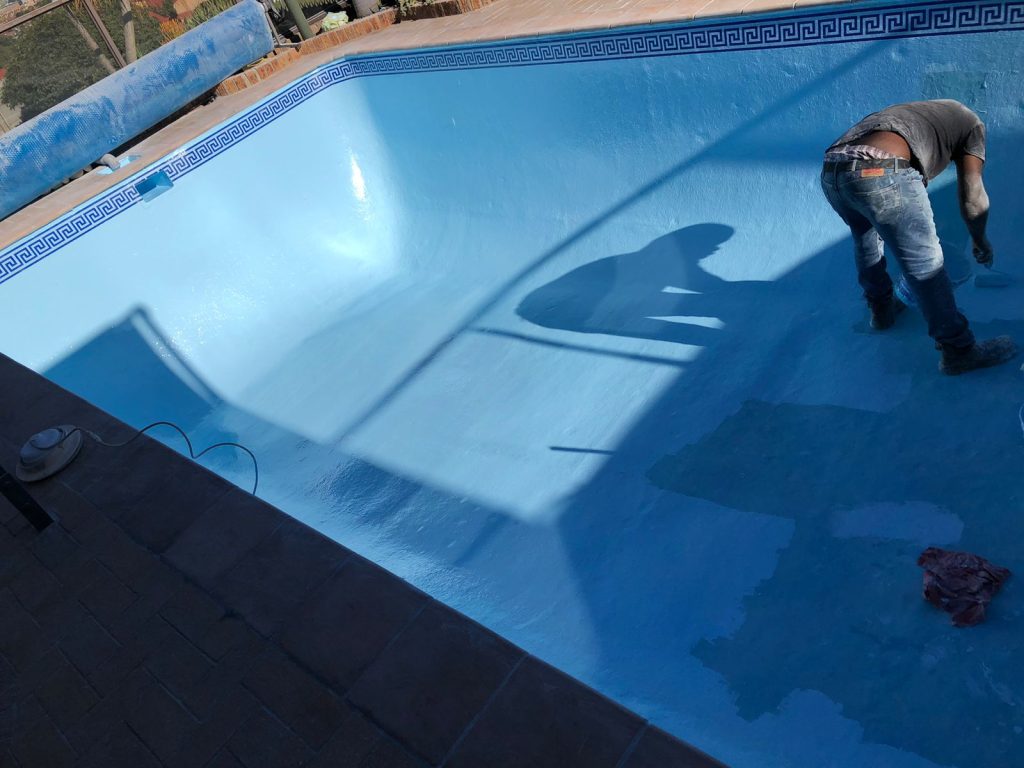
This is how our team approaches it. The painting is the quick part. The preparation is what decides whether the paint lasts five years or five months.
- Check the groundwater before draining. An empty fibreglass shell is light. After a wet Cape winter, water pressure in the ground can push it up and out of the hole. We check the water table and plan the drain around it.
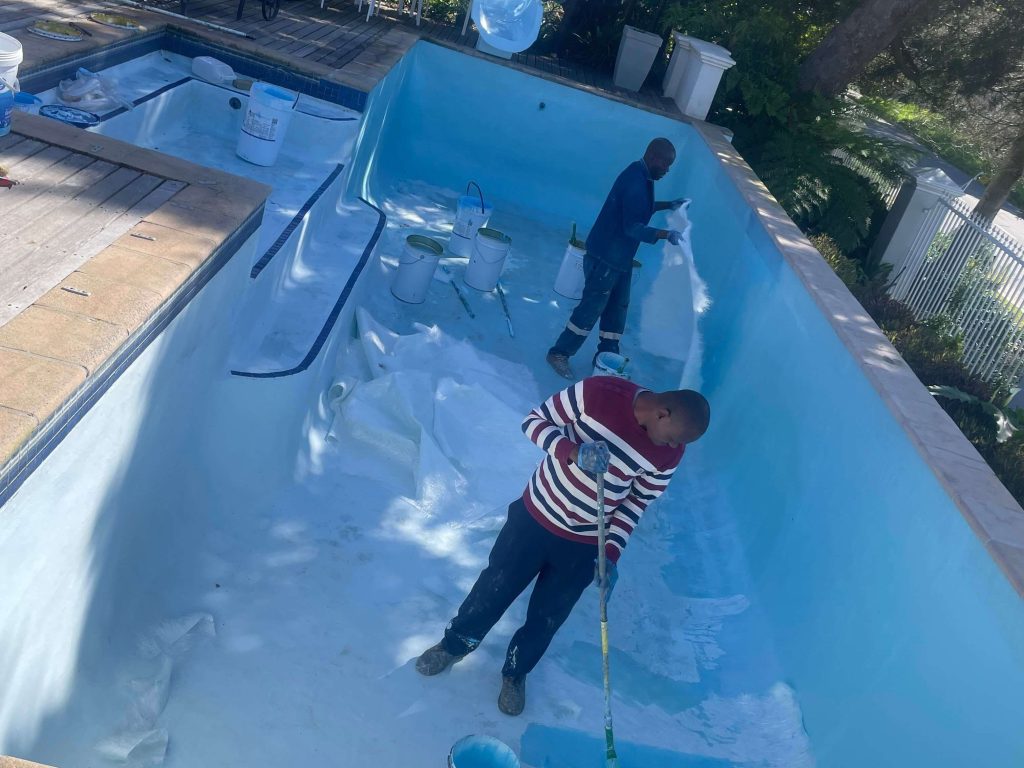
- Drain and clean. Pump out the water, scrub off algae, scale and body oils, and rinse well.
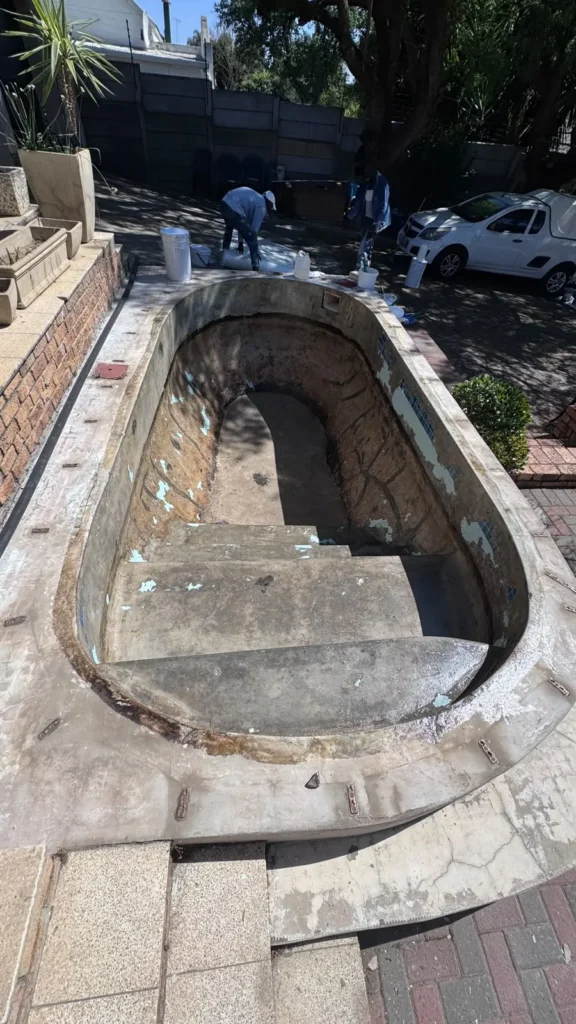
- Repair first. Grind out any small blisters or chips and fill them with a resin filler, then fair them smooth.
- Sand the whole surface. The old gelcoat is glossy, and paint needs a key. Every square metre gets sanded.
- Remove the dust. Vacuum, then wipe down with the solvent the paint system specifies.
- Prime if the system calls for it, then apply 2 to 3 coats of epoxy, keeping to the recoat times on the tin.
- Let it cure. Most epoxy systems need around 5 to 7 days before the pool is filled, longer in cold, damp weather.
Doing it yourself?
Epoxy paints give off strong fumes in a closed pool shell. Work with good airflow, wear the respirator, gloves and eye protection the label asks for, and never mix chemicals that aren’t part of the paint system.
If you’re not sure about the groundwater, don’t drain the pool. Ask us to look first. A lifted shell costs far more to fix than a paint job.
When Paint Won’t Work and Relining Is the Answer
Painting over a failing shell is the most common mistake we see. Blisters push the paint off from underneath, cracks reopen within a season, and water keeps escaping behind a fresh coat. You end up paying twice.
A reline deals with the cause. The old surface is ground back, cracks and blisters are repaired, and new fibreglass matting is laid in resin to form a fresh waterproof layer before the topcoat goes on. If water loss is part of the picture, we always find the leak first with pool leak detection so it isn’t simply sealed over.
If your shell has damage beyond the surface, such as a bulge or a long crack, our fibreglass pool repairs guide explains how a shell is reinforced before it’s relined. For the full service, see our page on pool relining.
What It Costs to Paint a Fibreglass Pool vs Relining It
At the time of writing, a 5 litre tin of epoxy pool paint sells from around R2,000 to R3,000 at South African pool suppliers, and a typical home pool needs 10 to 20 litres for proper coverage. Complete DIY paint kits for a mid-sized pool sell for around R10,000. Done professionally with full preparation, painting usually lands somewhere between R10,000 and R30,000, depending on size and repairs.
Relining is a bigger investment, from around R45,000 for a small, simple pool to R120,000 or more for a large or damaged one. Over 15 years, though, you might repaint two or three times. That narrows the gap more than the first quote suggests.
Western Cape Conditions That Affect the Choice
- Summer sun. Strong UV fades paint and gelcoat alike. Lighter colours hold their look longer than dark blues.
- Winter groundwater. High water tables after rain make draining risky. We plan painting and relining for drier months where we can.
- Coastal salt air and salt pools. Salt doesn’t damage a good epoxy, but poor water balance in a salt pool will chalk any finish faster.
- Hard water in parts of the Boland. Scale builds up on the surface and makes paint look dull. Balanced water protects whichever finish you choose.
Many pools sold as fibreglass are actually concrete pools that were lined years ago. If yours turns out to be a marbelite pool under an old coating, the options change, and we’ll talk you through them.
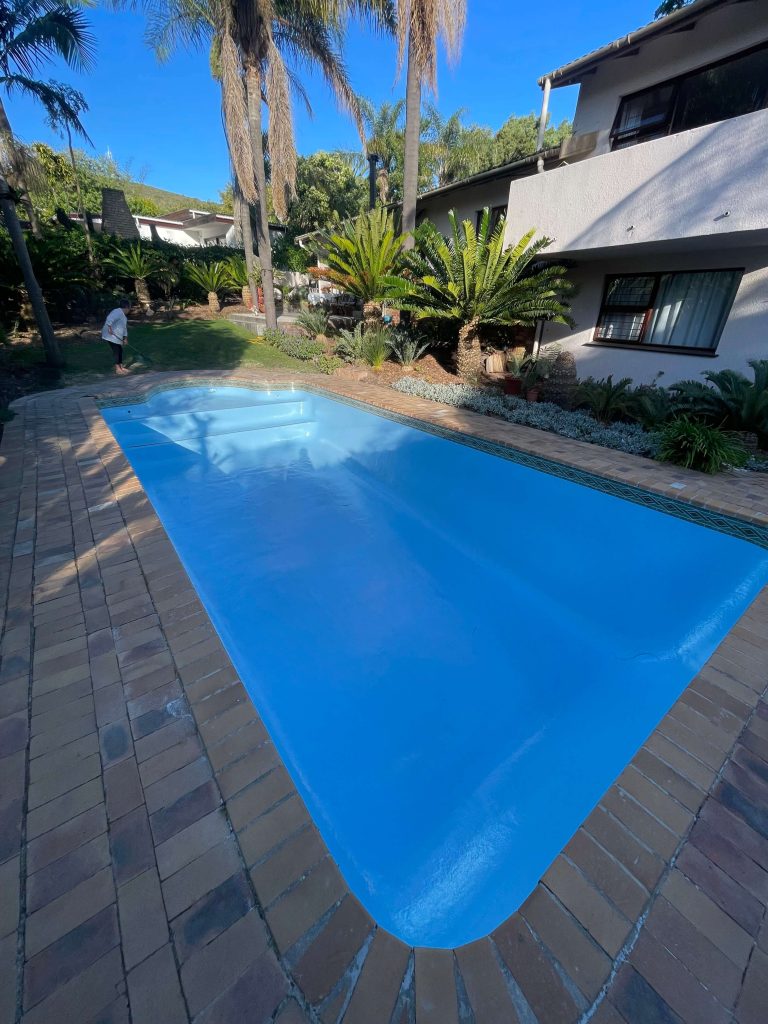
Choosing a colour? Our guide to pool paint colours shows how different shades look once the pool is full.
Not sure if your pool needs paint or a reline?
Our team will check the shell, look for blisters, cracks and water loss, and tell you honestly which option makes sense before giving you a written quote.
Call 074 378 6623, WhatsApp us, or email info@poolsreno.co.za. We also handle full pool renovation work if you’d like to update the coping and tiles at the same time.
Painting a Fibreglass Pool: Frequently Asked Questions
A two-part epoxy pool paint made for fibreglass is the usual choice. Some systems need a fibreglass primer first and others go straight onto the sanded gelcoat, so follow the instructions for the product you buy. Acrylic and rubber-based paints don’t bond as well to fibreglass.
A well-prepared epoxy finish usually lasts around 4 to 7 years. Strong sun, poorly balanced water and skipping the sanding step all shorten that. A full reline usually lasts 15 years or more.
No. The surface has to be dry, sanded and clean for paint to bond, so the pool has to be drained. With a fibreglass shell, check the groundwater level first, because an empty shell can lift when the ground is wet.
Painting is much cheaper up front, often a quarter or less of a reline. It doesn’t last as long and won’t fix blisters, cracks or leaks. If the shell is sound, paint is good value. If it’s failing, relining saves money over time.
Yes. Painting or relining both let you choose a new colour. Lighter blues and greys tend to fade less in strong sun than very dark finishes.