Pool paint is the quickest way to make a tired pool look new again. Pick the right paint for your surface, prepare it properly, and a painted pool can look good for years. Pick the wrong one, or paint over a surface that’s failing, and you’ll be watching it peel by next summer.
Here’s the short answer. Epoxy lasts longest and costs the most. Chlorinated rubber sits in the middle and is easy to recoat. Acrylic (water-based) is the cheapest and the shortest-lived. Which one you can use depends on what’s already on your pool, and whether your pool needs paint at all or something stronger.
| Paint type | Typical life with good water care | Good for | Watch out for |
|---|---|---|---|
| Epoxy (two-part) | Often 5 to 8 years | Bare or previously epoxied concrete and marbelite | Can’t go over rubber or acrylic paint; surface must be bone dry |
| Chlorinated rubber | Often 2 to 4 years | Previously rubber-painted pools, quick refreshes | Fades and chalks faster in strong sun |
| Acrylic (water-based) | Often 1 to 3 years | Short-term touch-ups, damp-prone surfaces | Shortest life; softens with poor water balance |
The Three Main Types of Pool Paint
Epoxy Pool Paint
Epoxy pool paint comes in two parts that you mix just before use. It cures into a hard, tile-like coat that stands up well to chlorine, brushing and pool cleaners. It’s the best choice for bare concrete or marbelite and for pools that were epoxy-painted before.
The catch is preparation. Epoxy needs a clean, etched and completely dry surface, and it won’t bond to rubber-based or water-based paint. If the pool already has one of those, the old paint has to come off first, which adds a lot of labour.
Chlorinated Rubber Paint
Swimming pool rubber paint is a single-pack, solvent-based paint. It’s forgiving to apply, dries fast and bonds well to old rubber paint, which makes recoating easy. Many older Cape Town pools have been painted with it for years.
It doesn’t last as long as epoxy, and dark colours in particular fade and go chalky in our summer sun. Expect to repaint more often.
Acrylic or Water-Based Paint
Acrylic paint is the easiest to apply and can even go onto a slightly damp surface, which helps on pools with a bit of groundwater pushing through. It’s the cheapest option, but also the shortest-lived. We see it as a short-term fix rather than a long-term finish.
Can you mix pool paint types?
- Rubber over old rubber paint: yes, once it’s cleaned and sound
- Acrylic over most sound, well-bonded paint: usually yes
- Epoxy over rubber or acrylic: no. The old paint must be stripped first
- Don’t know what’s on your pool? Our team tests a small patch before quoting
How Much Does Pool Paint Cost?
Pool paint price depends on the type, the size of the pool and how many coats it needs. A typical 8m x 4m family pool has roughly 65 to 75 square metres of surface once you add the walls to the floor. Two to three coats are normal.
| What you’re buying | Rough price at the time of writing |
|---|---|
| Chlorinated rubber pool paint, 5 litres | From around R2,000 to R3,000 |
| Epoxy pool paint, small pool package (about 15m²) | From around R2,200 |
| Epoxy pool paint, family pool package (about 50m²) | From around R6,500 |
| Epoxy DIY kit with prep products | From around R10,000 to R11,000 |
| Acrylic pool paint | Usually the cheapest per litre |
What a Professional Paint Job Costs
Paint is only part of the bill. A proper job includes draining, cleaning and acid washing, crack repairs, drying time, priming where needed, the coats themselves and refilling. With an epoxy system, a professionally painted family pool usually comes in from around R15,000 to R30,000, depending on size, the state of the surface and whether old paint has to be stripped.
A small splash pool costs far less, simply because there’s less surface to prepare and paint.
- Stripping old paint is the biggest variable. It can double the labour.
- Cracks and hollow spots must be repaired before painting, or they show through within months.
- Drying time matters. A surface that holds moisture needs more days empty before epoxy can go on.
- Water: refilling costs money, so many owners store the old water. We use pool water storage bladders where there’s space.
When Pool Paint Is Fine, and When It Isn’t
This is the part most paint guides skip. Pool paint is a coating, not a waterproofing system. It colours and protects a sound surface. It won’t fix a surface that’s coming apart, and it won’t stop a leak.
Paint is a good choice if
- The surface is sound, smooth and well bonded
- The pool was painted before and it’s just faded or chalky
- There are no leaks and no cracks that move
- You want a fresh look at a lower cost for now
- The pool is small and the budget is tight
Relining or resurfacing is the better job if
- Old paint peels every season or blisters in patches
- Marbelite sounds hollow when tapped or is lifting
- The surface is rough enough to scratch feet
- Cracks keep coming back or the pool is losing water
- There are already four or more layers of old paint
On a pool in that second list, paint is money spent twice. You pay to paint it, then pay again when the surface fails underneath. That’s when pool relining with fibreglass, or fresh swimming pool marbelite, is the better spend. A fibreglass lining forms a new waterproof skin over the old shell, and it doesn’t need repainting every few years.
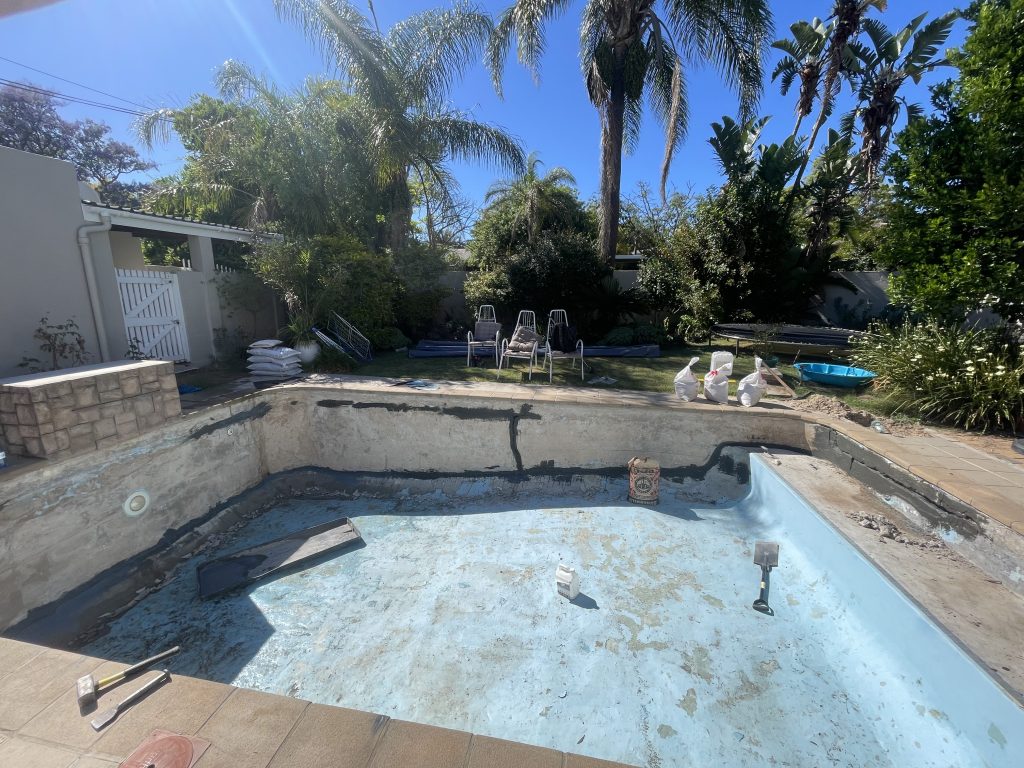
If your pool is losing water, find the leak before you choose a finish. Our pool leak detection uses pressure testing, dye testing and electronic listening to pin it down. And if the cracks are structural, read how to fix a pool crack properly before any coating goes on.
How the costs compare
Painting is the cheapest way to refresh a pool. Relining costs more up front but lasts much longer and adds waterproofing that paint can’t. See our guide to pool relining cost for current figures.
The honest test: if you’d be repainting within two or three years anyway, relining often works out cheaper over ten years.
How We Prepare a Pool for Painting
Most pool paint failures we see come down to preparation. This is the order our team works in:
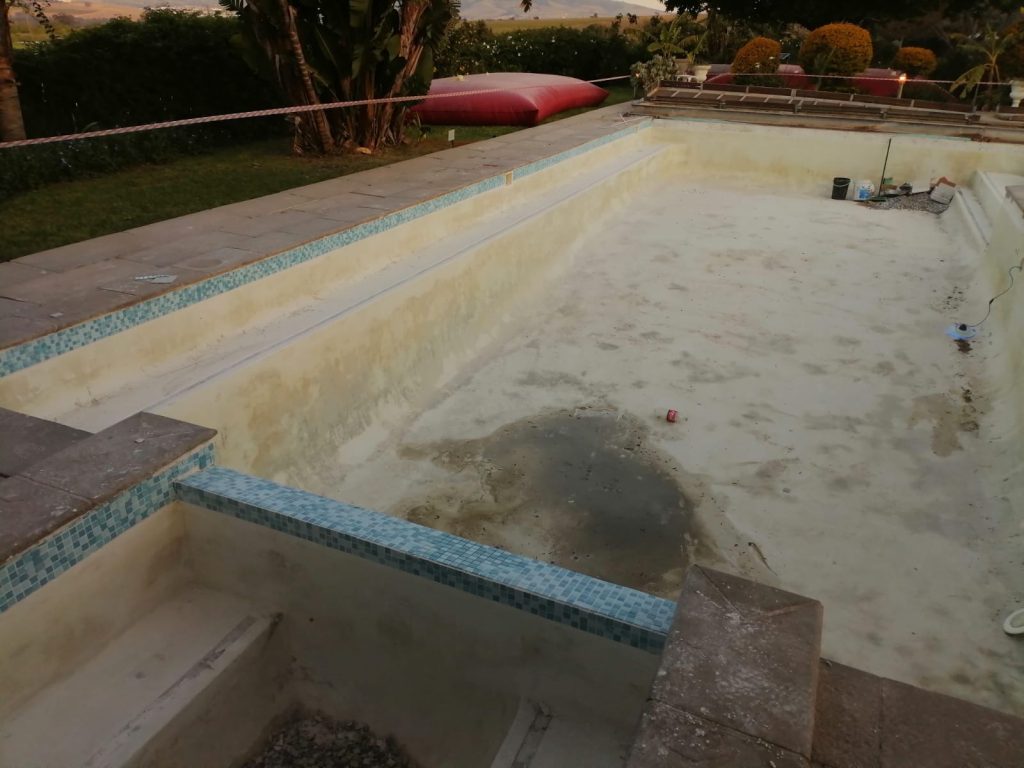
- Drain the pool and check the shell for hollow spots, cracks and damp patches.
- Clean off algae, scale and loose paint. Acid washing etches bare marbelite or concrete so paint can grip. This is done by our team with the right protective gear.
- Repair cracks and patch damaged areas, then let the repairs cure.
- Let the surface dry completely. In good weather that’s a few days; after rain it’s longer.
- Prime where the paint system calls for it, then apply two or three coats, following the label on coverage and drying times.
- Leave the paint to cure before refilling. Epoxy usually needs about a week.
- Refill, then balance the water before anyone swims.
Painting in Western Cape Weather
- Paint between spring and early autumn. Winter rain keeps surfaces damp, and damp is the enemy of epoxy.
- Avoid midday heat. Painting in direct summer sun makes paint skin over too fast and blister.
- Watch the groundwater. Pools in low-lying areas can have damp pushing through the walls. That blisters paint from behind.
- Coastal sun and wind. UV and sand chalk the surface faster near the sea. Lighter colours hide it better than dark blue.
Choosing a Pool Paint Colour
Light blue and white are still the most popular. They show the water as bright and clear and hide chalking well. Dark blue and charcoal look striking and warm the water a little, but they fade faster and show scale marks from hard water. Whatever you choose, use one system throughout so the colour matches.
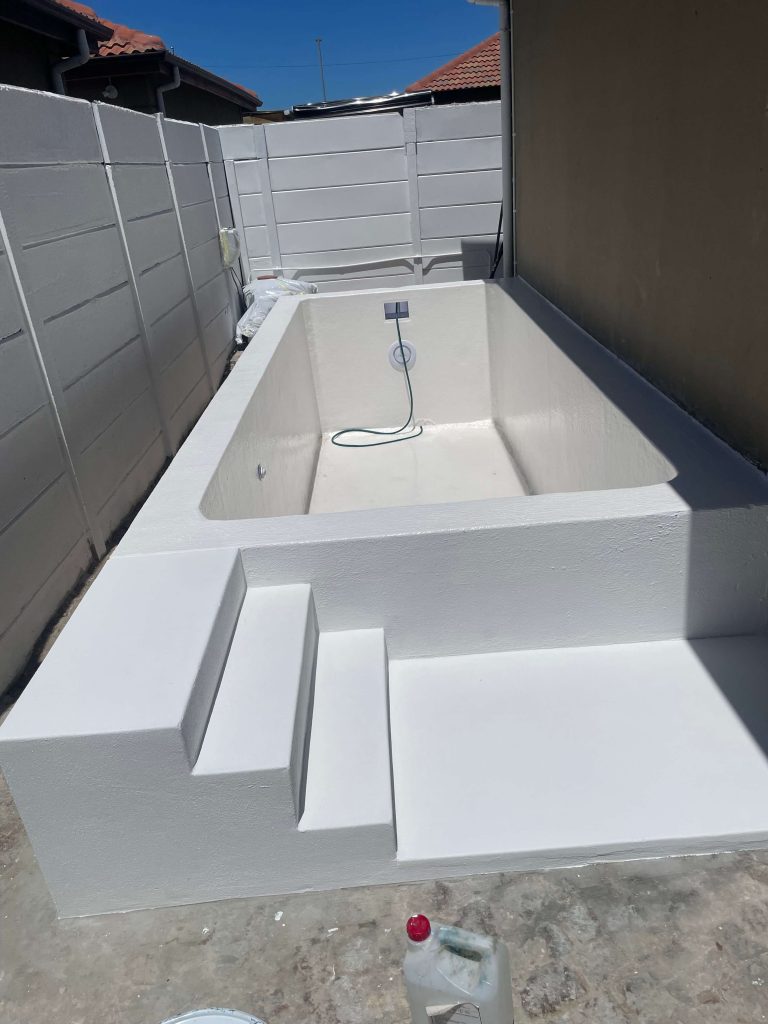
Want to see what a painted finish looks like as part of a bigger job? Our pool renovation work covers painting, relining and pool resurfacing. We’ve also written about epoxy coating on a marbelite pool with non-slip steps.
Painting a fibreglass pool follows different rules from concrete or marbelite. If yours is fibreglass, ask us before buying paint.
Not sure if your pool needs paint or relining?
Our team will look at the surface, test what’s on it and tell you honestly whether paint will do the job or whether relining or resurfacing is the better spend, with a quote before any work starts.
Call 074 378 6623, WhatsApp us, or email info@poolsreno.co.za.
Pool Paint Questions Answered
For bare or previously epoxied concrete and marbelite, epoxy lasts the longest. If your pool already has rubber paint, chlorinated rubber is the practical choice because epoxy can’t go over it without stripping. Acrylic is a short-term option.
At the time of writing, a professional epoxy paint job on a family pool usually costs from around R15,000 to R30,000, including preparation. Stripping old paint or repairing cracks adds to that. Ask our team for a current quote for your pool.
Epoxy often lasts 5 to 8 years, chlorinated rubber about 2 to 4 years and acrylic about 1 to 3 years. Poor preparation, strong sun and badly balanced water all shorten that.
Sometimes. Rubber can go over sound rubber paint, and acrylic can go over most well-bonded paint. Epoxy can’t go over rubber or acrylic, so that paint has to be stripped first.
Yes, up front. But paint is a coating, not waterproofing. On a pool that leaks, peels every year or has hollow marbelite, relining usually costs less over time because it lasts far longer.
It depends on the paint and the weather. Epoxy usually needs about a week to cure before refilling, and rubber paint a few days. Always follow the drying times on the product label.