The best pool paving ideas start with two tests most brochures skip: can you walk on it barefoot at two in the afternoon in January, and can a child run across it wet without slipping? A surround that fails either one ends up covered in towels and mats, however good it looked in the showroom.
In short, light-coloured, textured surfaces win. Here’s what to choose, what to avoid and how to lay it so it lasts.
Quick picks for a cool, non-slip pool surround
- Light sand, cream or pale grey pavers stay far cooler than charcoal, black or dark slate.
- Textured finishes such as riven, tumbled, brushed or exposed aggregate grip when wet. Polished and glazed surfaces don’t.
- Check the slip rating. For tiles and porcelain, look for R11 or higher on the spec sheet. Many installers prefer R12 at the water’s edge.
- Match the coping. A bullnose coping in the same tone ties it together and is kinder to wet hands and feet.
- Get the base right. A good surface on a poor base will sink, rock and trap water.
If you’d like our team to plan and lay it for you, see our pool paving and decking service.

Pool Paving Ideas Start With Grip and Heat
Before you look at colours and patterns, three things decide how a surround feels to use:
- Texture. Grip comes from a surface with fine ridges or grit that water can drain through. A smooth face, however matt it looks dry, can turn slick with a film of water and sunscreen on it.
- Colour. Dark surfaces absorb far more sun. On a still summer day, black or charcoal paving can get hot enough to make people hop, while sand-coloured paving next to it is fine to stand on.
- Material density. Dense stone and thick concrete hold heat for longer into the evening. More porous materials like sandstone and travertine shed heat faster but need sealing.
Slip ratings help. Tiles and porcelain are usually tested on a ramp and given an R rating. R11 and up suits wet outdoor areas, and R12 is a safe choice right next to the water. Some products also carry a barefoot rating, shown as class A, B or C. For a pool edge, B or C is what you want. If a supplier can’t tell you the rating, wet a sample and stand on it.
Comparing Pool Paving Materials
| Material | Grip when wet | Heat underfoot | Watch out for |
|---|---|---|---|
| Concrete pavers (textured, light colour) | Good | Cool to warm | Smooth-faced and dark versions get slippery and hot |
| Clay brick pavers | Good | Warm, hot in dark red or brown | Algae on shady sides in winter |
| Sandstone | Very good | Cool | Soft and porous, needs sealing, can weather near salt water |
| Travertine (tumbled or unfilled) | Good | Cool | Needs sealing, avoid polished finishes |
| Textured outdoor porcelain | Good if R11 or higher | Cool in light colours | Glazed or polished porcelain is far too slippery |
| Dark slate | Fair to good | Hot | Can flake, and gets very hot in full sun |
Prefer something softer than stone? Timber and composite decking stay cooler than dark paving and can be built over uneven ground. Our guide to wood decking for swimming pools compares the options.
7 Pool Paving Ideas for Western Cape Gardens
1. Light, textured pavers in sand or pale grey
The simplest idea is also the most comfortable. Concrete pavers in a sand, cream or light grey colour with a brushed or exposed aggregate finish stay pleasant underfoot and hide dust and leaves better than pure white.
2. A matching bullnose coping
The coping is the strip you sit on and grab when you climb out. A rounded bullnose edge in the same tone as the paving looks neat and is gentle on elbows and feet. If your existing pool coping is cracked or loose, replace it at the same time as the paving.

3. Natural stone with a riven or tumbled face
Sandstone and tumbled travertine give that soft, resort look and stay cool. Choose a riven, sawn-and-textured or tumbled finish, never honed or polished, and seal it so it doesn’t drink up pool water, sunscreen and leaf stains.
4. Clay brick for a classic look
Brick paving suits older Cape homes and pairs well with brick coping. Lighter, sandy bricks are kinder to bare feet than deep red. Lay them with tight joints so they don’t trap grit.
5. Wide on the sunny side, narrow on the shady side
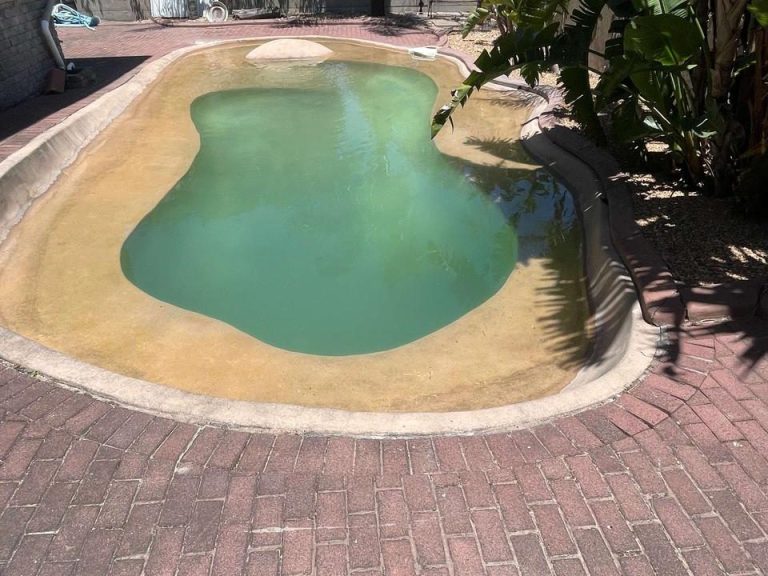
You don’t need the same width all the way round. Put the wide, flat area where the afternoon sun falls, for loungers, and keep a narrower walkway on the shady side. A metre is a good minimum for any walkway around the pool.
6. Break up the paving with planting and shade
Large unbroken areas of paving bake in summer and bounce heat back at you. Planting strips, a shade tree set well back from the water, or a section of decking all help. For more poolside ideas, see our garden design guide. Keep messy trees away from the edge or you’ll be scooping leaves forever.
7. Steps and paths that match
Carry the same non-slip finish onto the entry steps and the path back to the house. A clean, paved path means less grass and sand walked into the water. Our post on non-slip pool steps covers the inside of the pool too.
Pool Paving Ideas for Small Gardens and Splash Pools
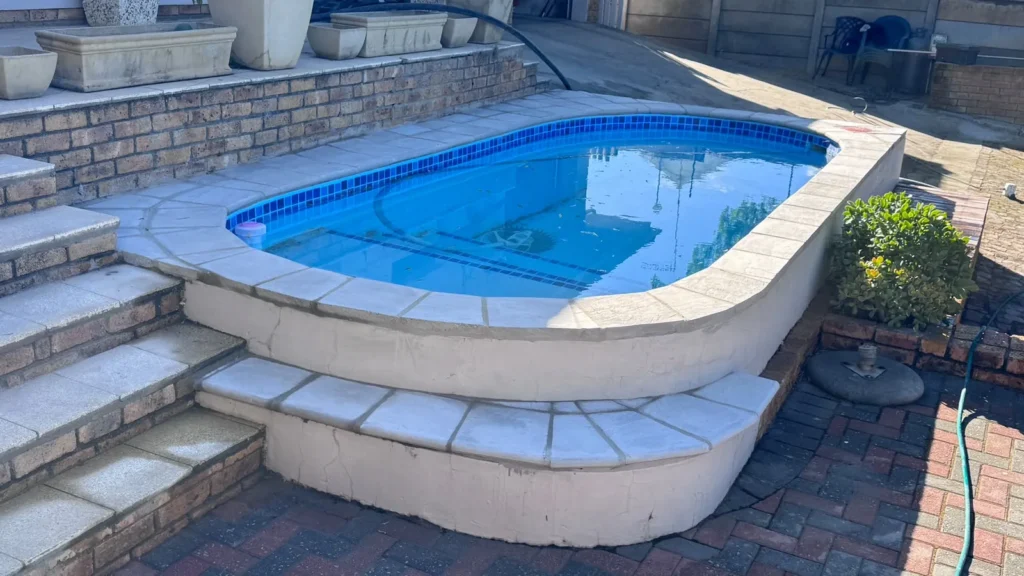
In a small garden, one material laid in large format looks bigger and calmer than several patterns. Even around a compact splash pool, leave enough paved space to get in and out safely and to service the equipment.
The Base Work That Makes Pool Paving Last
Most paving problems we’re called out to have nothing to do with the pavers. They come from what’s underneath.
- A gentle fall away from the pool. Rain and hose water must run away from the water, not into it. In a Cape winter, paving that drains towards the pool washes soil, fertiliser and leaves straight in, and green water follows.
- A compacted sub-base. Pavers laid on loose fill sink and rock within a season, leaving trip edges and puddles.
- A movement joint at the coping. The pool shell and the paving move differently. A flexible joint between them stops cracks.
- Somewhere for the water to go. On clay soils or slopes, plan a drain or soakaway so runoff doesn’t pool against the house or the pool wall.
- Tree roots kept out. Roots lift paving and can damage plumbing, so allow root barriers near big trees.

Keeping Pool Paving Safe and Good Looking
- Winter algae. Shady paving grows a green film in wet months, and that’s when it gets slippery. Brush it off before summer.
- Cleaning products. Use a cleaner made for outdoor paving, follow the label, and keep the runoff out of the pool.
- Sealing. Natural stone near the water needs resealing every few years, especially around salt pools and near the coast.
- Pressure washing. Use a fan nozzle and keep it moving. A narrow jet can etch soft stone and blow out joint sand.
If the pool itself is due for a pool renovation, plan it together with the new paving. Doing the coping, waterline tiles and surround in the right order saves cutting and patching later.
Planning a new pool surround?
Our team will look at your sun, drainage and how you use the space, show you samples to test wet and barefoot, and give you a written quote for paving, coping or decking.
Call 074 378 6623, WhatsApp us, or email info@poolsreno.co.za.
Pool Paving Ideas: Frequently Asked Questions
Light-coloured, textured materials work best: brushed or exposed aggregate concrete pavers, riven sandstone, tumbled travertine or textured outdoor porcelain rated R11 or higher. They grip when wet and stay comfortable in the sun. Avoid polished, glazed or very dark surfaces.
Pale colours stay coolest. Sandstone, travertine and light concrete pavers are comfortable on most summer days, while charcoal pavers and dark slate can get too hot to stand on in full sun. Shade and planting nearby also help.
Smooth-faced, polished or glazed pavers can be slippery when wet. Textured pavers and tiles with a slip rating of R11 or higher are much safer. Algae on shady paving in winter is a common cause of slips, so keep it brushed.
Yes. Paving should have a gentle fall away from the pool so rain and dirt run off into the garden or a drain, not into the water. Paving that drains towards the pool is a common cause of green water after winter rain.
Aim for at least a metre on walkways so people can pass safely, and more where loungers or a table will go. Many pools look and work best with a wider area on the sunny side and a narrower path on the shady side.