Pool coping is the strip of stone, brick or concrete that caps the top of the pool wall. It’s where you sit with your feet in the water, where kids grab the edge, and the first thing your eye follows around the pool. There are three main styles: bullnose, with a rounded front edge, square edge, with a crisp flat profile, and natural stone, which can be cut either way.
Bullnose pool coping is still the most common choice on South African family pools because it’s comfortable and forgiving. Square edge suits modern, rectangular pools. Natural stone gives the softest, most expensive look and needs a bit more care. Here’s how they compare and how our team helps people choose.
Choosing pool coping in 30 seconds
- Kids, older swimmers or lots of sitting on the edge? Go bullnose. It’s kinder to legs, elbows and wet hands.
- Rectangular pool, clean modern house? Square edge coping looks sharp and lines up with large-format paving.
- Freeform or round pool? Bullnose and brick follow curves easily. Square edge stone needs a lot of cutting.
- Near the sea or in full afternoon sun? Pick a light, dense, sealed material and avoid very dark stone.
- Match the surround. Coping and paving in the same tone always looks calmer than two competing colours.
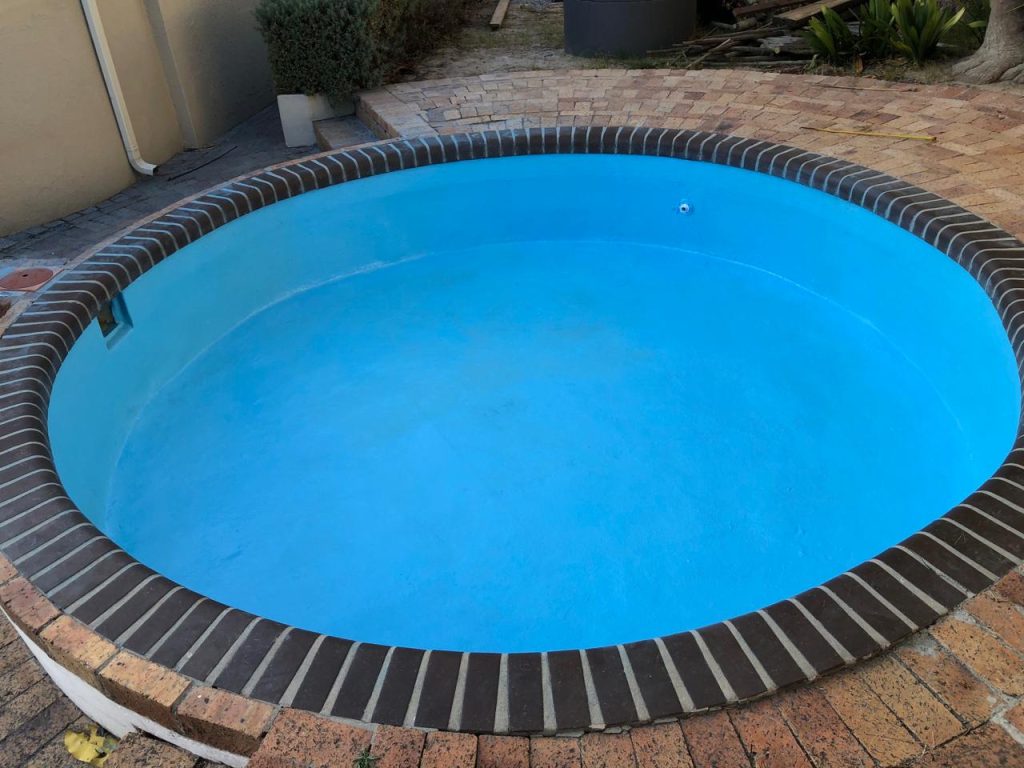
Pool Coping Styles Compared
Most coping in the Western Cape is precast concrete, clay brick, porcelain coping tiles or natural stone. Each of those materials can come in more than one edge profile, so think of style and material as two separate choices.
| Style | What the edge looks like | Suits | Feel underfoot | Watch out for |
|---|---|---|---|---|
| Full bullnose | Rounded top and front edge | Family pools, freeform and round pools | Soft and comfortable to sit on | Can look dated next to very modern houses |
| Half bullnose | Rounded front, flat top | Most pool shapes | Comfortable, sits flatter than full bullnose | Needs neat joints on curves |
| Square edge | Flat top, sharp 90 degree front | Rectangular and modern pools | Fine to walk on, harder on bare legs | Corners chip if knocked, hard to fit to curves |
| Natural stone | Bullnosed, square or rock-faced | Resort-style and older Cape homes | Cool and textured in light stone | Needs sealing, softer stones weather near salt air |
| Brick coping | Rounded bullnose bricks or bricks laid flat | Older homes with brick paving | Warm in dark reds and browns | Joints need regular checks |
Bullnose Pool Coping: The Classic Rounded Edge
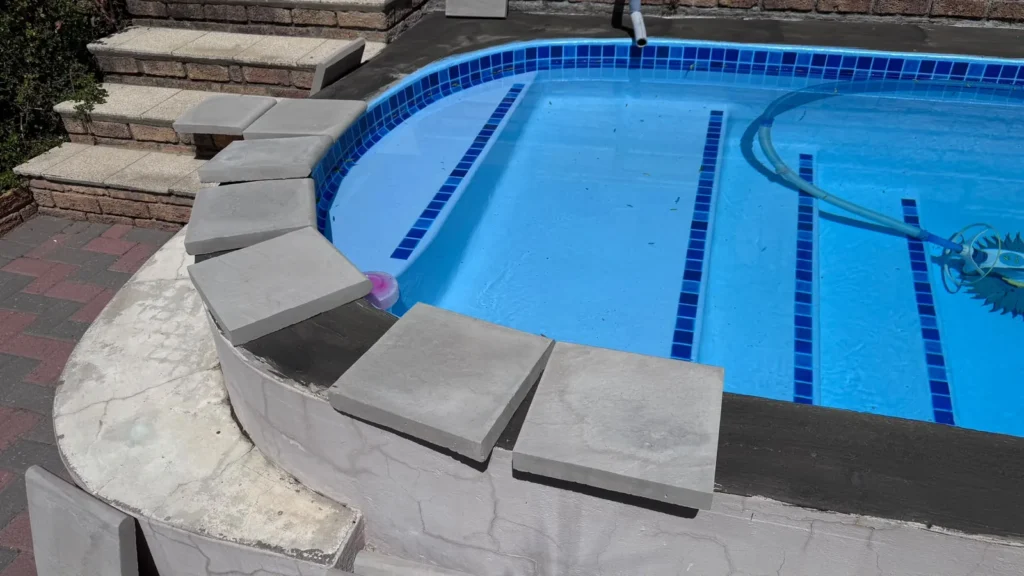
Swimming pool bullnose coping has a rounded front edge that curls down towards the water. It’s been the standard on South African pools for decades, and for good reason. When you sit on the edge, nothing digs into the back of your legs. When you climb out, there’s a smooth lip to grip. A child who slips against it gets a bump, not a cut.
You’ll usually see two profiles:
- Full bullnose. Rounded over the top and down the front. It reads as soft and traditional.
- Half bullnose. Flat on top with only the front edge rounded. It looks a little more modern and gives a flatter surface to put a drink down on.
Precast concrete bullnose coping is the most common version, often in grey, sand or a sandstone-look finish. Bullnose bricks give the same rounded edge in clay, which suits older homes with brick paving. Curved pools are easy with bullnose because the pieces come in radius shapes or can be cut into short segments without the joints standing out.
Why people choose bullnose
- Comfortable to sit on and grip
- Safer for children and older swimmers
- Follows curves and round pools neatly
- Hides small level differences along the edge
- Widely available, so matching pieces later is easy
What to keep in mind
- Can look traditional next to a very modern house
- Cheaper precast pieces vary in colour from batch to batch
- Dark finishes still get hot in summer sun
- Rounded edges show chips and stains less but still need sealing
- Choose a lightly textured finish so wet feet don’t slip
Square Edge Pool Coping for a Modern Look
Square edge coping has a flat top and a straight, sharp front. On a rectangular pool with large-format paving or decking it gives that clean, architectural line you see on newer homes. Some designs use a thicker front face, sometimes called a drop face, so the coping looks like a solid slab floating over the water.
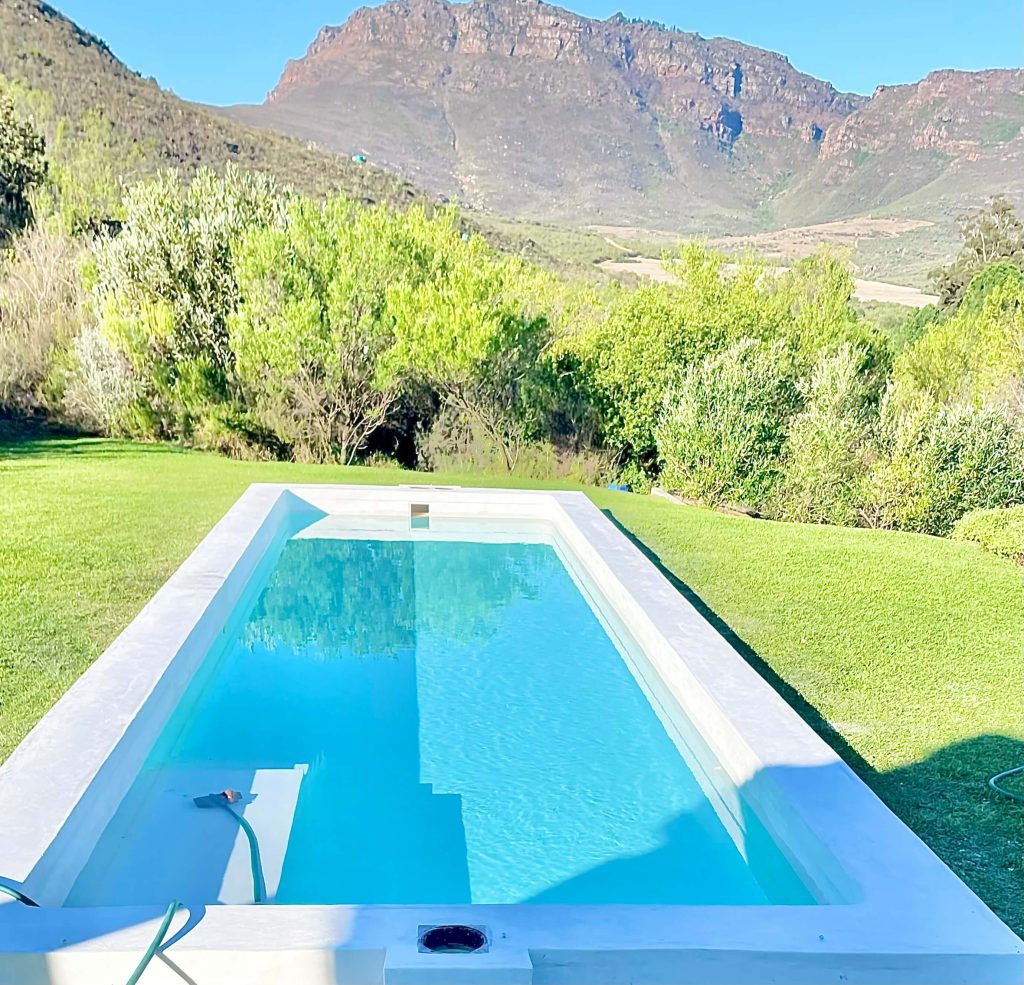
It does ask more of the installer. Square edges show every uneven joint and every millimetre that’s out of level, so the pool wall underneath has to be straight. On freeform pools, square stone needs a lot of angled cuts and there’s more waste. And a sharp corner is less forgiving if someone slips against it, so we’d think twice about it on a pool used mainly by young kids.
A good middle ground is a square edge with a slightly eased or arrised front, where the very sharp corner is ground off. It keeps the modern look and is far kinder to shins.
Natural Stone Pool Coping
Natural stone gives the most expensive look of any pool coping, and each piece is slightly different. It can be cut with a bullnose, a square edge or a rough rock face. These are the stones we’re asked about most:
- Sandstone. Warm, cool underfoot and naturally grippy. It’s soft and porous, so it needs sealing, and close to the sea it can weather and flake over time. Pool coping sandstone in pale tones stays very comfortable in summer.
- Travertine. Creamy and resort-style. Choose a tumbled or textured face, never polished, and seal it.
- Granite. Very hard and dense, so it handles salt air and pool chemicals well. A flamed or textured finish is needed for grip, and dark granite gets hot.
- Slate. Looks striking but can flake, and dark slate gets very hot in full sun.
Colour matters as much as the stone. Dark charcoal coping looks smart against a blue pool, but in a Cape summer it can be too hot to sit on in the middle of the day. Light stone stays far cooler. Our guide to pool coping and paving shows how we match the edge to the surround.
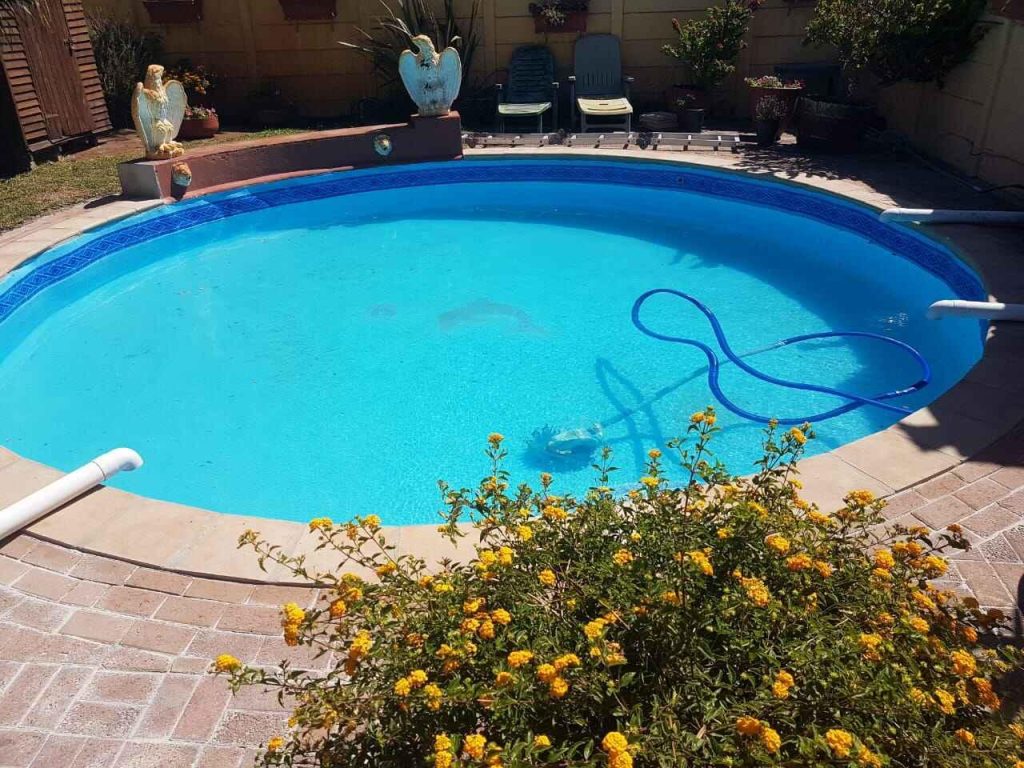
Other Options: Pool Coping Tiles, Brick and Decking
- Pool coping tiles. Porcelain coping tiles come with a matching bullnose or square edge piece, so the edge and the paving can be the same tile. They’re dense and easy to clean. Ask for a textured, outdoor slip-rated tile at the water’s edge. Our page on swimming pool coping and tile upgrades shows how the waterline tiles tie in.
- Brick coping. Clay bricks laid flat or bullnose bricks on edge suit older Cape homes and brick paving.
- Decking to the edge. Timber or composite decking can run right up to the water as the coping. See our guide to decking for swimming pool surrounds.
Matching Pool Coping to Your Pool Shape
The shape of the pool often makes the decision for you.
| Pool shape | Styles that work best | Why |
|---|---|---|
| Rectangular | Square edge, half bullnose, coping tiles | Straight runs show off a crisp edge and line up with paving |
| Freeform or kidney | Full or half bullnose, brick, cut natural stone | Rounded pieces follow curves without big wedge-shaped joints |
| Round | Bullnose radius pieces or brick | Short pieces keep the curve smooth |
| Beach entry | Bullnose on the deep sides, paving into the shallow end | There’s no wall to cap where the beach slopes in |
| Small plunge or splash pool | Any, kept wide enough to sit on | In a small pool the edge becomes seating, so comfort counts |
When to Replace Pool Coping, and When a Repair Will Do
You don’t have to wait for a renovation to change your coping, but it’s often the best time. Most of the coping we replace has one of these problems:
- Loose or rocking pieces that move when you step on them
- Cracks running through several pieces, or a gap opening between the coping and the pool wall
- Missing pieces, so water and soil get in behind the waterline tiles
- Worn, stained or flaking stone that no longer cleans up
- A style you simply don’t like, on a pool you’re already renovating
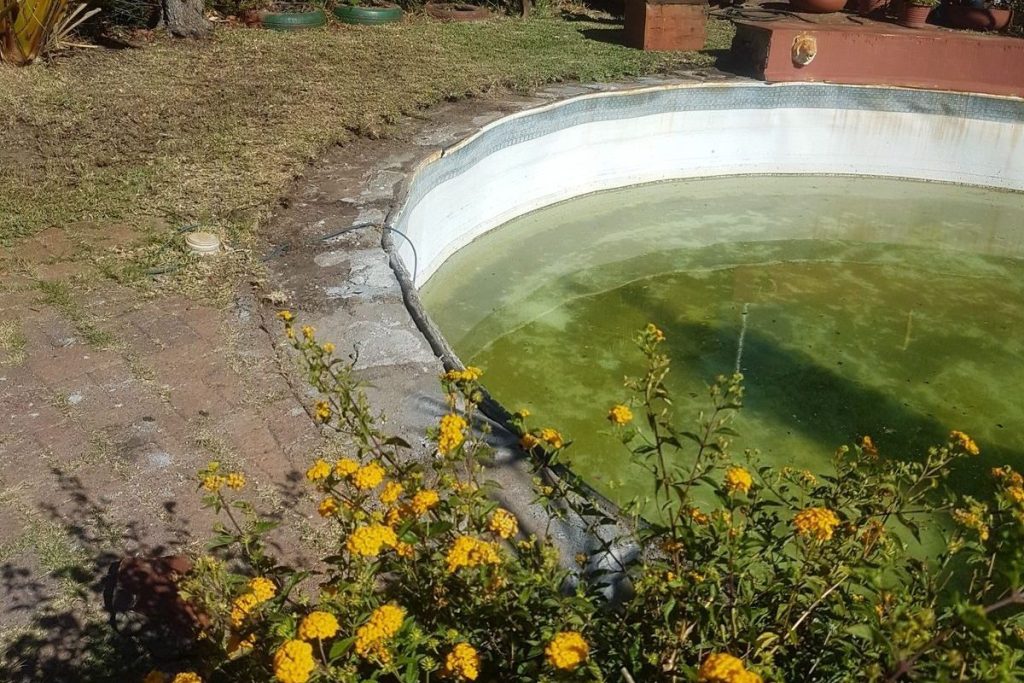
One or two loose pieces can usually be lifted and rebedded. Our article on swimming pool coping repair covers that side, and our coping cost guide lists typical prices for cement pool coping, brick and natural stone.
If you’re planning a pool renovation or pool relining, do the coping in the same job. The coping and waterline tiles go on before the new surface, so you aren’t cutting into a brand new finish later.
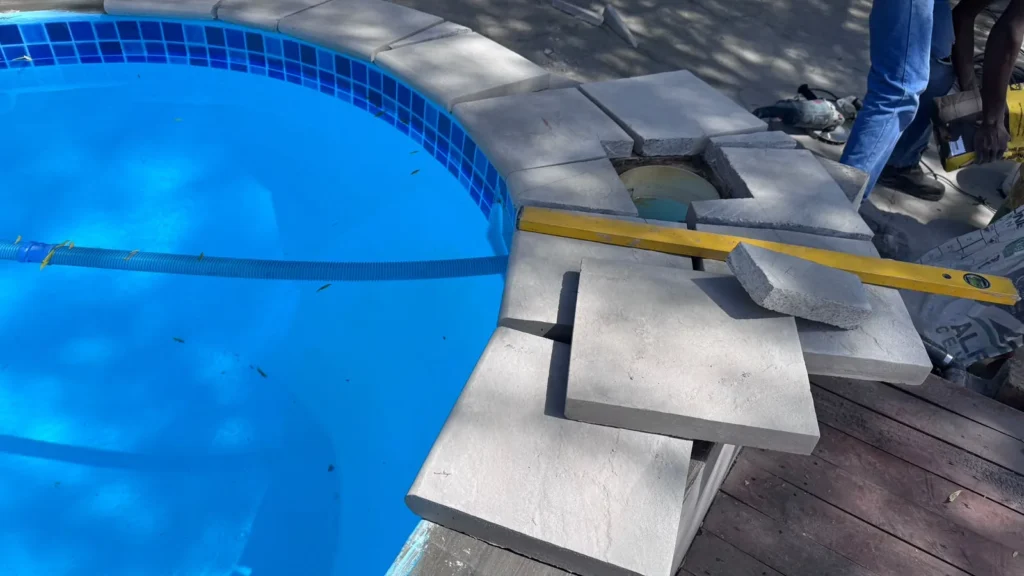
How Our Team Lays New Pool Coping
- Lift the old coping and check the bond beam, the concrete top of the pool wall, for cracks and loose sections.
- Set out the pieces dry first so joints are even and cut pieces land in the least visible spots.
- Bed each piece in mortar with a slight fall away from the water, so rain and splash run into the garden, not the pool.
- Leave a flexible movement joint between the coping and the paving behind it. The two move differently and a rigid joint cracks.
- Seal natural stone and grout once cured, and protect the coping whenever the pool is acid washed.
Western Cape conditions to plan for
- Coastal salt air weathers soft sandstone and rusts cheap fixings. Dense stone, good sealing and a rinse after big storms help.
- Winter rain runs off the garden. A coping that falls towards the pool washes soil and leaves straight in.
- Summer sun makes dark coping too hot to sit on. Lighter tones are far more comfortable.
- Hard water in parts of the Boland leaves white scale along the waterline, which shows more on dark coping.
Thinking about the pool interior too? Our post on marbelite pool colours helps you pick a finish that sits well with the coping, and our guide to non-slip pool steps covers the entry.
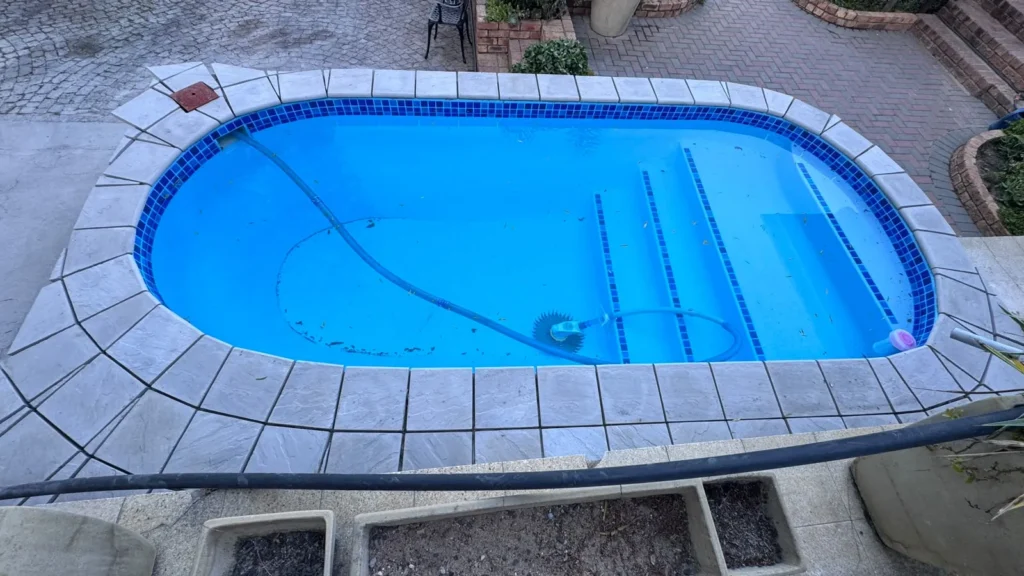
Choosing new pool coping?
Our team will look at your pool shape, the paving and how you use the edge, bring samples you can sit on and wet, and give you a written quote to lift the old coping and lay the new.
Call 074 378 6623, WhatsApp us, or email info@poolsreno.co.za.
Pool Coping Styles: Frequently Asked Questions
Bullnose coping has a rounded front edge that curves down towards the water. Full bullnose is rounded over the top as well, while half bullnose has a flat top with only the front rounded. It’s the most common style on family pools because it’s comfortable to sit on and grip.
Neither is better in every case. Bullnose is more comfortable, safer for children and easier to fit to curved pools. Square edge looks cleaner and more modern on rectangular pools, but it needs a very straight pool wall and its corners can chip.
Dense, lightly textured materials work best: good precast concrete, granite, outdoor porcelain coping tiles or well-sealed sandstone. Near the sea, avoid soft stone that isn’t sealed. Whatever you choose, a light colour stays cooler in summer.
It doesn’t have to be the same material, but it should be the same or a similar tone. Coping and paving that match make the area look bigger and calmer, while two strong colours side by side tend to look busy.
Often yes, if the waterline tiles and the top of the wall are sound, the water is lowered just below the work area instead. If the bond beam or waterline tiles need repairs, or the pool is being resurfaced, the coping is done while the pool is empty.