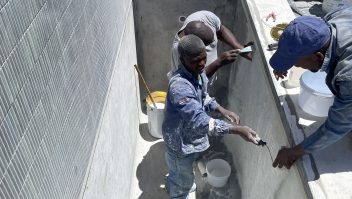
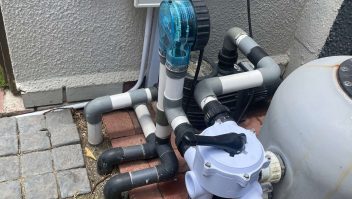
An old pool makeover rarely needs a new pool. In most gardens we work in, five upgrades do nearly all the work: a new surface and colour, fresh coping and waterline tiles, a better surround, LED lighting, and steps or a water feature that make people want to sit by the water. Done together and in the right order, they change how the whole garden looks and feels.
This is our overview of those five, with links to the detailed guides on each one. Start here, decide what your pool needs, then go deeper on the parts that matter to you.
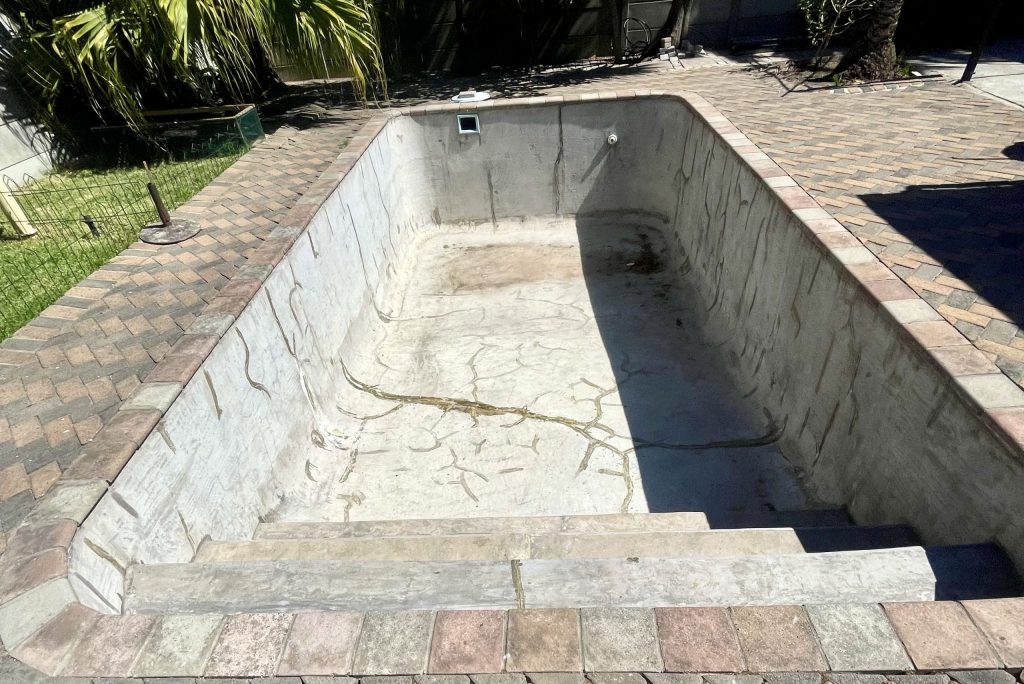
A pool like this one, drained, cracked and stained, is a typical starting point. The shell is sound. Everything else is what a makeover fixes.
| Upgrade | What it changes | Worth it when |
|---|---|---|
| 1. Surface and colour | The whole look of the water | The surface is rough, stained, cracked or faded |
| 2. Coping and waterline tiles | The edge, which frames the pool | Coping is loose, cracked or dated, tiles are missing |
| 3. Paving or decking | How the pool sits in the garden | The surround is hot, slippery, cracked or uneven |
| 4. LED lighting | The pool at night | The light is dead, dim or old halogen |
| 5. Steps, benches and features | How people use the pool | Getting in is awkward, or there’s nowhere to sit |
Five Upgrades for an Old Pool Makeover
1. A New Surface and Colour
Nothing changes an old pool more than its interior. A rough, blotchy grey surface makes clean water look dirty, and a fresh finish makes the same water look bright. The choice is between new marbelite, fibreglass relining and paint, depending on the state of the shell.
- Not sure the surface is finished? Our guide to the signs of pool resurfacing being due will tell you.
- Deciding between finishes? We compare fibreglass vs marbelite pools side by side.
- Choosing a colour? See how pool paint colours look under water before you choose.
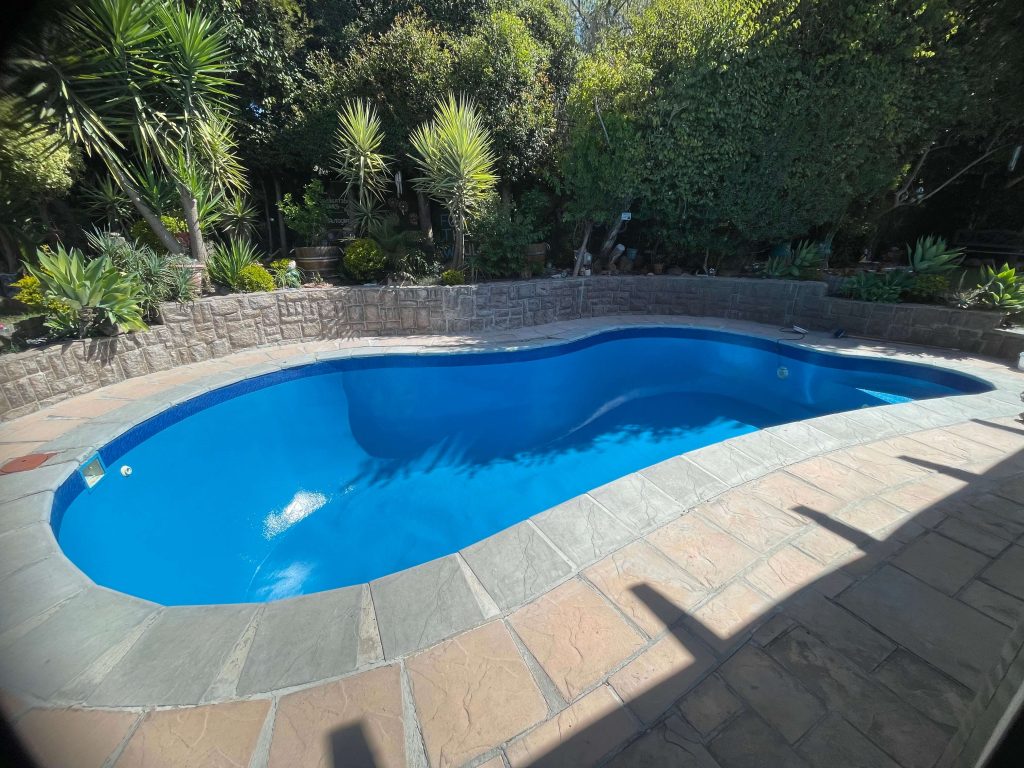
Colour is the cheapest big change in a makeover. White and light blue read fresh and bright. Darker blues and greys look deeper and more modern, and warm up a little faster in the sun.
2. Coping and Waterline Tiles
The coping is the frame around the picture. Old brick coping that’s cracked, loose or a dated colour drags down a new surface next to it. Replacing it is also a safety fix, because loose coping stones are a common cause of trips and cut feet.
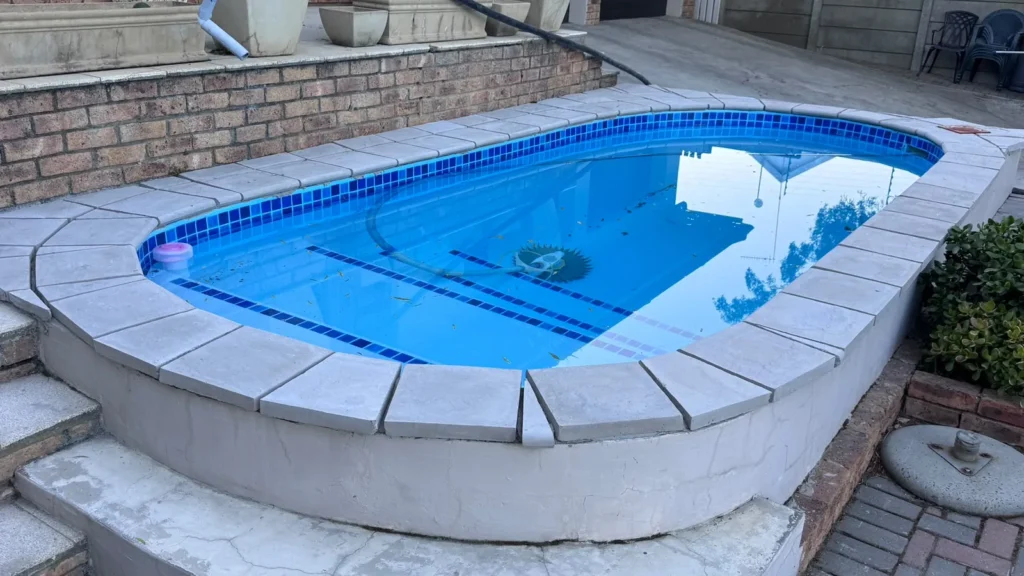
A band of waterline tiles or mosaics does two jobs: it hides the scum line and it gives the pool a finished edge. Our guide to pool coping styles covers bullnose, square edge and natural stone.
3. Paving or Decking Around the Pool
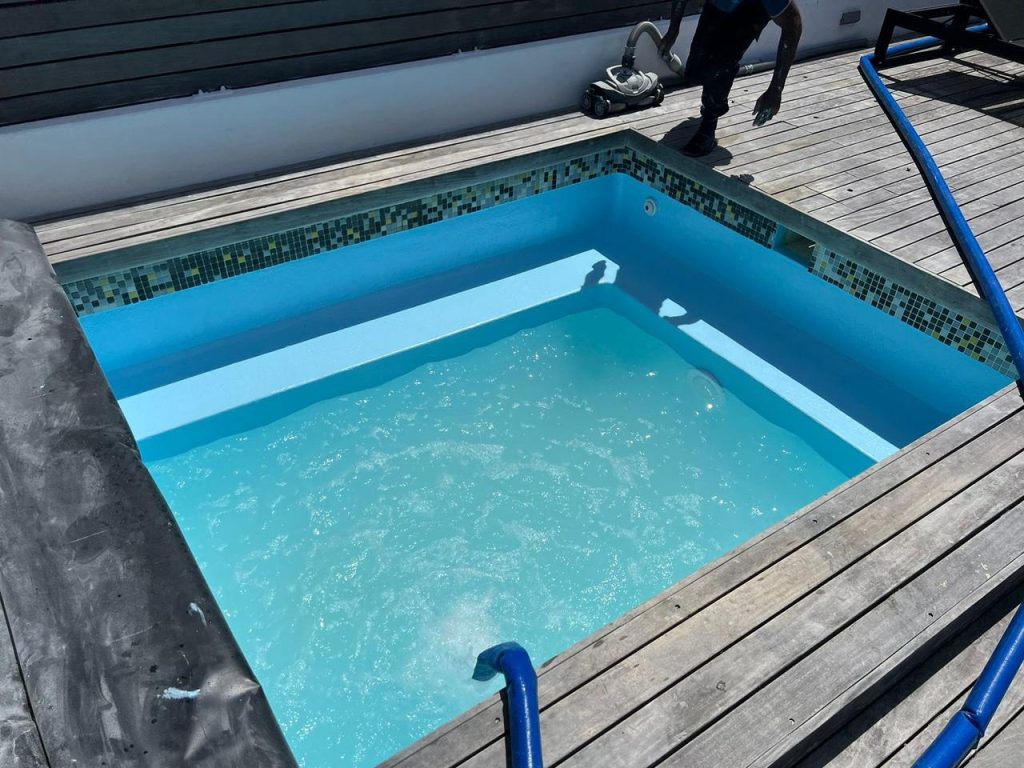
In an old pool makeover, the surround is what ties the pool to the house and garden. Hot, slippery or cracked paving is also the main reason people don’t sit by their pool. Light, textured pavers stay cooler underfoot in a Western Cape summer, and timber or composite decking softens a hard, square pool.
Our pool paving ideas guide covers materials and layouts, and our decking for swimming pool service page shows the work we do.
4. LED Pool Lighting
A lit pool turns into a garden feature after dark, and most summer evenings in the Cape are spent outside. Old halogen lights are dim, hot and expensive to run. LED replacements are brighter, use far less power and can be white or colour changing.
Read our guide to swimming pool lights led upgrades for the options. Most pool lights run on low voltage through a transformer, and all wiring is electrician work. If the pool is being drained for a new surface anyway, that’s the time to sort the lights.
5. Steps, Benches and Water Features
Many older pools have a narrow ladder or a tiny corner step. Wide entry steps, a bench seat or a sun ledge change how a pool is used: people sit in it instead of just swimming past. Non-slip finishes on new pool steps matter for children and older swimmers.
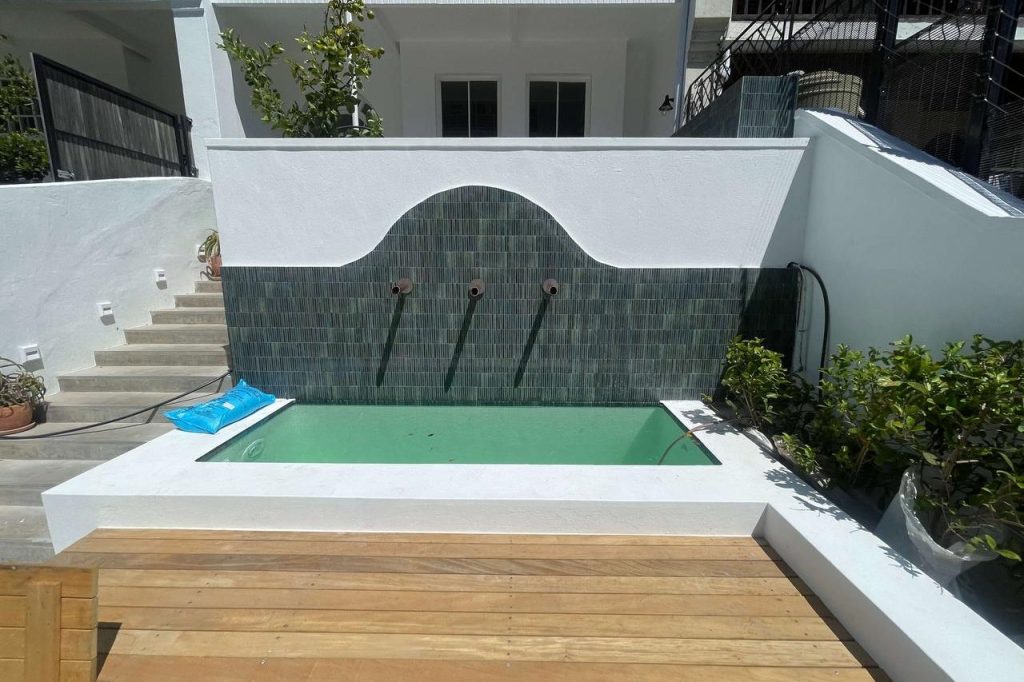
A water feature adds sound and movement, and hides the hum of the road. Spouts on a feature wall, like the one above, are a popular choice. Our guide to a swimming pool water feature compares fountains, spouts and waterfalls.
Old Pool Makeover: Do It in the Right Order
Doing these upgrades one at a time over several years usually costs more, because each job undoes some of the last. When they’re planned together, the order looks like this:
- Leaks and structure first. Find and fix any leak or structural crack before spending on looks.
- Plumbing, equipment and light wiring. Anything buried or behind the walls goes in while the pool is empty and the paving is up.
- Coping, waterline tiles and paving. The edge and surround go down before the interior, so dust, grout and offcuts don’t land on a new finish.
- The new surface. Marbelite, relining or paint goes on last inside the pool.
- Fill and start up. The new surface gets its curing weeks, then the lights and features go on show.
Timing tip
- Plan the work for autumn or spring. Our guide to when to schedule a swimming pool renovation explains why December is the month to avoid.
- Get one quote that covers all five upgrades, even if you phase them. It shows the full picture and avoids doing work twice.
Where to Spend First on an Old Pool Makeover
If the budget is tight
- Fix leaks and loose coping first: they’re safety and damage issues
- Put the money into the surface, because it changes the most
- Swap old lights for LED while the pool is empty
- Clean and re-grout the existing paving rather than replacing it
If you’re doing it properly
- New surface in a colour chosen with the paving in mind
- New coping and a waterline tile band
- A new surround, paving or decking, that matches the house
- Wider steps, a bench or a sun ledge, and a water feature
Don’t forget the part nobody sees. If the pump is old, the makeover is a good time to fit an inverter pool pump that costs less to run.
Ready to bring an old pool back to life?
Send us a few photos of the pool and the area around it. Our team will visit, tell you which upgrades will make the biggest difference for your budget, and give you one written quote covering the lot.
Call 074 378 6623, WhatsApp us, or email info@poolsreno.co.za. See our pool renovation services for everything we do.
Old Pool Makeover: Common Questions
Usually, yes, if the shell is structurally sound. A new surface, coping and surround cost a fraction of a new pool and change the whole garden. If the shell is badly cracked or moving, have it assessed before spending on looks.
A new interior finish and a good clean of the existing paving and coping make the biggest difference for the money. Paint is the cheapest finish, but it only suits a sound surface. Swapping old lights for LED adds a lot for little extra while the pool is empty.
A surface-only makeover usually takes about 5 to 10 working days on site. Adding new coping, paving and steps can stretch it to several weeks, depending on the size of the job and the weather.
Small changes are possible, like adding steps, a bench or a sun ledge, or filling in part of a pool. Big shape changes on a concrete pool are major building work, and often a new surround and steps give the same fresh feel for far less.
Yes, if you can. The coping and paving should be done before the new interior, so doing them together avoids damaging a new finish and means the colours and levels are planned as one.