If your concrete or gunite pool needs a new surface, the choice usually comes down to two finishes: relining it with fibreglass or resurfacing it with marbelite. Both are good finishes when they’re done properly, and both have weak spots. This guide to fibreglass vs marbelite pools sets them side by side so you can decide what suits your pool, your budget and how much upkeep you want.
We’re comparing finishes for an existing concrete or gunite pool here, not a factory-made fibreglass shell. Our team applies both, so we’ve no reason to push one over the other.
The quick answer
- Marbelite costs less upfront, has a classic matt look and a natural grip underfoot, but it’s porous and needs well-balanced water and regular brushing.
- Fibreglass relining costs more upfront, gives a smooth, non-porous surface that algae struggles to grip, and bridges fine cracks better.
- Pools with lots of hairline cracking, rough old plaster or recurring algae are often better off relined.
- A sound pool on a tighter budget, where the owner keeps the water balanced, does very well with fresh marbelite.
Fibreglass vs Marbelite Pools at a Glance
| Marbelite | Fibreglass relining | |
|---|---|---|
| What it is | Cement plaster with marble aggregate, hand trowelled | Resin and glass-fibre mat laminated onto the shell, with a topcoat |
| Upfront cost | Lower | Higher |
| Surface | Slightly textured, matt | Smooth, often glossy |
| Porous? | Yes | No |
| Algae and stains | Grip more easily | Grip less easily |
| Hairline cracks | Can show through over time | Bridged by the laminate |
| Water chemistry | Sensitive to low pH and hard water | More forgiving, but still needs balance |
| Underfoot | Natural grip | Smooth, so steps need a non-slip finish |
| Common lifespan | Often 10 to 15 years with good water care | Often 15 years or more, with topcoat refreshes |
How Each Finish Is Applied
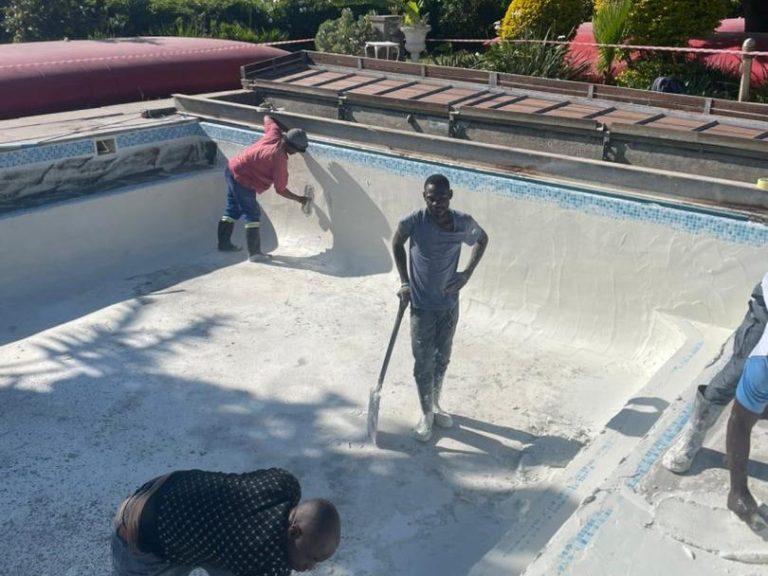
Marbelite: Hand-Trowelled Plaster
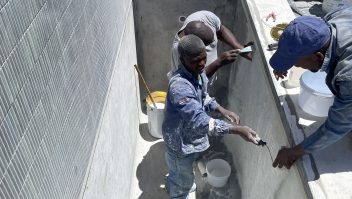
The pool is drained, the old surface is cleaned and roughened, and any hollow or loose plaster is chipped off back to sound material. The marbelite is then trowelled on by hand, usually in a single day so there are no joins, and the pool is filled straight away because marbelite cures under water.
For the first few weeks the new surface releases fine dust, so it needs brushing and careful water balance while it settles. Our guide to pool plaster dust explains that stage.
Fibreglass Relining: A Laminated Lining
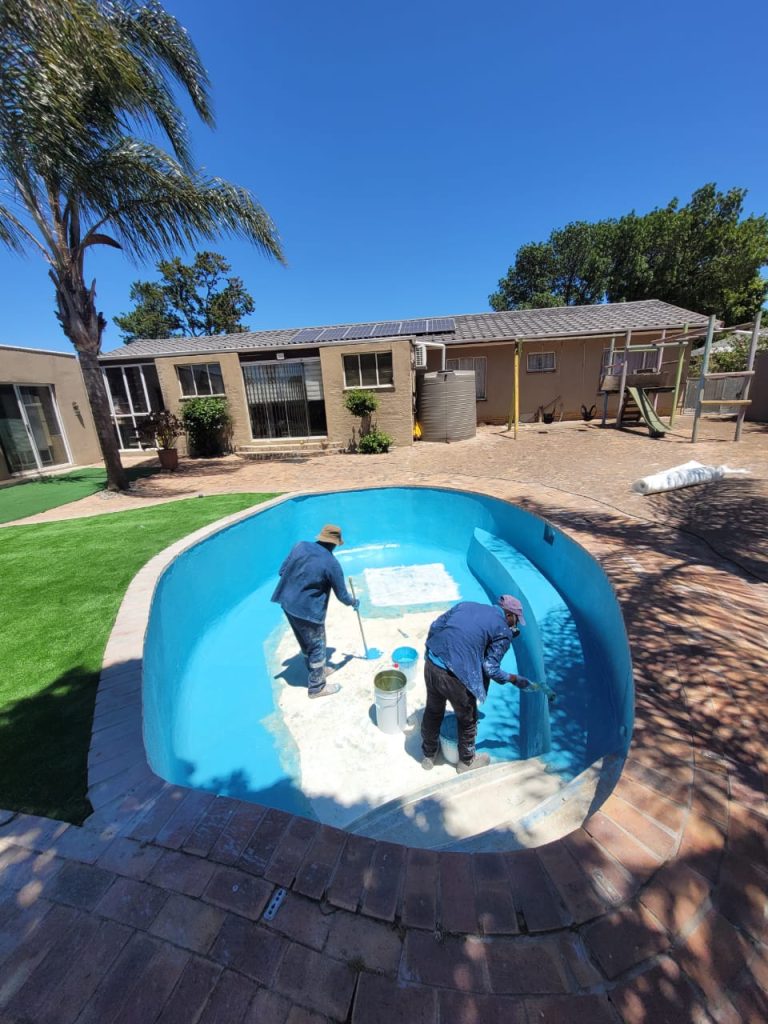
The pool is drained and the old surface is ground back to give the resin something to bond to. Cracks are opened and repaired first. Layers of glass-fibre mat are then laminated onto the walls and floor with resin, followed by a topcoat in your chosen colour.
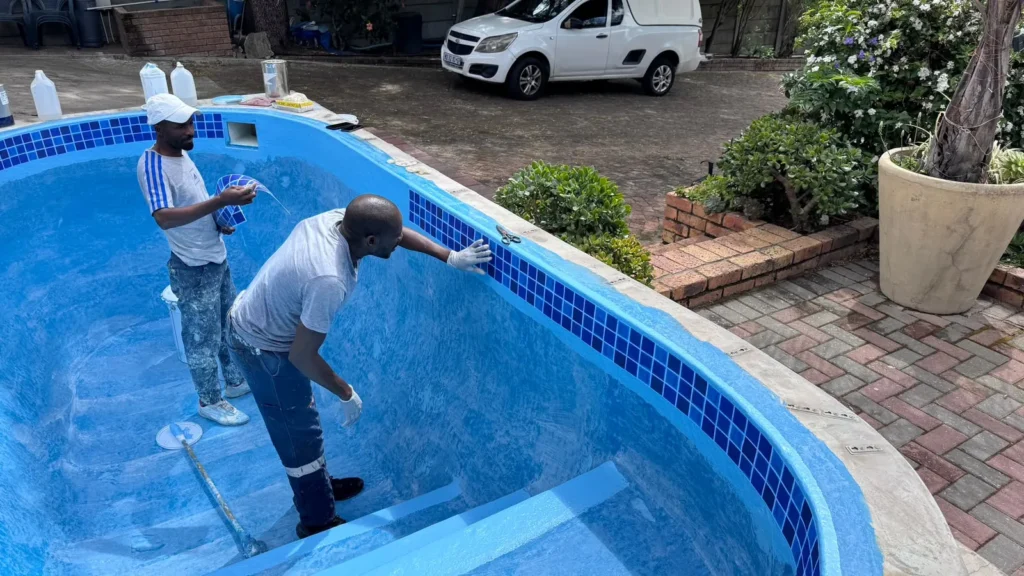
It takes longer than marbelite and needs dry weather, because rain and damp interfere with laminating. Preparation is everything: most relining failures we’re called to trace back to poor grinding, a damp shell or cheap resin, not to fibreglass itself. Our pool relining page explains our process in more detail.
Cost of Fibreglass vs Marbelite Pools
Both finishes are priced mainly by surface area, then adjusted for the condition of the pool. At the time of writing, South African contractors were quoting roughly the following:
| Finish | Typical price per square metre | What pushes it up |
|---|---|---|
| Marbelite resurfacing | From around R450 to R800 | Chipping off hollow plaster, crack repairs, darker pigments, mosaics |
| Fibreglass relining | From around R600 to R900 | Extra layers of mat, crack repairs, premium resins and topcoats, mosaics |
To get a feel for your own pool, work out the surface area. An 8m x 4m pool with an average depth of 1.5m has roughly 68 square metres of walls and floor. On most pools, fibreglass comes out higher than marbelite upfront, and the gap narrows if the old marbelite has to be chipped off anyway. For full worked examples, see our pool relining cost guide.
Running costs matter too. A porous surface usually means a bit more brushing and chemical use over the years, and a marbelite pool may need an acid wash now and then to remove stains. A fibreglass topcoat may need refreshing as it ages. Neither is free to own.
Lifespan and Upkeep Compared
Living with marbelite
- Brush weekly, because algae grips a porous surface
- Keep pH and alkalinity in range, as acidic water etches the surface and roughens it
- Watch calcium in hard water areas to avoid scaling
- Expect occasional stain treatment or an acid wash
- Small chips and patches can be repaired locally, though colour matching isn’t perfect
Living with fibreglass
- Brushing is quicker because algae has less to hold on to
- Water still needs balancing, but the surface is more tolerant
- Avoid harsh abrasives and aggressive acid washing
- Sun can fade or chalk the topcoat over the years
- Damage can be patched and recoated, though colour matching takes care
How long either finish lasts depends far more on water care and preparation than on the label. We’ve seen neglected marbelite go rough in a few years and well-kept marbelite last much longer than average. If you’re not sure how far gone your current surface is, our guide to the signs of pool resurfacing being due will help.
Look and Feel
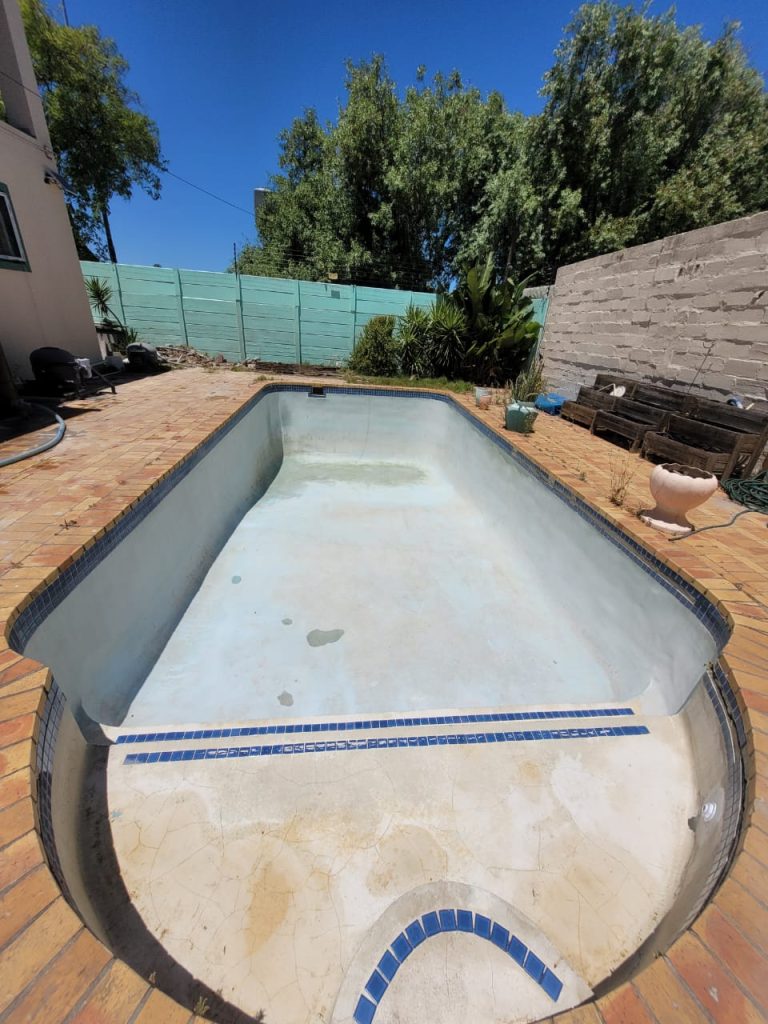
Marbelite has a soft, matt look that many people love on older pools, especially classic white or light blue. It feels slightly textured, which gives good grip on steps and the floor.
Fibreglass is smooth and usually glossy, and it’s easy on feet and swimwear. Colours tend to look richer. The flip side is that smooth steps and benches need a non-slip finish, particularly in a pool used by children or older swimmers.

Fibreglass vs Marbelite Pools in Western Cape Conditions
- Hard Boland water. High calcium can leave scale on marbelite. Fibreglass is less prone to it, though scale can still form at the waterline.
- Winter rain. Heavy rain drops pH and dilutes the water, which is harder on marbelite. Fibreglass relining also needs a dry spell to apply.
- Summer sun. Strong UV is tough on fibreglass topcoats over the years, and on chlorine levels in either pool.
- Older marbelite pools. Many pools in established suburbs have been re-marbelited more than once. Layers that have gone hollow often need chipping off, which narrows the cost gap with relining.
- Ground movement and cracks. Pools on clay or shifting ground often show fine cracks. Fibreglass bridges these better than plaster.
Which Finish Suits Your Pool?
Marbelite is a good fit if
- The shell is sound with no recurring cracks
- You want the lower upfront price
- You like a classic matt finish and natural grip
- You keep the water balanced and brush regularly
- The pool has been marbelite all along and the old layer is well bonded
Fibreglass relining is a good fit if
- The surface keeps cracking or has many hairline cracks
- Algae and stains keep coming back on rough plaster
- You want a smoother surface and less brushing
- The old plaster is hollow and needs removing anyway
- You plan to stay in the house for many years
One thing to know before you decide: marbelite needs a cement surface to bond to, so it can’t simply go over a fibreglass lining. Going back to marbelite after relining means taking the lining off, so treat fibreglass as a long-term choice. If you only want a colour change on a sound surface, pool paint is a third option worth comparing.
What Neither Finish Can Fix
A new surface is not a cure for a leaking pipe, a cracked shell or a pool that’s moving. If the pool is losing water, swimming pool leak detection comes first, then structural repairs, then the finish. Any honest quote for either finish should check this before work starts.
You can read more about the finish itself on our marbelite pool surfacing page, or see everything we do on our pool renovation page.
Not sure which finish your pool needs?
Our team will look at the surface, tap for hollow areas, check for leaks and cracks, and quote for both finishes where both make sense, so you can compare them properly.
Call 074 378 6623, WhatsApp us, or email info@poolsreno.co.za.
Fibreglass vs Marbelite Pools: Common Questions
Neither is better for every pool. Fibreglass relining is smoother, less porous and handles fine cracks better, but costs more upfront. Marbelite is cheaper, has a classic finish and good grip, but needs more careful water care and brushing.
A well-applied fibreglass lining often lasts longer than marbelite, though its topcoat may need refreshing along the way. Both depend heavily on preparation and water care, so no honest contractor can promise an exact number of years.
Yes. Relining an old marbelite pool with fibreglass is very common. The old surface is ground back, hollow areas and cracks are repaired, and the fibreglass is laminated over it.
Not directly. Marbelite needs a cement surface to bond to, so the fibreglass lining would have to be removed first. That’s why we treat relining as a long-term decision.
It’s smoother than marbelite, so steps, benches and sun ledges should get a non-slip finish. The floor and walls are fine for normal swimming.
Fibreglass usually does, because algae has less to grip on a non-porous surface. Both still need the water tested and balanced regularly.