Most fibreglass relining jobs take 5 to 10 working days from the day the pool is drained to the day it’s ready to fill. Once it’s done, a properly applied lining that’s looked after lasts 15 to 25 years. Those are the two answers our team gives most often, and both come with a few honest conditions.
This guide walks through how long fibreglass relining takes at each stage, what can stretch the job, and what decides whether the lining lasts closer to 15 years or 25.
At a glance
- On site: usually 5 to 10 working days. A small family pool in dry weather sits at the short end.
- Swimming: usually within 24 to 48 hours of the pool being filled and the water balanced.
- Lifespan: 15 to 25 years with proper care, sometimes with a topcoat refresh along the way.
- Guarantee: we guarantee fibreglass lining and repair work for up to 5 years, depending on the project.
How Long Fibreglass Relining Takes, Stage by Stage
Every pool is different, but the stages are always the same. This is how a typical job for an 8 m by 4 m family pool runs in dry weather:
| Stage | Typical timing | What happens |
|---|---|---|
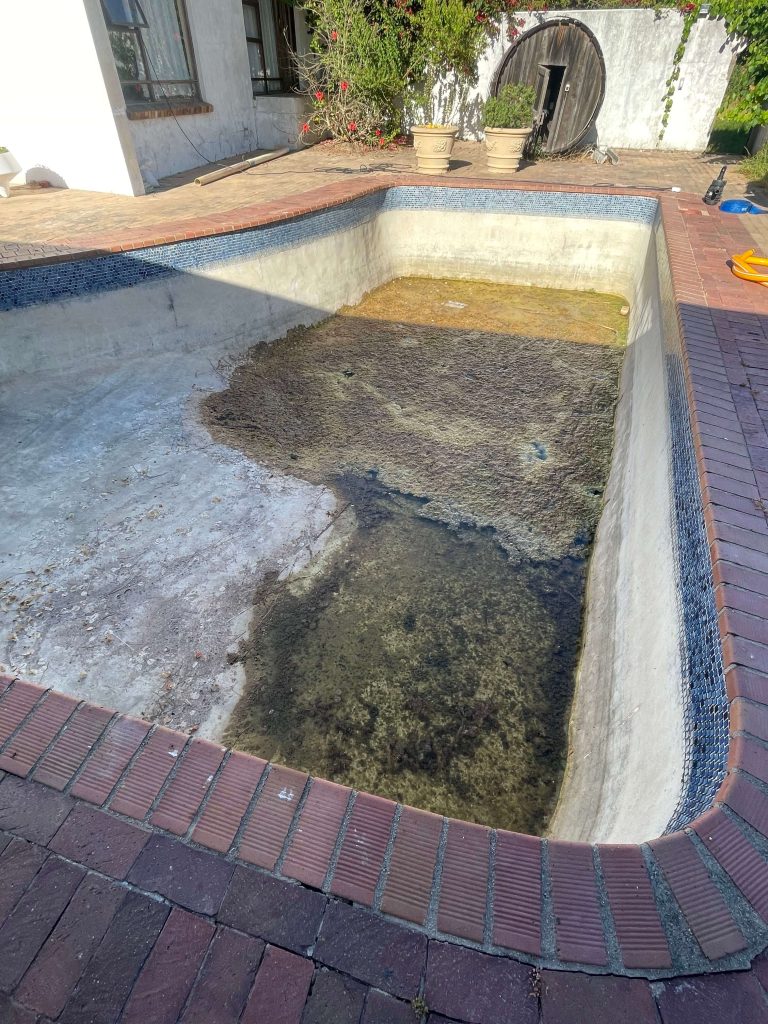
| Drain and clean | Day 1 | The pool is pumped out, algae and dirt are scrubbed off, and the fittings are checked. |
| Preparation | Days 1 to 3 | The old surface is ground or sanded back, hollow plaster is chipped out and cracks are opened and repaired. |
| Priming | Day 3 | Once the shell is dry, it’s primed so the lining has a sound surface to bond to. |
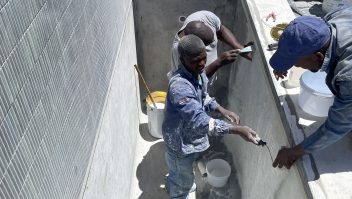
| Laminating | Days 3 to 6 | Fibreglass mat and resin are laid onto the walls, floor and steps, layer by layer. |
| Finishing | Days 6 to 8 | The laminate is sanded smooth and the topcoat goes on in your chosen colour, with non-slip on the steps. |
| Curing and filling | Days 8 to 10 | The lining is left to cure. Once we’ve confirmed it’s ready, the pool is filled in one go. |
Preparation Takes Longer Than People Expect
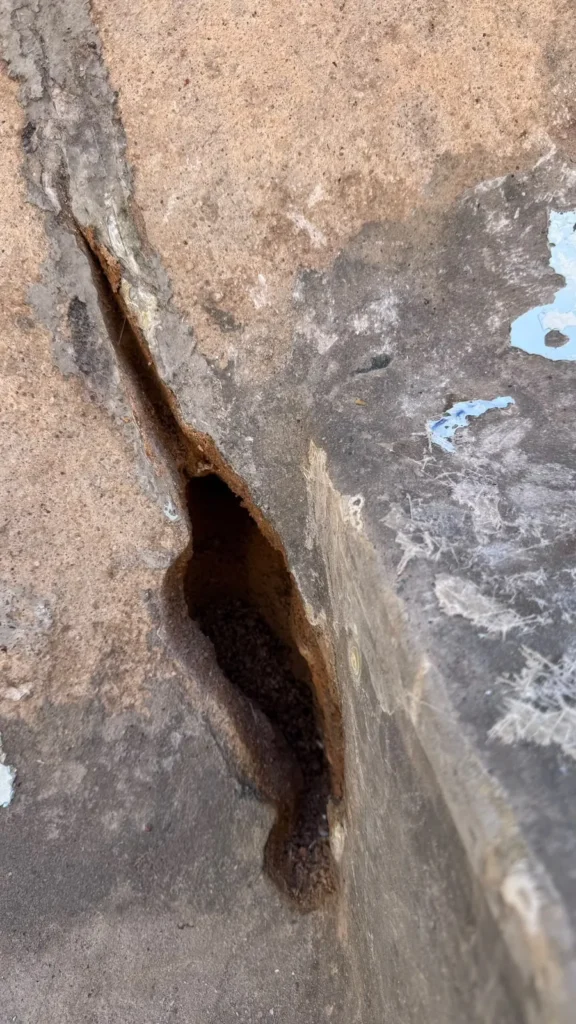
Homeowners are often surprised that the first two or three days look like nothing much is happening. That’s the stage that decides how long the lining will last. If the old marbelite is hollow, it has to come off, because a lining is only as strong as what it’s stuck to. If a crack is moving, it has to be repaired properly first, or it’ll come straight back through the new surface.
If the pool has been losing water, the leak needs finding before any of this starts. Lining over a leaking pipe or fitting just hides it. Our pool leak detection page explains how we track those down.
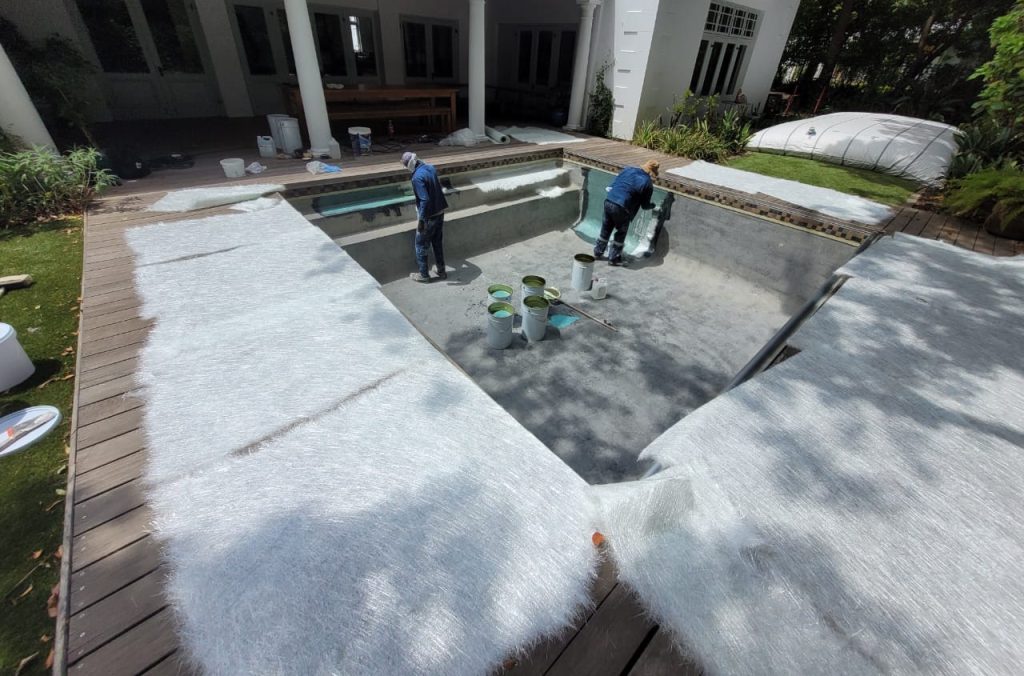
Laminating and the Topcoat
Laminating is where the pool visibly changes. Our team lays cut fibreglass mat onto the shell and wets it out with resin, rolling out the air as they go, wall by wall and then the floor. Steps, benches and corners take the most time because the mat has to be shaped around them.
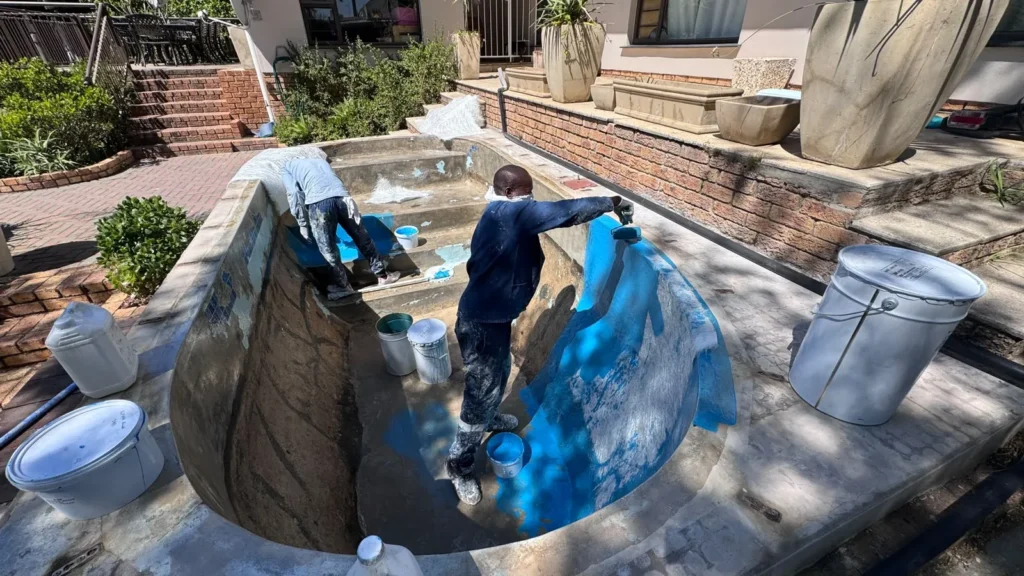
The topcoat goes on last. It’s the coloured, smooth layer you see and touch, and it’s what takes the sun and the chemicals every day. We add a non-slip finish to the steps and any sun ledge at this stage.
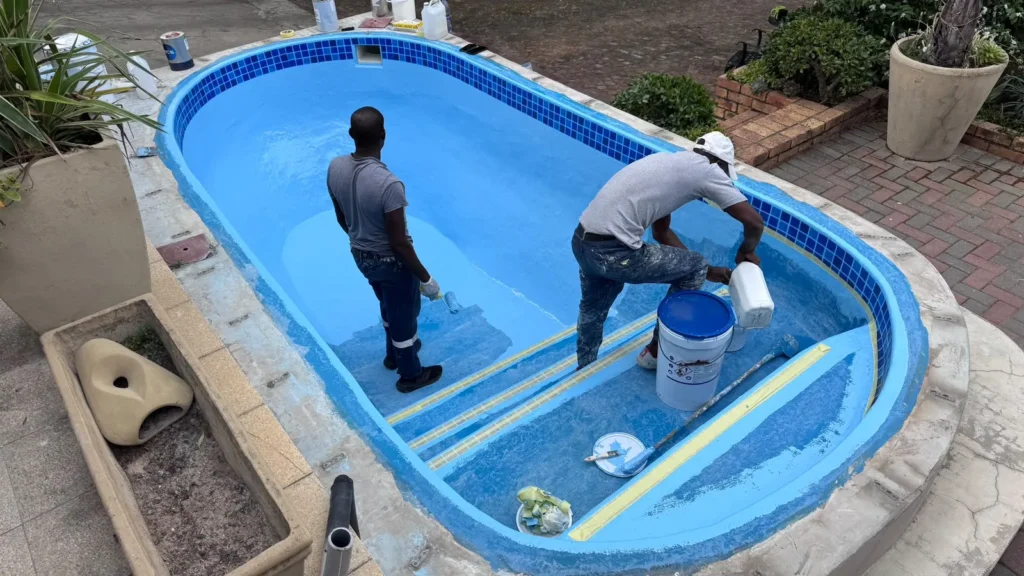
What Can Make Fibreglass Relining Take Longer
Usually adds a day or more
- Rain, or a shell that’s still damp from winter
- Lots of hollow plaster that has to be chipped off
- Structural cracks that need proper repair first
- A big or freeform pool, a beach entry or lots of steps
- Mosaics, tiles or new coping as part of the job
Can add a week or more
- A leak that has to be found and fixed before relining
- A long spell of wet weather in mid-winter
- Groundwater pushing up through the floor of the shell
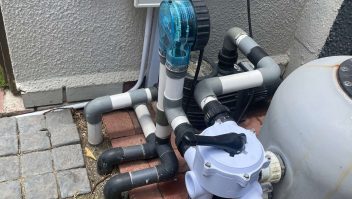
- Extra work like new paving or equipment upgrades
- A busy booking period in late spring
Weather is the big one in the Western Cape. Resin and damp don’t mix, so we only laminate on a dry shell, and cold days slow the curing. Wind brings its own problem: dust and leaves blown onto wet resin. We watch the forecast and plan the laminating days around it, which is why a reline booked in a wet July can take longer than the same pool in February.
If you’re planning a bigger renovation with new coping, paving or equipment at the same time, our week-by-week guide to pool renovation timing shows how the jobs fit together.
When Can You Swim Again?
Once we’ve confirmed the lining has cured, the pool is filled. Fill it in one go with municipal water, hose on the floor of the deep end, and don’t stop and start, because that can leave a line on the new surface. Stop at the middle of the skimmer mouth.
Then the water is balanced. Once the pH and chlorine are where they should be, you can usually swim within 24 to 48 hours. With a garden hose, filling a typical pool can itself take a day or two, so on most jobs plan on roughly two weeks from draining to your first swim, a little more if the weather turns.
How Long Fibreglass Relining Lasts
With proper care, a fibreglass lining lasts 15 to 25 years before it needs refurbishing. Where a pool lands in that range depends far more on how it was done and how it’s looked after than on the calendar.
| What happens | Shortens its life | Helps it last |
|---|---|---|
| Preparation | Lining over hollow plaster, damp shells or unrepaired cracks | Grinding back to sound material and repairing cracks first |
| Materials | Cheap resin, too few layers of mat | Pool-grade resin and enough laminate for the job |
| Water balance | Long spells of low pH or very high chlorine | pH kept around 7.2 to 7.6, chlorine around 1 to 3 ppm |
| Cleaning | Harsh scrubbing brushes, abrasive powders, aggressive acid washes | A soft brush and gentle, non-abrasive cleaners |
| Chemicals | Granules left sitting on the floor | Follow the label and let products dissolve properly |
| The pool itself | Leaving it empty for long spells, ground movement | Keeping it full and fixing leaks early |
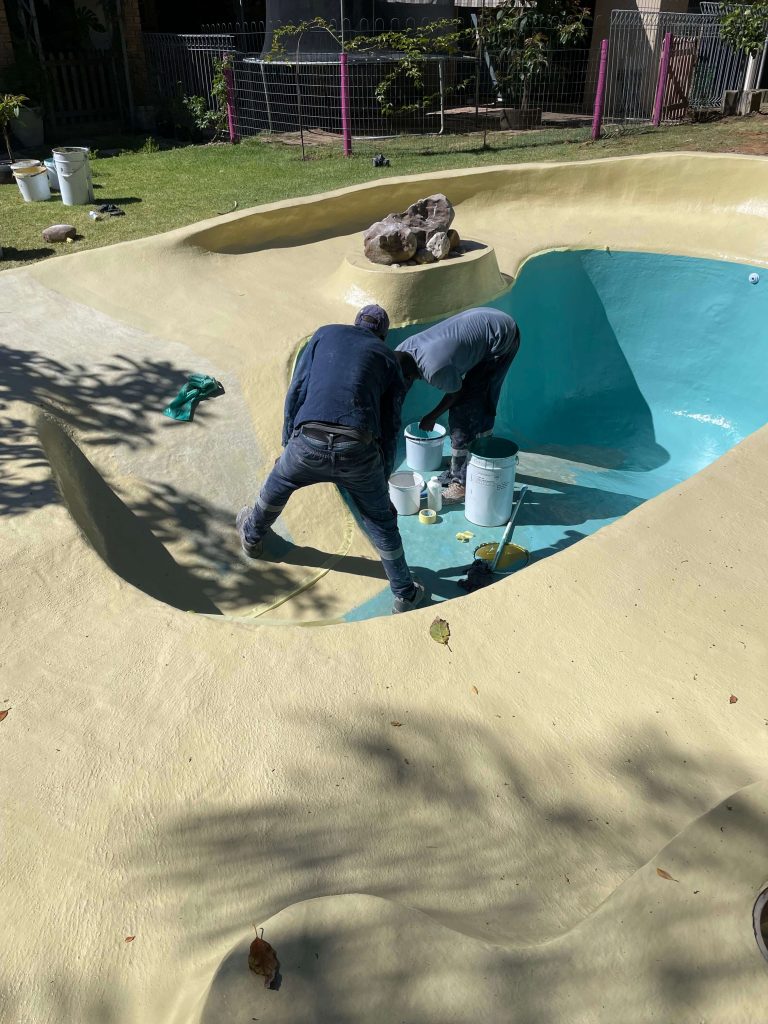
That’s why we quote a range. A lining applied well on a sound shell, in a pool with balanced water, is the one that reaches the top end. For how fibreglass compares with marbelite over the long run, see our guide to fibreglass vs marbelite pools, and if you’re not sure your current surface is due, our post on the signs of pool resurfacing being needed is a good place to start.
Signs a Lining Is Getting Tired
- The colour has faded or the surface feels chalky when you run a hand over it
- Fine surface cracks or crazing, often on steps and in corners
- Small blisters in the surface
- Rough patches where algae starts to hold on again
Most of these don’t mean a full reline. A faded or chalky topcoat can often be refreshed with a new coat, which buys years at a fraction of the cost. Our guide to fibreglass swimming pool paint explains when a recoat is enough.
How Long Fibreglass Relining Lasts in Western Cape Conditions
- Summer sun is the main thing that ages a topcoat. Expect colour fade on exposed pools first.
- Hard Boland water can leave scale at the waterline. Keep calcium in check and brush the tile line.
- Coastal pools take more wind and salt, and the coping and paving around them usually age before the lining does.
- Winter rain drops the pH and dilutes the chlorine. A quick test after heavy rain protects the surface.
A pool cleaning services plan that keeps the water balanced all year is one of the simplest ways to get the full life out of a new lining.
Planning a reline?
Tell us roughly how big your pool is and what the surface looks like, and our team will come out, check the shell and give you a written quote with a realistic timeline for your pool.
Call 074 378 6623, WhatsApp us, or email info@poolsreno.co.za. See our fiberglass pool lining page for more on how we work, or our pool relining cost guide for prices.
How Long Fibreglass Relining Takes and Lasts: FAQs
Most fibreglass relining jobs take 5 to 10 working days on site. A small pool in dry weather is quicker. A large pool, lots of crack repairs or wet weather can push it out.
With proper care, a fibreglass lining lasts 15 to 25 years before it needs refurbishing. Good preparation, quality materials and balanced water make the biggest difference.
Yes, but it can take longer. The shell has to be dry before laminating and cold weather slows curing, so wet spells add days. We plan the laminating around the forecast.
Once the lining has cured, the pool is filled and the water is balanced, you can usually swim within 24 to 48 hours.
Not often. After many years in strong sun the topcoat can fade or chalk, and a fresh topcoat can restore it without a full reline.