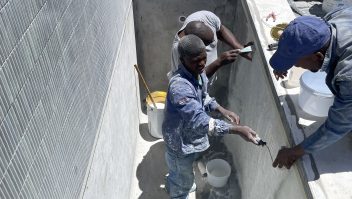
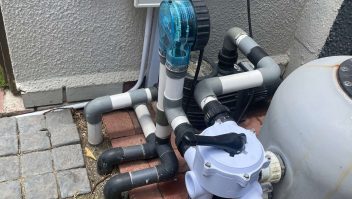
If you are searching for fibreglass pool relining cost in Cape Town, you have probably already discovered a frustrating problem: different websites quote very different prices.
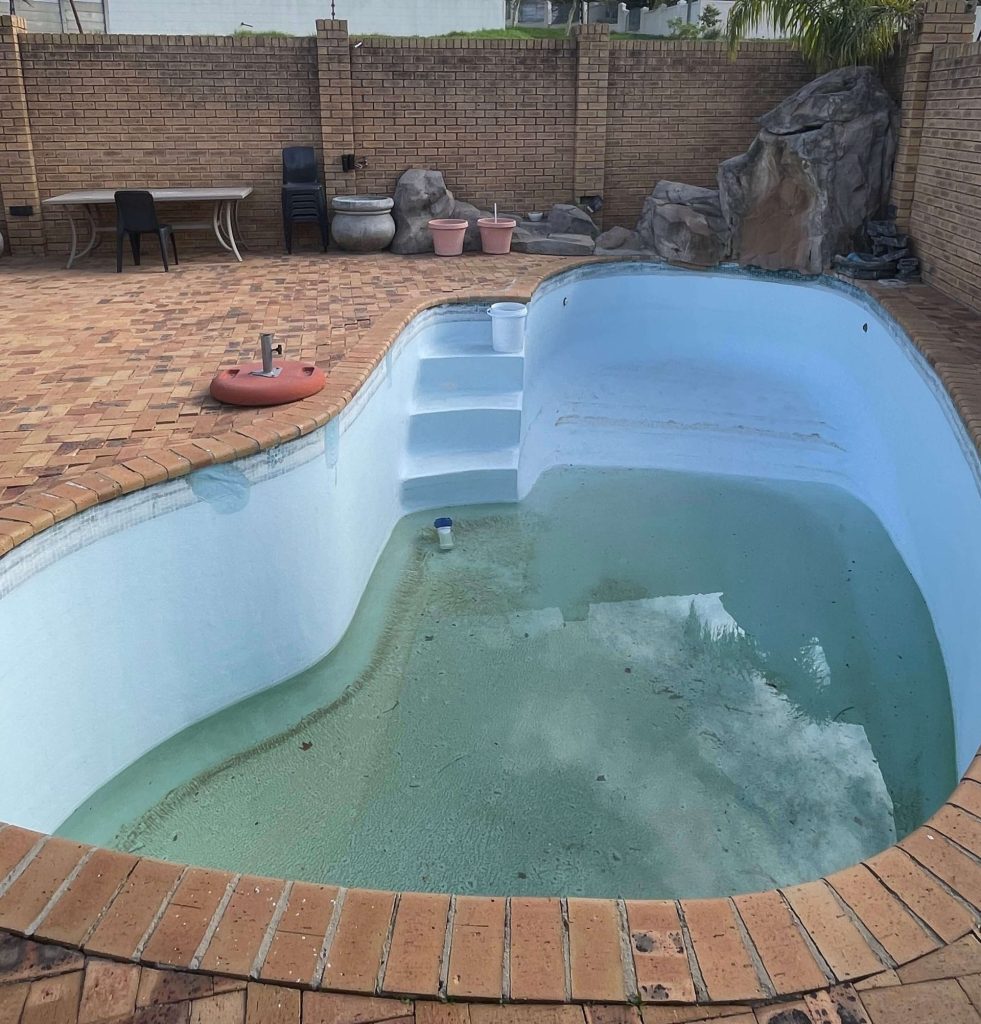
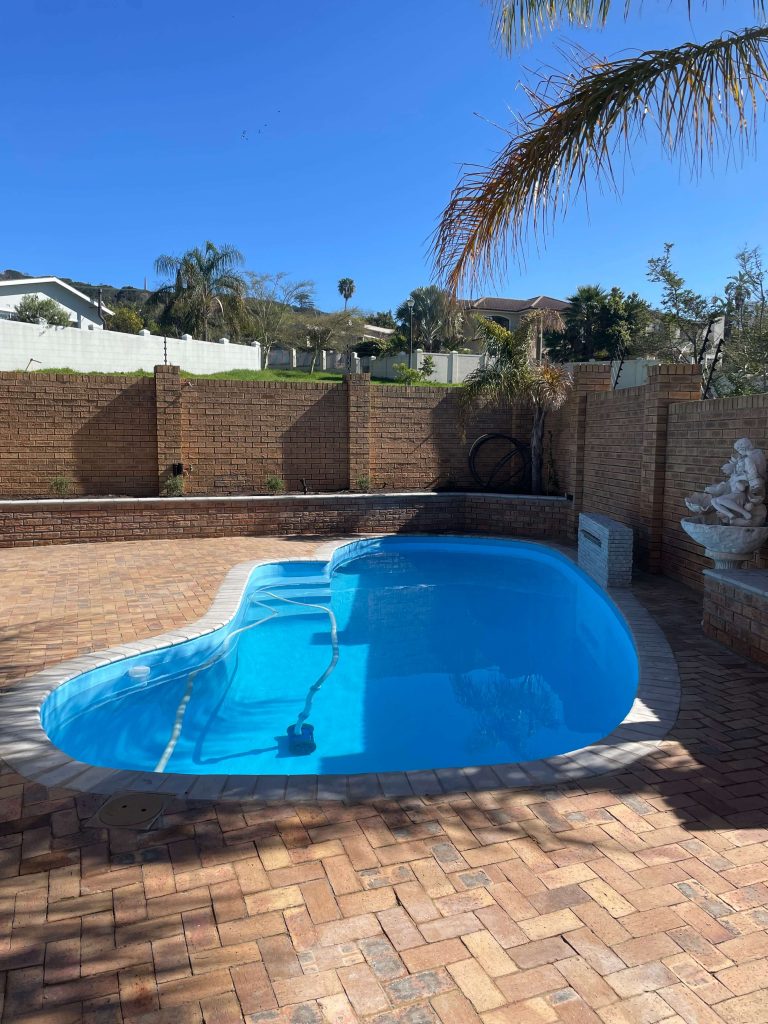
One company may advertise a low price per square metre. Another may give you a large project range. A third may offer a surprisingly cheap quotation without explaining exactly what is included.
So what should a homeowner actually budget for?
The short answer is that fibreglass pool relining in Cape Town can range from approximately R45,000 to R120,000+ for many residential projects, with more complex pools potentially costing more. The final price depends on the actual surface area, pool condition, preparation requirements, resin specification, fibreglass system, access, repairs, finishing system and site conditions.
Published Cape Town pricing guides currently show a wide market range. For example, some competitors advertise approximately R600–R850+ per m², while other Cape Town renovation guides place complete fibreglass relining projects around R70,000–R120,000+. These figures illustrate why comparing only a price per square metre can be misleading.
At Pools Reno, we believe homeowners should understand what they are paying for before comparing quotations.
This guide explains the real factors behind the price of fibreglass pool lining and relining in Cape Town, including surface preparation, concrete and marbelite pools, heated swimming pools, resin selection, osmosis protection and finishing options.
Fibreglass Pool Relining Cost in Cape Town at a Glance
As a 2026 budgeting guide, a typical residential fibreglass pool relining project may fall approximately within these ranges:
| Pool/project type | Indicative budget |
|---|---|
| Small/simple pool | R45,000 – R65,000+ |
| Medium family pool | R65,000 – R90,000+ |
| Large pool | R90,000 – R120,000+ |
| Complex or heavily damaged pool | R120,000+ |
| Heated pool with enhanced specification | Usually higher than a basic reline |
| High-water-table / enhanced osmosis protection | Additional cost depending on system |
These figures are budgeting ranges, not fixed quotations.
The existing pool shell, surface condition and specification can change the price considerably.
That distinction matters because two pools with the same dimensions can require completely different amounts of preparation and repair.
Why You Should Not Choose a Fibreglass Pool Relining Contractor Based Only on Price Per Square Metre
A price such as R600/m² or R850/m² sounds useful.
However, what exactly does that number include?
Does it include:
- draining the pool?
- protecting the site?
- removing loose material?
- acid cleaning?
- mechanical sanding?
- grinding?
- crack repairs?
- hollow-area repairs?
- primer?
- fibreglass mat?
- GP resin?
- vinyl ester resin?
- additional reinforcement?
- osmosis barrier?
- poolcoat?
- mosaic tissue?
- clear mosaic coat?
- fittings?
- waste removal?
- final preparation?
- curing?
- labour?
- transport?
If the answer is unclear, the cheapest quotation may not actually be the cheapest project.
A professional fibreglass lining is a complete composite surfacing system, not simply fibreglass placed over an old pool.
That is why Pools Reno evaluates the existing pool before establishing the final specification.
What Is Included in a Professional Fibreglass Pool Relining?
A properly specified project can include considerably more than the visible fibreglass surface.
Depending on the pool, the work may include:
1. Pool inspection
The existing pool is assessed for:
- cracks
- hollow areas
- loose marbelite
- deteriorated surfaces
- old coatings
- previous repairs
- water ingress
- damaged fittings
- plumbing penetrations
- groundwater problems
- previous fibreglass failure
- possible osmosis
2. Surface preparation
Preparation can include:
- draining
- cleaning
- removal of loose material
- acid cleaning where appropriate
- thorough rinsing
- sanding
- grinding
- dust removal
- mechanical profiling
- preparation around fittings
3. Repairs
Depending on the condition, additional work may include:
- crack repair
- surface levelling
- hollow-area treatment
- damaged step repairs
- corner preparation
- fitting preparation
- leak-related repairs
4. Primer or bonding system
Concrete and marbelite do not behave like existing fibreglass.
The appropriate bonding system therefore needs to match the substrate and specified resin system.
5. Fibreglass reinforcement
The glass reinforcement forms the structural component of the composite laminate.
6. Resin
The resin binds and encapsulates the glass reinforcement.
Depending on the specification, this may involve a suitable GP polyester resin or a higher-performance vinyl ester resin.
7. Finishing system
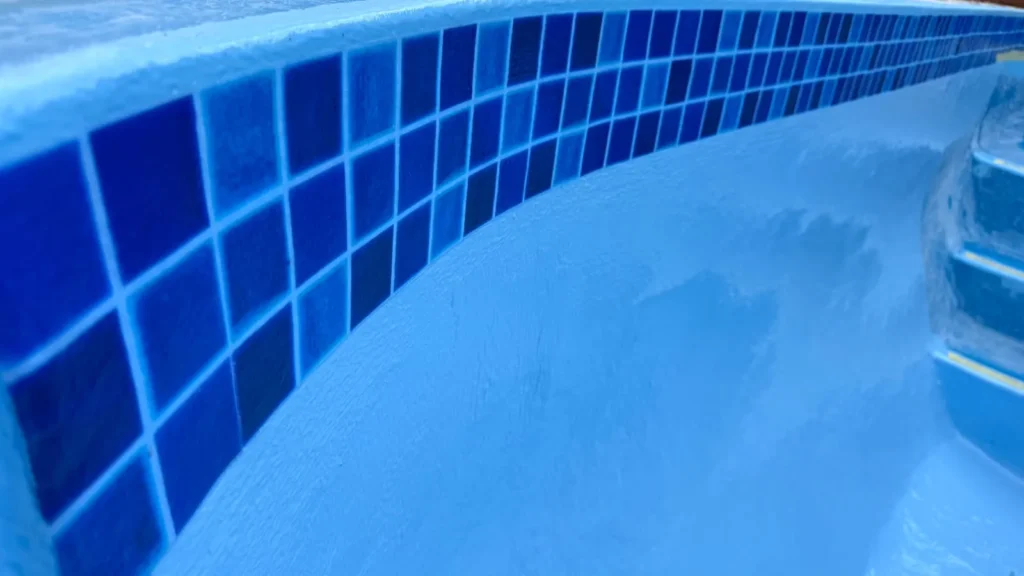
The final exposed surface may use a compatible poolcoat or, where a decorative mosaic system is specified, a suitable clear coating.
8. Final inspection and preparation
The completed surface needs to be checked before the pool is returned to service.
The Biggest Factor in Fibreglass Pool Relining Cost: Pool Condition
Pool size matters.
However, pool condition can matter even more.
Consider two 8-metre pools.
Pool A
The pool has:
- sound substrate
- minimal cracking
- no loose areas
- good access
- little previous repair work
The preparation may be relatively straightforward.
Pool B
The same-sized pool has:
- cracked marbelite
- hollow areas
- old paint
- failed previous repairs
- damaged steps
- leaking fittings
- difficult access
- groundwater concerns
The two pools have almost identical dimensions.
They do not have identical renovation costs.
That is why a responsible contractor should inspect the pool before giving a final specification.
Does Pool Size Affect Fibreglass Relining Cost?
Absolutely.
Larger pools require more:
- fibreglass reinforcement
- resin
- poolcoat
- labour
- preparation
- mixing
- handling
- finishing
But there is an important calculation that homeowners often overlook.
Pool footprint is not the same as fibreglass surface area.
An 8m × 4m pool has a floor footprint of:
32 m²
But the contractor does not only laminate the floor.
The walls, steps, benches, slopes, corners and other surfaces also require treatment.
Therefore, quoting purely from the pool’s length × width can produce a misleading comparison.
The actual surface area depends on:
- length
- width
- depth
- wall profile
- steps
- benches
- swim-outs
- slopes
- curves
- internal features
This is one reason why an on-site assessment remains important.
A Simple Way to Understand Fibreglass Pool Relining Pricing
Think about the quotation as five major cost groups.
1. Preparation
This includes getting the old pool into a condition where the new laminate can bond properly.
2. Repairs
The pool may require additional crack, surface or structural-related work.
3. Composite laminate
This includes:
- glass reinforcement
- resin
- labour
- consolidation
- curing
4. Finishing system
This may include:
- pigmented poolcoat
- specialist finish
- mosaic tissue
- compatible clear coat
5. Site and project costs
These can include:
- transport
- difficult access
- waste removal
- disposal
- additional labour
- protection of surrounding areas
- equipment requirements
Once these five areas are understood, a quotation becomes much easier to compare.
How Much Does It Cost to Fibreglass a Concrete Pool?
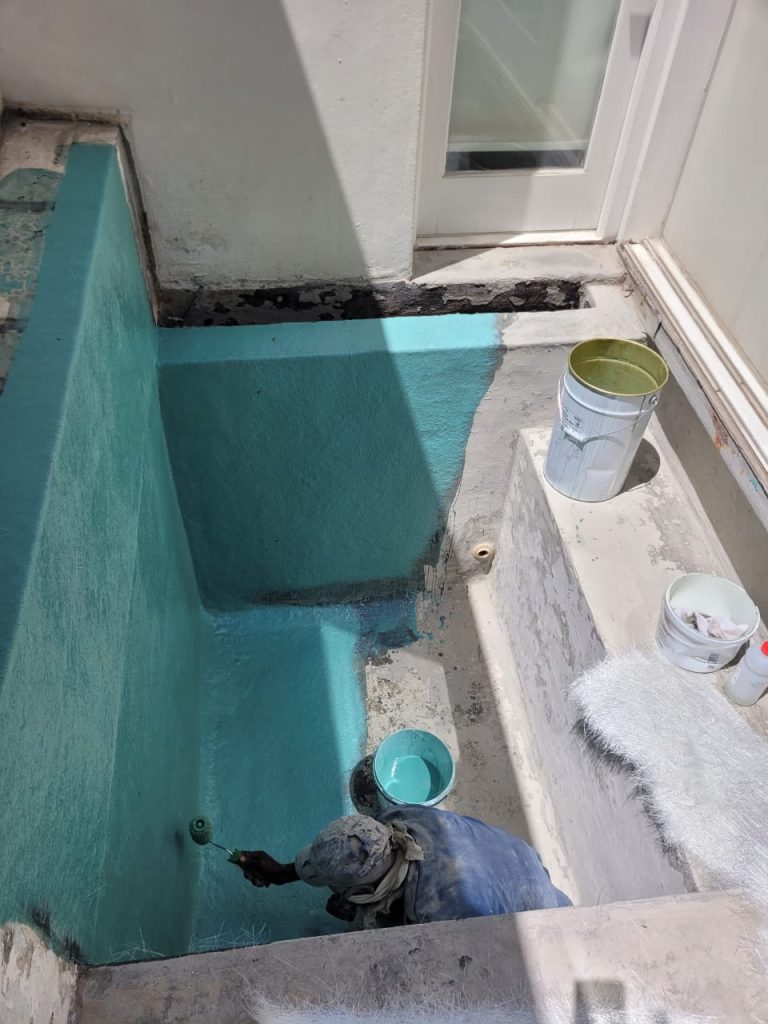
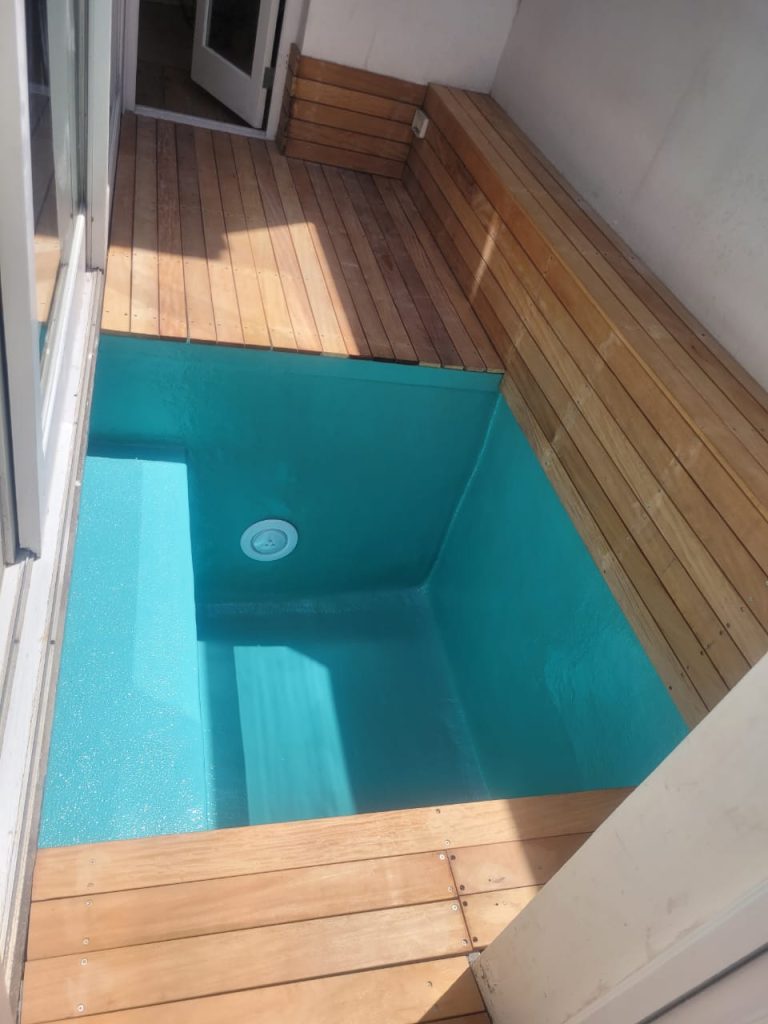
Concrete pools are common candidates for fibreglass relining.
However, the condition of the concrete matters.
A structurally suitable concrete pool may be prepared and converted into a fibreglass-lined pool without demolishing the entire shell.
A typical project may involve:
Existing concrete pool
↓
Inspection
↓
Removal of loose/unsound material
↓
Cleaning
↓
Mechanical preparation
↓
↓
Compatible primer/bonding system
↓
Fibreglass laminate
↓
Specified resin
↓
Poolcoat
The final price depends on the amount of work required at each stage.
How Much Does It Cost to Fibreglass a Marbelite Pool?
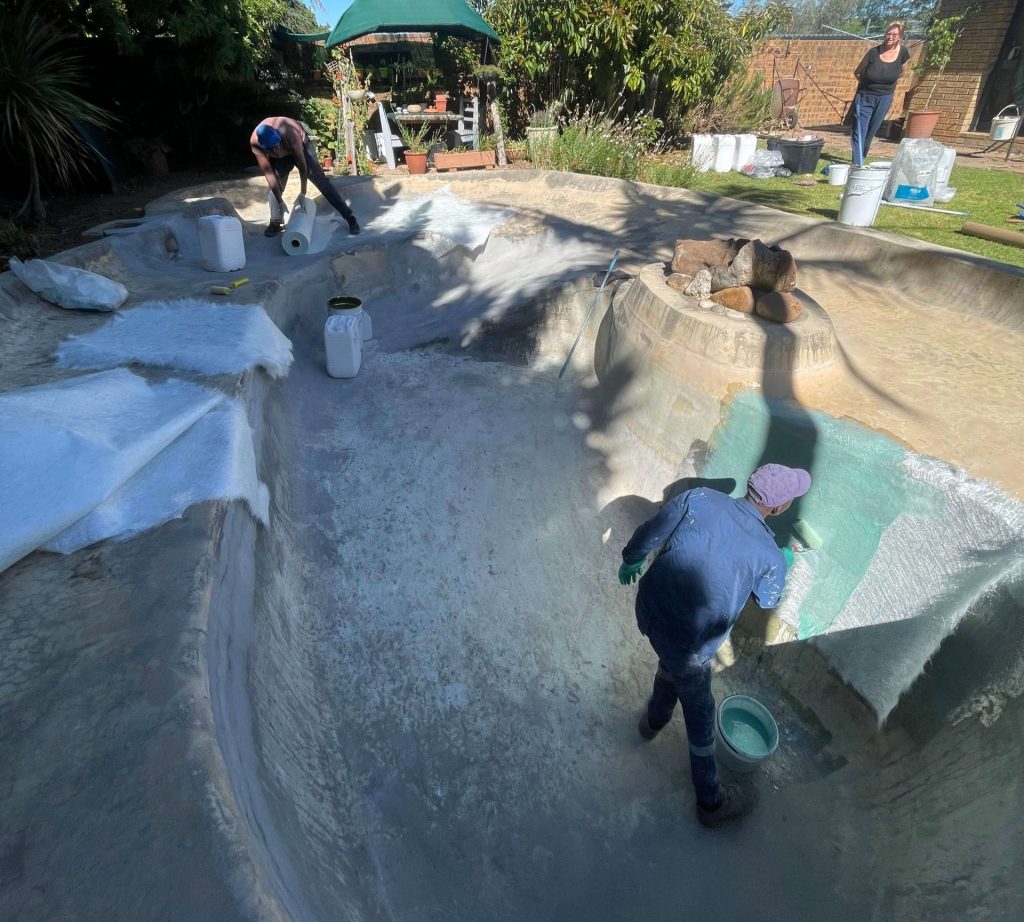
Old marbelite pools can be excellent candidates for fibreglass relining when the underlying shell remains suitable.
However, an old marbelite surface should never simply be covered without assessment.
Problems may include:
- hollow marbelite
- cracking
- loose material
- staining
- chemical deterioration
- previous coatings
- failed repairs
- moisture problems
The more preparation required, the more labour and material the project can require.
This is why a very cheap “fibreglass over marbelite” quotation should always be examined carefully.
Ask:
What preparation is actually included?
That single question can reveal a significant difference between quotations.
Does a Heated Swimming Pool Cost More to Fibreglass?
It can.
A heated pool deserves additional consideration because the lining system operates under different conditions from an unheated pool.
The specification may need to account for:
- elevated water temperature
- heating cycles
- chemical exposure
- moisture
- substrate condition
- resin chemistry
- laminate construction
- finishing compatibility
This does not mean every heated pool automatically requires vinyl ester resin.
Instead, the specification should be based on the actual operating environment.
For demanding applications, a suitable vinyl ester resin system such as HETRON 922 may be considered instead of relying solely on a general-purpose polyester resin. Pools Reno’s technical guide explains the distinction between GP polyester and HETRON/vinyl ester systems in more detail.
GP Resin vs Vinyl Ester: Why the Resin Can Change the Price
This is one of the areas homeowners should understand before comparing quotations.
GP Polyester Resin
GP means general purpose.
A suitable GP polyester resin can provide an economical solution for appropriate fibreglass composite applications.
Its use can help keep project costs lower where the pool environment and specification make it appropriate.
Vinyl Ester Resin
Vinyl ester belongs to a different resin family.
HETRON 922, for example, is an epoxy vinyl ester resin. Its manufacturer information identifies characteristics including chemical resistance, toughness and suitability for fibreglass-reinforced linings.
Consequently, a quotation specifying vinyl ester may cost more than one using standard GP polyester.
That does not mean GP resin is automatically bad.
It means the two quotations may be specifying different composite systems.
When comparing quotations, ask:
Which resin is being used?
What fibreglass reinforcement is being used?
How many layers are specified?
What primer is included?
What poolcoat is included?
Is an osmosis barrier included?
Those questions are far more useful than simply asking:
“What is your price per square metre?”
What Is an Osmosis Barrier and Why Can It Increase the Cost?
Some swimming pools require additional moisture protection.
This can be particularly relevant where there is:
- a high water table
- persistent groundwater
- damp surrounding soil
- previous osmotic blistering
- previous fibreglass failure
- moisture-sensitive concrete
- a history of water migration
In these situations, an osmosis-barrier system may be considered as part of the overall specification.
The barrier adds materials and labour.
Therefore, the price can increase.
However, it should not be treated as an unnecessary “upgrade” simply to make a quotation more expensive.
The correct question is:
Does the pool’s moisture environment justify the additional system?
A barrier also does not magically eliminate groundwater or hydrostatic pressure. Those underlying conditions may require separate investigation and management. Pools Reno’s existing technical article explains this distinction in detail.
Why High Water Tables Can Increase Pool Renovation Costs
Cape Town’s varied ground conditions mean that groundwater should not be ignored during a major pool renovation.
A pool can appear perfectly normal from inside while groundwater exists around the shell.
Once the pool is drained, the surrounding ground can exert pressure on the empty structure.
For that reason, a professional assessment should consider:
- groundwater
- hydrostatic pressure
- drainage
- shell condition
- moisture migration
- previous blistering
- previous lining failure
Where additional moisture protection or drainage work becomes necessary, the project cost can rise.
However, that additional cost may be far more economical than dealing with repeated coating or laminate failure later.
Why Surface Preparation Has Such a Major Effect on Cost
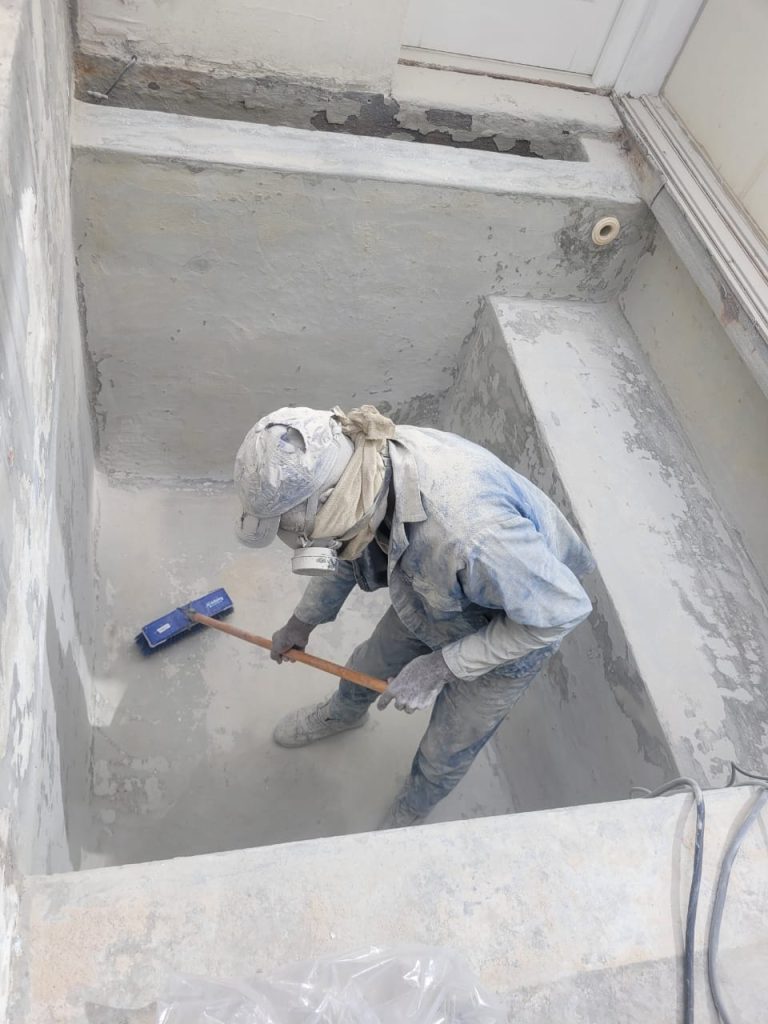
This is where homeowners often underestimate a professional fibreglass relining project.
The new fibreglass needs a suitable substrate.
That means the installer may need to spend significant time:
- removing loose marbelite
- removing failed coatings
- sanding
- grinding
- cleaning
- repairing cracks
- preparing corners
- preparing fittings
- removing contamination
- controlling dust
- preparing the bonding surface
The preparation may not be visible once the pool is completed.
Nevertheless, it is one of the most important parts of the project.
As Pools Reno explains in its technical guide, a premium resin cannot compensate for a poorly prepared substrate.
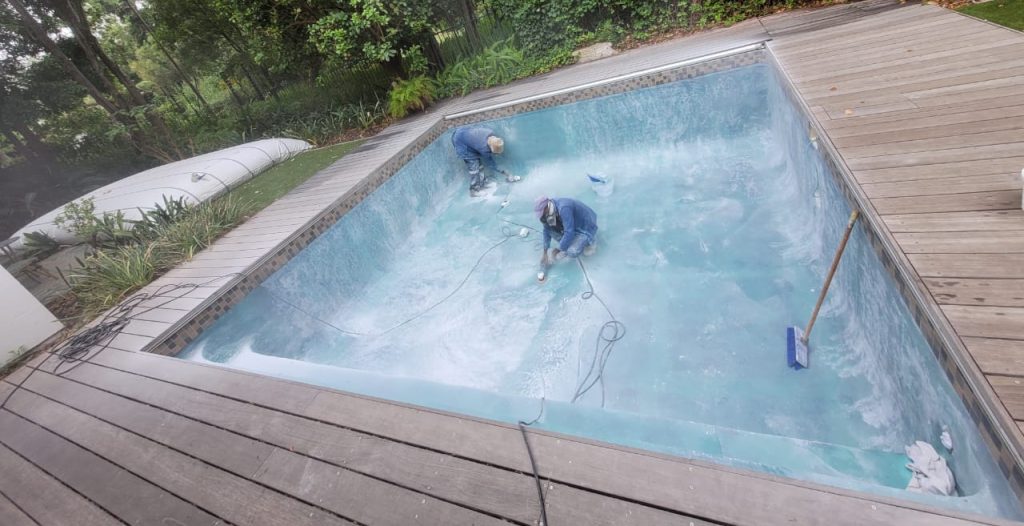
Why Two Fibreglass Pool Quotes Can Differ by R20,000, R30,000 or More
This is one of the most important things to understand before choosing a contractor.
Imagine receiving three quotations:
Quote A
R55,000
Quote B
R78,000
Quote C
R105,000
At first glance, Quote A appears to be the obvious winner.
But suppose Quote A includes:
- basic preparation
- standard GP resin
- minimal repairs
- basic poolcoat
While Quote C includes:
- extensive mechanical preparation
- crack repairs
- compatible primer
- upgraded resin specification
- additional fibreglass reinforcement
- osmosis barrier
- premium finishing system
- difficult-access labour
- waste removal
These aren’t really three prices for the same product.
They are three different specifications.
This is why comparing fibreglass pool quotations requires comparing the scope of work, not just the bottom line.
Fibreglass Pool Relining Cost Calculator – Cape Town
You can use the following as a rough budgeting tool.
Small pool
Approximately 20–35 m² of pool surface area
Possible budget:
R45,000–R65,000+
Medium pool
Approximately 35–60 m²
Possible budget:
R65,000–R90,000+
Large pool
Approximately 60–100 m²
Possible budget:
R90,000–R120,000+
Complex renovation
Large, heavily damaged, difficult-access or specialist-system projects:
R120,000+
These are budgeting ranges only.
They should not be interpreted as a fixed Pools Reno price list.
Market guides currently publish materially different ranges, which reinforces the importance of comparing the specification behind the number.
What Can Add to the Cost of Fibreglass Pool Relining?
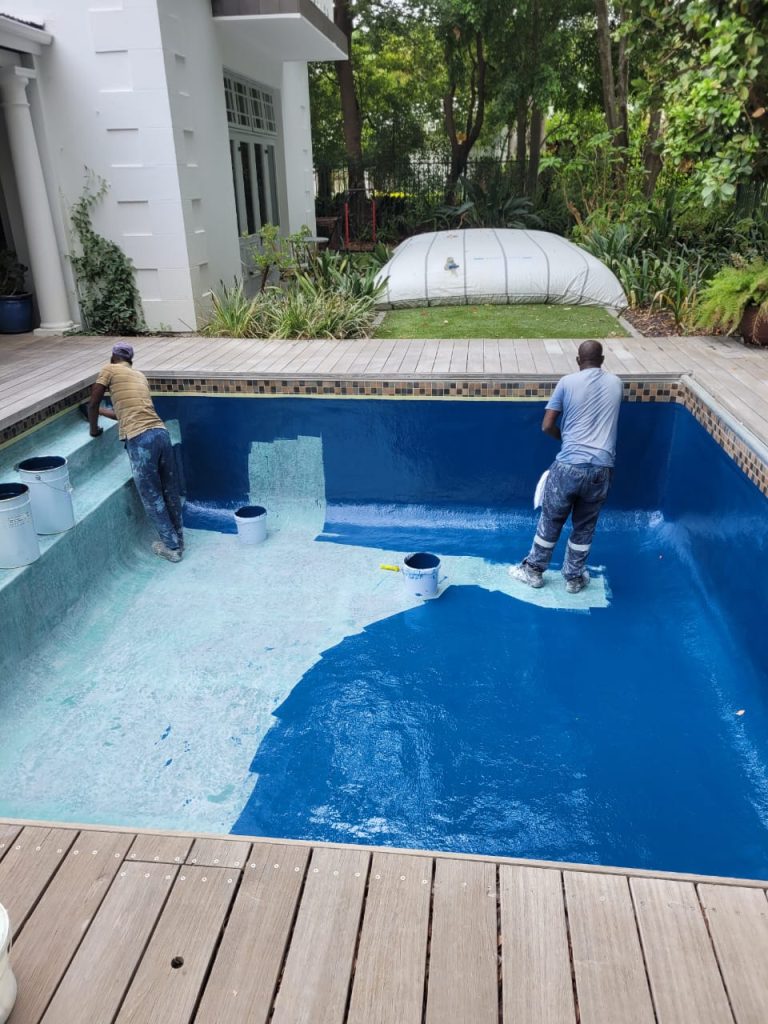
Several items can increase the final quotation.
Crack repairs
More extensive cracking means additional preparation and repair work.
Hollow or loose marbelite
Unsound material cannot simply be treated as a reliable substrate.
Existing fibreglass removal
Old failed fibreglass can require additional labour to remove and prepare.
Difficult access
Tight courtyards, stairs and restricted access can increase labour and handling requirements.
Steps and complex shapes
Curves, benches, swim-outs, steps and tight corners require more detailed fibreglass work.
Pool fittings
Skimmers, lights, drains and return fittings require careful detailing.
High water table
Groundwater management or additional moisture protection can affect the specification.
Osmosis
Existing blistering or suspected osmotic damage requires investigation and potentially additional treatment.
Heated pools
A demanding heated-pool environment may justify a higher-performance resin or more carefully specified system.
Decorative finishes
Mosaic tissue and compatible clear coatings can add to the project cost.
Waste removal
Removal and responsible disposal of old material, rubble, empty resin containers and other job-site waste should be considered when comparing quotations.
What Should a Professional Fibreglass Pool Relining Quote Include?
Before accepting a quotation, ask for a written scope.
It should ideally identify:
Pool preparation
- draining
- cleaning
- acid cleaning where appropriate
- sanding/grinding
- removal of loose material
Repairs
- crack repairs
- hollow-area repairs
- surface repairs
- fittings and penetrations
Bonding system
- primer
- bonding resin
- substrate-specific preparation
Fibreglass system
- fibreglass reinforcement
- resin type
- laminate specification
- number of layers where applicable
Moisture protection
- osmosis barrier if specified
- moisture assessment
- groundwater considerations
Finish
- poolcoat
- colour
- mosaic tissue if selected
- clear mosaic coating where applicable
Site work
- labour
- transport
- waste removal
- site clean-up
This makes quotations much easier to compare.
Questions to Ask a Fibreglass Pool Relining Contractor Before You Accept the Cheapest Quote
Ask these questions:
1. What resin are you using?
GP polyester or vinyl ester?
2. What fibreglass reinforcement are you using?
Ask for the actual specification.
3. How will you prepare my existing pool?
A vague answer such as “we clean and fibreglass it” is not enough.
4. Will the pool be mechanically sanded or ground?
This is especially important for old marbelite and contaminated surfaces.
5. What primer will be used?
The primer should be compatible with the substrate and specified system.
6. Are crack repairs included?
Don’t assume they are.
7. Does the price include waste removal?
Ask specifically.
8. Is an osmosis barrier recommended for my pool?
If yes, ask why.
9. What happens if groundwater is present?
This is particularly important for pools in moisture-sensitive locations.
10. Is the pool heated?
Tell the contractor.
The operating environment can influence the resin and finishing specification.
Fibreglass Relining vs Marbelite Resurfacing: Which Is Cheaper?
Marbelite resurfacing can have a lower upfront cost.
Current Cape Town guides commonly place marbelite resurfacing below fibreglass relining in price.
However, price should not be the only consideration.
Marbelite
Potential advantages:
- lower initial cost
- traditional appearance
- familiar South African pool finish
Potential disadvantages:
- can become rough
- porous cement-based surface
- may require more maintenance
- can deteriorate with age
Fibreglass
Potential advantages:
- smooth finish
- waterproof composite surface
- low-maintenance finish
- suitable for many concrete and marbelite renovation projects
- can provide a modern alternative to replacing the pool shell
The correct choice depends on the existing shell, budget, desired finish and long-term objectives.
Is Fibreglass Pool Relining Worth the Money?
For the right pool, it can be.
The biggest advantage is that you may be able to renovate a structurally suitable existing shell rather than demolishing and rebuilding the entire pool.
That can reduce the amount of structural construction required.
It also allows homeowners to completely change the appearance of an old pool.
A rough, stained marbelite pool can become a smooth modern composite finish.
A worn pool can receive a new waterproofing and finishing system.
A leaking surface can be investigated and incorporated into a broader renovation strategy.
However, fibreglass should not be marketed as a magic solution for every structural problem.
If the underlying shell has serious movement or structural failure, those issues must be addressed first.
Why a Free Site Assessment Is More Valuable Than a Generic Online Price
An online calculator can help you establish a budget.
It cannot see your pool.
A proper inspection can identify:
- surface deterioration
- cracks
- hollow areas
- old coatings
- damaged fittings
- previous repairs
- groundwater
- moisture
- access limitations
- difficult geometry
- heating requirements
That information allows the contractor to recommend the appropriate system.
It also reduces the likelihood of discovering major additional costs halfway through the project.
How Pools Reno Approaches Fibreglass Pool Relining
At Pools Reno, we don’t believe a fibreglass pool lining quotation should simply be:
“R___ per square metre.”
The pool needs to be assessed first.
The specification may involve:
Existing pool
↓
Inspection
↓
Surface preparation
↓
Repairs
↓
Primer/bonding system
↓
Fibreglass reinforcement
↓
Appropriate GP or vinyl ester resin
↓
Optional osmosis protection
↓
Laminate consolidation
↓
Curing
↓
Poolcoat or decorative finish
↓
Final inspection
The system is selected according to the pool rather than forcing every swimming pool into one generic specification.
For heated pools, moisture-sensitive pools and pools with previous fibreglass problems, additional consideration may be appropriate.
Get a Fibreglass Pool Relining Quote in Cape Town
If your swimming pool is:
- leaking
- cracked
- rough
- stained
- deteriorating
- losing water
- suffering from old marbelite failure
- showing signs of previous fibreglass problems
- difficult to maintain
- being upgraded to a heated pool
fibreglass relining may be worth investigating.
The important thing is to compare complete specifications rather than simply choosing the lowest advertised price.
Pools Reno provides fibreglass pool lining, relining and renovation services across Cape Town and the Western Cape.
Request a Fibreglass Pool Relining Quote from Pools Reno
You can also learn more about the technical side of fibreglass pool lining, including heated pools, resin selection, surface preparation and osmosis protection in our detailed guide.
Frequently Asked Questions
How much does fibreglass pool relining cost in Cape Town?
A reasonable 2026 budgeting range for many residential projects is approximately R45,000 to R120,000+, although the actual cost depends on pool size, surface condition, preparation, repairs, resin system, access and finishing specification.
What is the average price per square metre for fibreglass pool relining?
Published Cape Town guides currently show approximately R600–R850+ per m², but a per-square-metre figure can be misleading because the actual surface area is larger than the pool footprint and different quotations may include very different preparation and finishing specifications.
Can you fibreglass over an old marbelite pool?
Yes, where the underlying pool shell and substrate are suitable. The marbelite must be properly inspected and prepared first. Loose, hollow or contaminated areas require attention before the new laminate is installed.
Can you fibreglass over a concrete swimming pool?
Yes, a structurally suitable concrete pool can often be renovated with a fibreglass lining system. Proper surface preparation and an appropriate bonding system are essential.
Does a heated pool cost more to fibreglass?
It can. Heated pools operate under elevated temperature and chemical conditions, so the resin, laminate and finishing system may require a more carefully considered specification.
Is vinyl ester better than GP resin?
Neither should automatically be described as universally “better”. GP polyester can be appropriate for suitable applications, while vinyl ester can offer advantages where the project requires higher performance characteristics. The resin should be selected according to the application and manufacturer specification.
Does every pool need an osmosis barrier?
No. An osmosis barrier should be considered according to the pool’s moisture environment, substrate, groundwater conditions and previous history.
Does an osmosis barrier stop groundwater?
No. It can form part of a moisture-management strategy, but it does not eliminate groundwater or hydrostatic pressure around the pool shell.
How long does fibreglass pool relining take?
Many residential projects can be completed within several days to approximately a week, but the actual duration depends on pool size, preparation, repairs, weather, curing requirements, access and the specified system.
Is fibreglass cheaper than rebuilding a pool?
In many suitable renovation situations, relining an existing structurally sound pool can avoid the cost and disruption of demolishing and rebuilding the entire shell. However, a proper comparison requires assessing the condition of the existing pool.
Why are some fibreglass pool quotes much cheaper than others?
The specifications may be different. One quotation may include minimal preparation and standard materials, while another includes extensive preparation, repairs, primer, upgraded resin, additional reinforcement, osmosis protection and premium finishing.
How do I get an accurate fibreglass pool relining price?
The most reliable method is an on-site assessment. The contractor can then assess the pool’s dimensions, substrate, condition, access, moisture conditions, fittings and desired finish before preparing the quotation.
“Don’t Compare Apples With Oranges”
Comparing Fibreglass Pool Quotes?
Don’t compare only the final price. Compare the specification.
Ask what each contractor includes for surface preparation, crack repairs, primer, fibreglass reinforcement, resin, poolcoat, osmosis protection, waste removal and finishing.
A cheaper quotation is not necessarily a cheaper pool renovation if important preparation or materials are excluded.
Ask Pools Reno for a site assessment and detailed quotation.