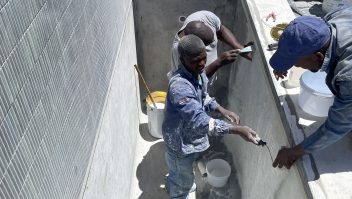
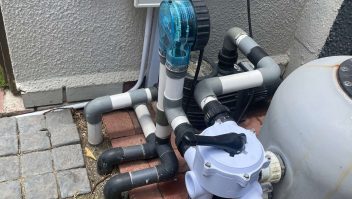
A fibreglass pool repair kit can fix small, cosmetic damage above the waterline: a chipped step edge, a gouge from a dropped tool, a small hole or a short hairline crack that isn’t moving. It can’t fix a crack that keeps coming back, a wall that’s bulging, blisters spreading across the floor, or a leak. Those have a cause behind them, and a patch only covers the symptom.
Our team repairs fibreglass pools and relines concrete ones across the Western Cape, and we see a lot of DIY patches. Some are perfectly good. Others have to be ground off before the real repair can start. Here’s how to tell which side of the line your damage is on.
A kit can usually fix
- Chips and gouges in the gelcoat or topcoat
- Small holes, roughly coin-sized, above the waterline
- A short hairline crack that hasn’t grown in months
- A chipped step edge or coping lip
- Scuffs and worn spots that need a dab of topcoat
A kit can’t fix
- Cracks longer than about 15 cm, or ones that reopen
- Bulging, bowing or soft, spongy walls
- Blisters spreading across the floor or walls
- Cracks around lights, skimmers or return jets
- Any damage that’s letting water out of the pool
What’s in a Fibreglass Pool Repair Kit?
Most kits sold in South Africa contain the same basics. Pool-specific kits add a coloured topcoat so the patch blends in.
| Item | What it’s for |
|---|---|
| Polyester resin | The liquid that soaks into the mat and hardens into the repair |
| Catalyst (hardener) | A small bottle or tube that makes the resin set. The amount is critical |
| Chopped strand mat | Glass-fibre matting that gives the repair its strength |
| Topcoat or gelcoat | The coloured, smooth final layer. Mostly in pool-specific kits |
| Acetone, sandpaper, brush, gloves | Cleaning, keying the surface, applying, and protecting your hands |
At the time of writing, general fibreglass repair kits from hardware stores cost from around R200 to R450, and pool-specific kits with a white or blue topcoat from around R470 to R490. Prices change, and a bigger patch will need extra resin and mat.
Jobs a Fibreglass Pool Repair Kit Handles Well
Kits work best on damage that’s small, dry, easy to reach and not structural. Typical examples from the pools we look after:
- A chipped step edge where something heavy was dropped. Once it’s patched, check the step still has grip. Our guide to pool steps covers non-slip finishes.
- Gelcoat chips on the bond beam or coping lip, just above the water.
- A small hole left after an old fitting or bracket was removed above the waterline.
- Spider cracks in the gelcoat that are only in the surface layer. These are cosmetic, and a topcoat touch-up stops dirt collecting in them.
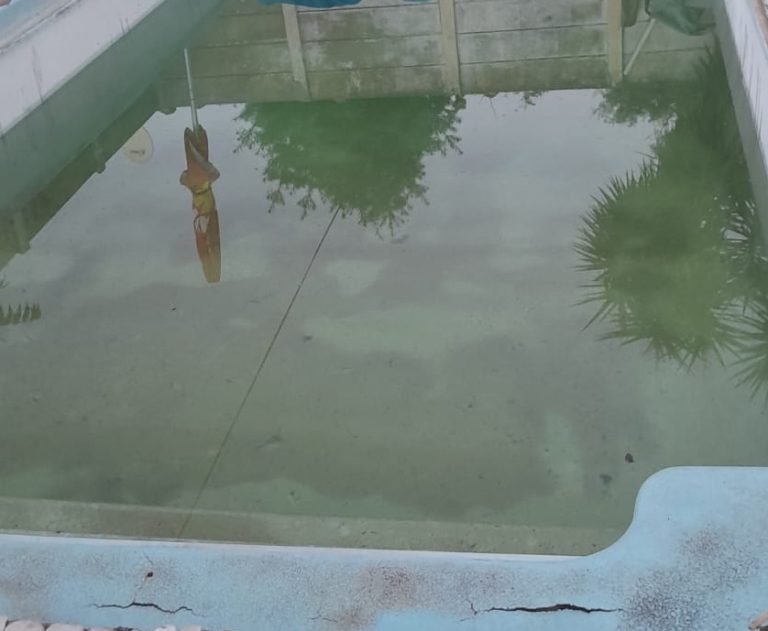
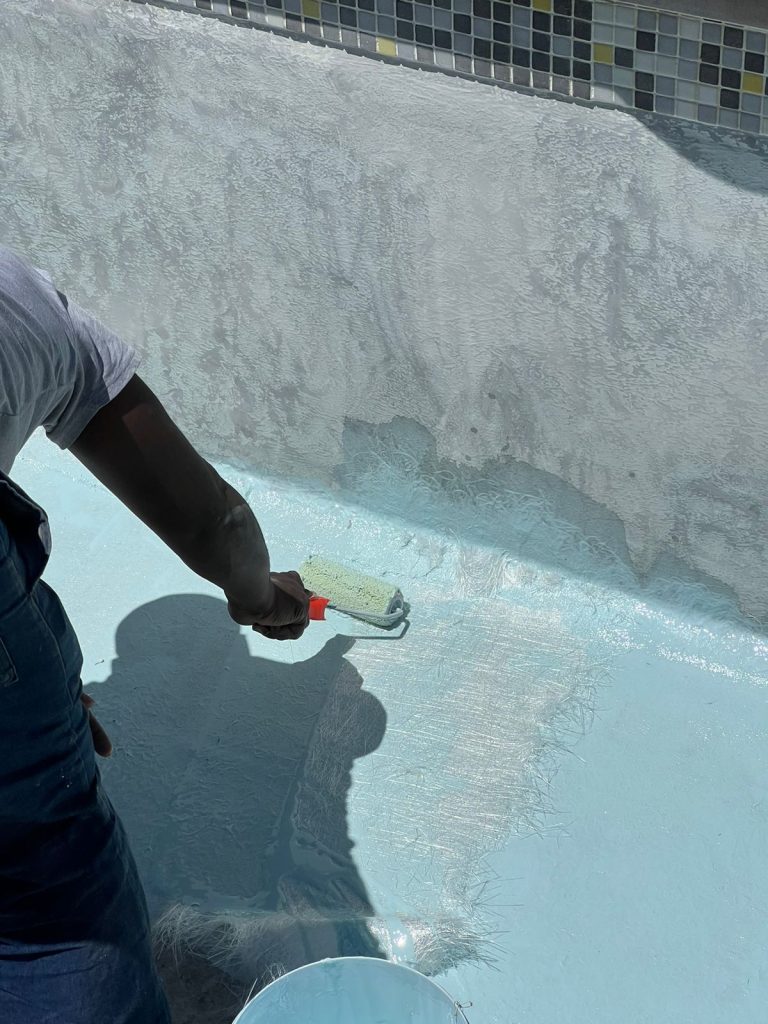
For the full how-to, including surface preparation, layering the mat and finishing, see our step-by-step series on fibreglass pool repairs. In short: the area must be completely dry, sanded back past the damage, cleaned, laminated with mat and resin, left to cure for 24 to 48 hours, then sanded and topcoated. Most DIY patches take two or three days from start to finish because of the curing.
Using a Fibreglass Pool Repair Kit Safely
Before you open the tin
- Read the kit’s instructions and safety label first, and follow its resin-to-catalyst ratio exactly. More catalyst doesn’t speed it up safely. It can overheat and crack the repair.
- Wear gloves and eye protection. The catalyst burns skin and eyes, so rinse with plenty of water if you get any on you.
- Work in fresh air. Resin fumes are strong, and resin and acetone are flammable, so no smoking, braais or open flames nearby.
- Mix only what you can use in a few minutes, and keep the kit away from children and pets.
- Don’t drain or lower a fibreglass pool to reach a repair. That’s a job for our team, for the reasons below.
Colour matching is the other thing to know. Even a white or blue topcoat from a pool kit will rarely match a pool that’s had years of sun. A patch that looks a shade different is normal. If the whole surface has faded, a full recoat with fibreglass swimming pool paint may be the better answer than lots of patches.
Underwater Fibreglass Pool Repair: What’s Possible
Standard repair kit resin won’t cure properly in water or on a damp surface, so a kit isn’t an underwater fibreglass pool repair. Below the waterline, the honest options are:
- A temporary underwater putty. Epoxy putties made for wet use can plug a small chip or hole until a proper repair is done. Treat it as a holding measure.
- A proper repair with the water lowered. This is the lasting fix, but on a fibreglass shell lowering the water is where things go wrong.
A fibreglass shell relies on the water inside to balance the pressure of the soil and groundwater outside. Empty it, or even drop it a long way, especially after Cape winter rain, and the walls can bow in or the whole shell can lift. A shell that was poorly backfilled during fibreglass swimming pool installation is even more at risk. When a repair below the waterline is needed, our team manages the water level, the timing and the weather so the shell stays put.
Where a DIY Fibreglass Patch Goes Wrong
When we’re called to a failed patch, it’s usually one of these:
- The surface wasn’t dry or clean. Pool water left in the laminate, or old chemicals on the surface, stop the resin bonding. The patch lifts within months.
- The cause wasn’t fixed. A crack from ground movement or a moving wall reopens straight through the new patch.
- The wrong material. Builders’ fillers and household sealants aren’t made for constant immersion in chlorinated water.
- Too thick in one go. Heavy layers trap air and cure unevenly, leaving a weak spot.
A failed patch isn’t the end of the world, but it does mean grinding it off before a proper repair, which adds to the job.
When a Fibreglass Pool Repair Kit Isn’t Enough
Put the kit down and call our team if you see any of these:
| What you see | What it usually means |
|---|---|
| A crack longer than about 15 cm, or one that keeps reopening | Movement in the shell or the ground under it |
| Walls bulging, bowing or feeling soft | Pressure from outside, poor backfill or water behind the laminate |
| Blisters across a large area | Water working into the laminate, often from age or water chemistry |
| Cracks around lights, skimmers or jets | Stress at the fitting, and often a leak |
| The water level dropping | A leak that needs finding before any patch |
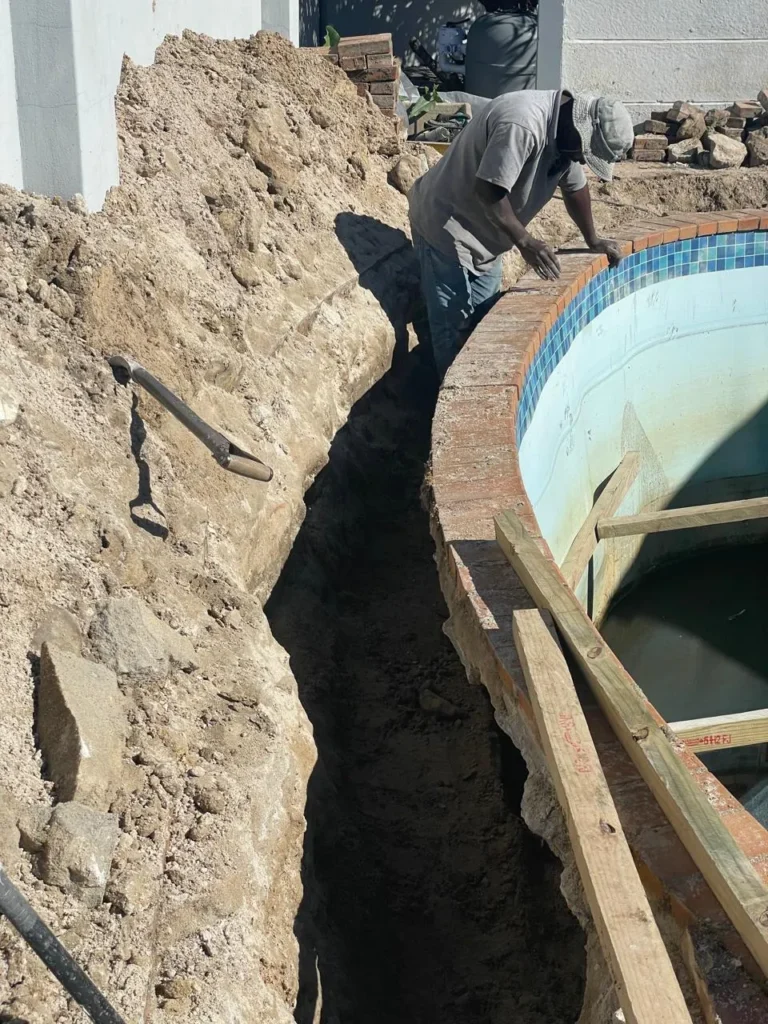
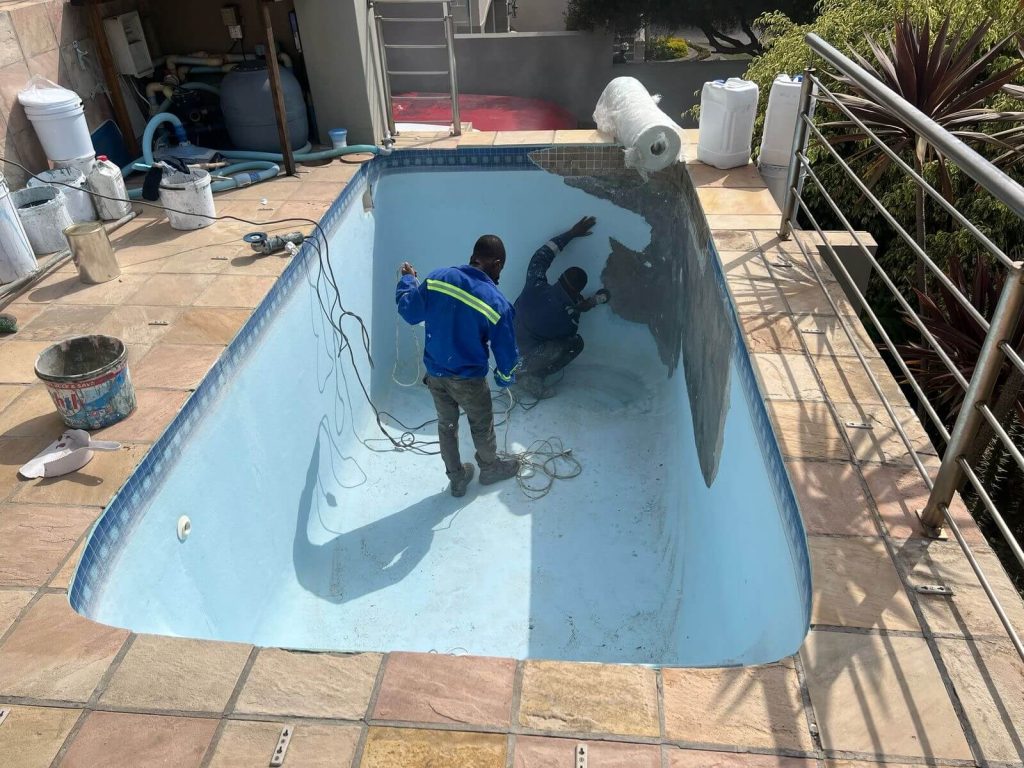
Bulging walls on older fibreglass pools usually come from the ground outside, and our guide to repairing fibreglass pools with bulging and cracking explains what’s involved. For serious damage to a fibreglass swimming pool shell, the repair is laminated in several layers and properly cured before the water goes back in.
If the pool is losing water, find out why first. Our guide to swimming pool leaks explains the bucket test, and our pool leak detection team can pinpoint the spot. If the surface is worn all over, a full pool relining may make more sense than a string of repairs.
A Note on Relined Concrete Pools
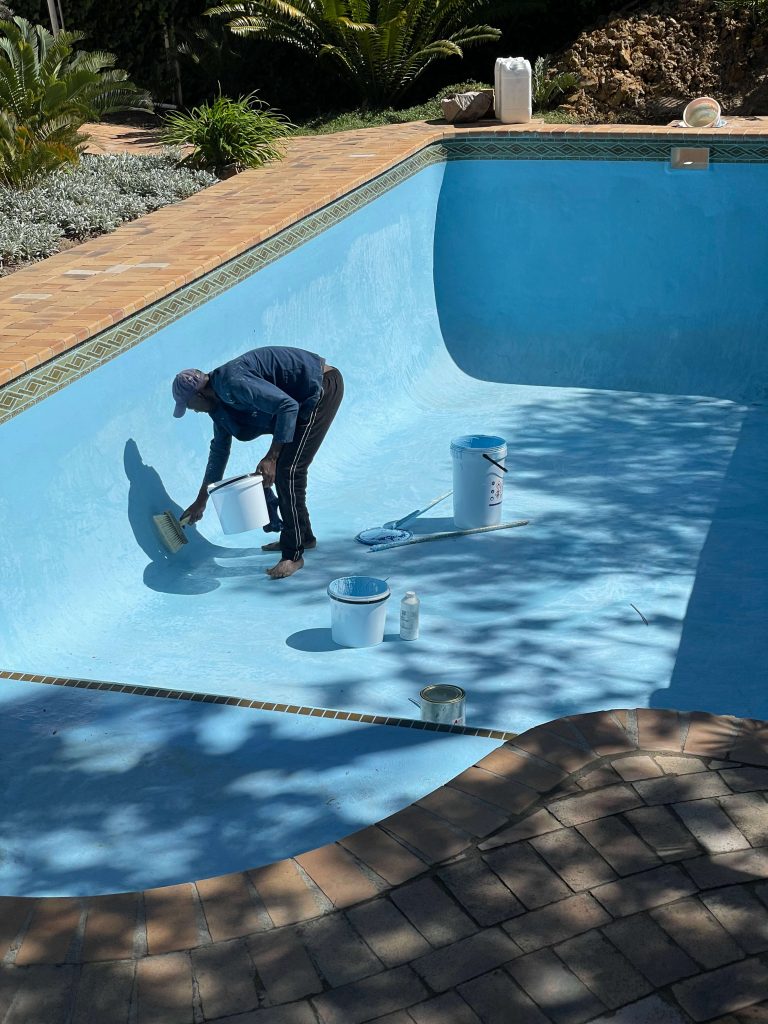
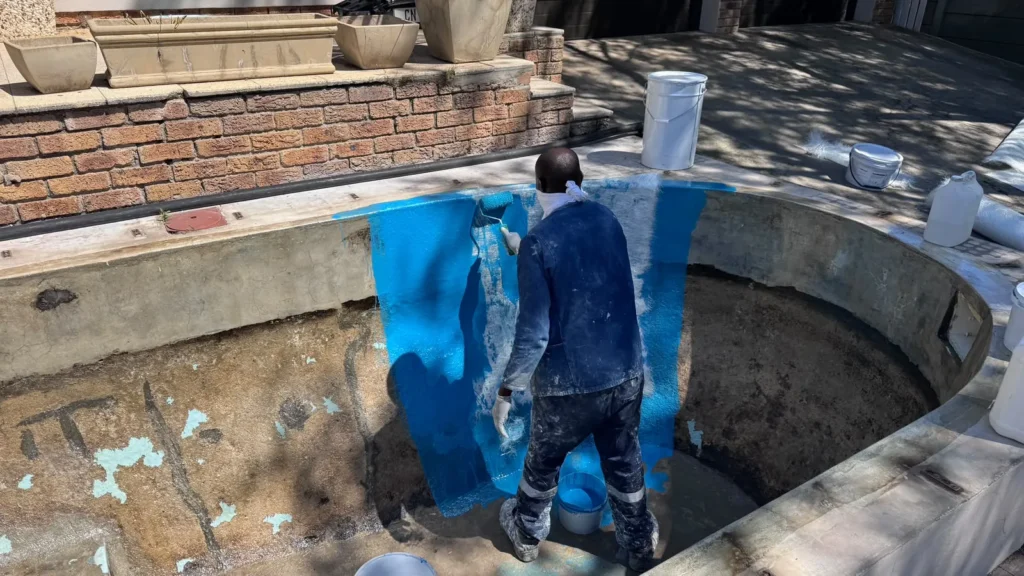
Many Western Cape pools are concrete or gunite shells with a fibreglass lining, not one-piece fibreglass shells. A small chip in the lining can be patched the same way. But a crack that runs through the lining often started in the concrete underneath, so patching the lining alone won’t hold. That crack needs repairing from the shell outwards.
Not sure if a kit will do it?
Send us a photo of the damage with something for scale, like a coin or a ruler. Our team will tell you honestly whether it’s a DIY patch or a job for us, and if it doesn’t hold, call us.
Call 074 378 6623, WhatsApp us, or email info@poolsreno.co.za. We also offer full swimming pool repair services for cracks, leaks and structural damage.
Fibreglass Pool Repair Kit Questions
Yes, for small chips, holes and short hairline cracks above the waterline. Use a pool repair kit, keep the area dry and follow the instructions exactly. Anything structural, spreading or leaking should be left to a professional.
Only temporarily. Standard kit resin won’t cure in water, but an epoxy putty made for wet use can plug a small hole until a proper repair is done with the water lowered. On a fibreglass shell, lowering the water should be left to professionals.
Most kit repairs need 24 to 48 hours to cure before sanding and topcoating, depending on temperature. Cold, damp weather slows it down.
At the time of writing, general fibreglass repair kits cost from around R200 to R450 and pool kits with a coloured topcoat around R470 to R490. Bigger repairs need extra resin and mat.
No. A fibreglass shell can bulge or lift when it’s emptied, especially when the ground is wet. If a repair needs the water lowered, let our team manage it.