Concrete and gunite pools are built to last decades, but the surface and the fittings don’t last as long as the shell. Sooner or later most older pools need some concrete pool repair work, and it nearly always falls into one of three groups: cracks, hollow spots in the plaster, or leaks.
The right repair depends on which one you’ve got, and the order you do them in matters as much as the repair itself. This guide explains how our team tells them apart, how each is fixed properly, and what you can safely check yourself first.
What we check before quoting any repair
- Is the pool actually losing water, or is it evaporation?
- Is a crack only in the plaster, or through the shell?
- Is the crack growing, and are there rust stains around it?
- Does the plaster sound hollow when it’s tapped?
- Are the skimmer, lights, jets and coping joint sound?
A quick word on terms. A gunite swimming pool is concrete sprayed onto a steel frame, while other concrete pools are cast or built with blocks. Both usually have a marbelite or fibreglass finish on top, and they’re repaired in much the same way.
Concrete Pool Repair Starts With the Right Diagnosis
| What you see | Likely cause | Usual repair |
|---|---|---|
| Fine web of surface cracks | Ageing or shrinking plaster | Usually cosmetic. Resurface when it gets rough |
| Single hairline crack, no water loss | Movement in the plaster layer | Seal it and keep an eye on it |
| Crack with water loss or rust stains | Crack through the shell, steel corroding | Structural crack repair, then a new finish |
| Hollow sound, bulges or flaking | Plaster has lost its bond with the shell | Chip out to sound material, patch or resurface |
| Gap where the pool meets the paving | Movement at the coping joint | Reseal the joint, re-bed loose coping |
| Water loss with no visible crack | Skimmer, light, jets or pipes | Leak detection, then targeted repair |
Concrete Pool Repair for Cracks
Hairline and Surface Cracks
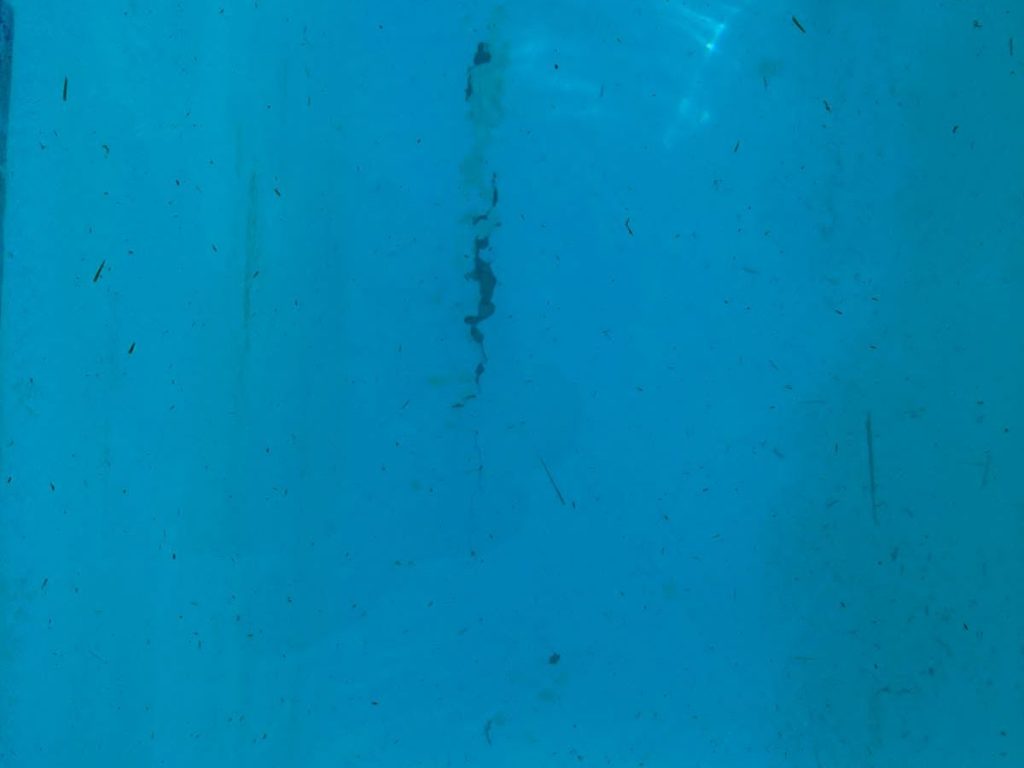
Most cracks in older pools are in the plaster only. Fine crazing across the surface is normal as marbelite ages and isn’t a leak risk on its own. A single hairline crack can be opened slightly and sealed with a suitable pool repair compound.
The important thing is whether it’s moving. Mark both ends of the crack with a waterproof marker and note the date. If it’s grown after a few weeks, or the pool is losing water, treat it as structural.
Structural Cracks in the Shell
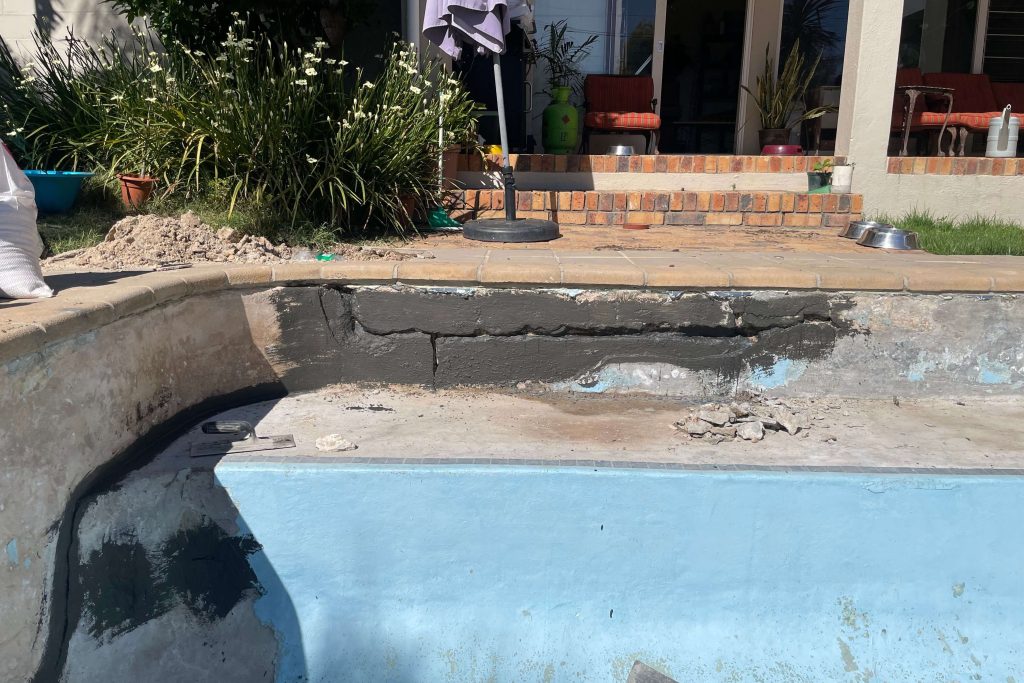
A structural crack runs through the concrete itself. Signs include water loss, a crack that keeps growing, rust staining from the steel inside, or a crack that lines up across the wall and floor. Common causes are ground movement on clay soils, tree roots, a pool emptied while the ground was waterlogged, or weak original construction.
Fixing one properly means draining the pool, cutting the crack open along its length, stitching across it with steel where needed, filling it with a structural repair compound and waterproofing over it. Then the finish goes back on. For the causes in more depth, see our guide on how to fix a crack in a swimming pool.
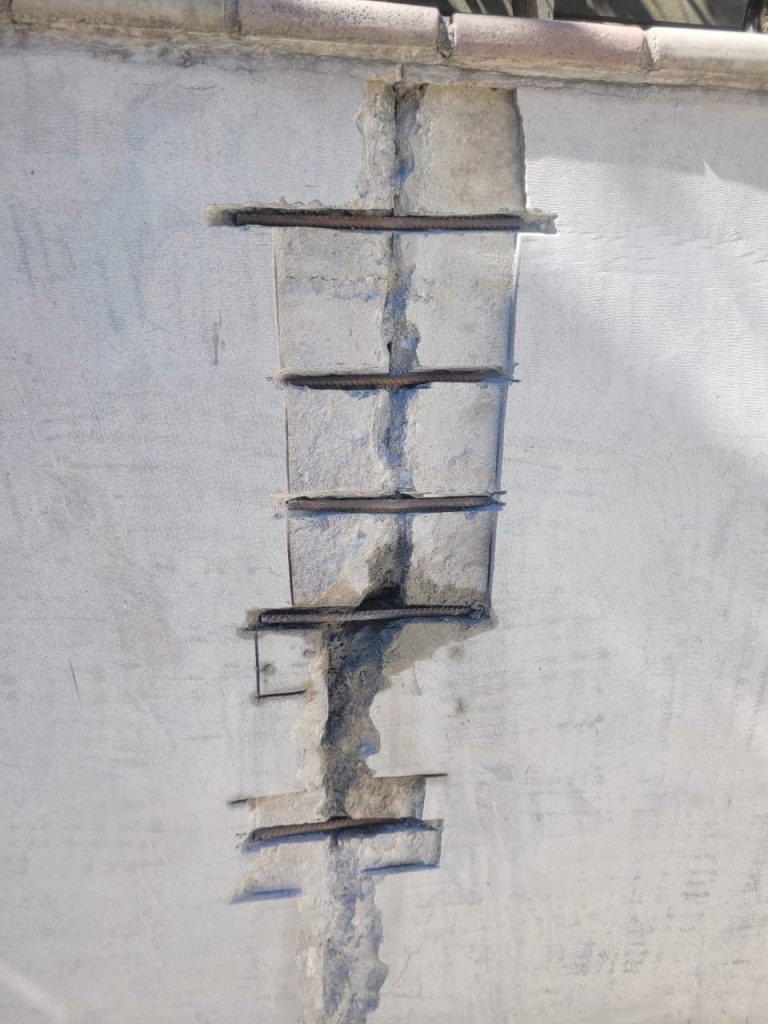
This is not a weekend job. Putty pushed into a structural crack under water may slow a leak for a while, but the crack keeps moving and the steel keeps rusting. For typical prices, our cost guide covers crack repairs and swimming pool leak repairs, and we’ll always quote once we’ve seen the pool.
Concrete Pool Repair for Hollow Spots
Tap the plaster on a drained pool and most of it sounds solid. Hollow spots sound dull and drummy, because the plaster has come away from the concrete behind it. Left alone, they crack, flake and eventually fall off, leaving rough patches that cut feet and grow algae.
Delamination usually comes from a weak bond when the plaster was first applied, water getting in behind it through cracks, too many layers of re-marbelite over the years, or a pool left empty in the sun.
- Every hollow area is chipped out back to sound material, not just the obvious ones.
- The exposed concrete is cleaned and treated so the new material bonds.
- Small areas are patched. Expect patches to show a slight colour difference on marbelite.
- When hollow areas are widespread, a full resurface or a fibreglass relining makes more sense than dozens of patches.
There’s more on the causes and prevention in our guide to pool plaster delamination.

Finding and Fixing Leaks in Gunite and Concrete Pools
Before assuming the worst, rule out evaporation. In a hot, windy Western Cape summer a pool can lose a surprising amount of water. Our guide to swimming pool leaks and evaporation shows how to do a simple bucket test.
If it is a leak, these are the usual suspects in a concrete or gunite pool:
- The joint where the plastic skimmer box meets the concrete
- The light niche and the conduit carrying its cable
- Return jets and the main drain
- Cracks through the shell
- Pipes under the paving, especially near the pump
Our swimming pool leak detection uses pressure testing on the pipes, dye testing at fittings and cracks, and electronic listening to pinpoint the leak before anything is dug up or cut open.
Gunite Pool Repair in the Right Order
The most expensive mistake we see is a new surface over a problem that wasn’t fixed first. The order we follow is:
- Find and fix any leaks in the pipes and fittings.
- Repair structural cracks, and fix the bond beam and pool coping where needed.
- Remove all hollow and loose plaster.
- Waterproof any repaired areas.
- Apply the new finish, marbelite or fibreglass.
- Refill, balance the water and check the level over the following days.
If you’re weighing up the finish, our comparison of fibreglass vs marbelite pools sets out the pros and cons of each.
Patch Repair or a Full New Surface?
A patch repair makes sense if
- There are one or two small problem areas
- The rest of the surface is sound and smooth
- The pool isn’t due for a new finish for a few years
- You can live with a slight colour difference
A full resurface or relining makes sense if
- Hollow areas are spread across the pool
- There are many cracks, or cracks keep coming back
- The surface is rough, stained or growing algae
- The pool is drained for structural repairs anyway
Fibreglass is worth considering on a pool with a history of cracking, because the laminate bridges fine cracks that would show through plaster. Our pool relining page explains how it’s done, and our pool renovation services cover the rest.
Western Cape factors that affect repairs
- Winter groundwater. An empty pool in waterlogged ground can lift or crack. We plan draining around the weather and the water table.
- Clay soils. Ground that swells in winter and shrinks in summer is behind many shell cracks.
- Coastal air. Near the sea, steel exposed by a crack rusts quickly and the rust widens the crack.
- Weather windows. Repair compounds and new finishes need dry conditions to cure, so wet spells add time.
Safe Checks You Can Do Yourself
- Do a bucket test to compare water loss with evaporation.
- Mark the ends of any crack and check them again in a few weeks.
- Look for rust stains, damp patches in the garden or water around the pump.
- Note whether the level stops dropping at the skimmer or a light, which points to the leak.
Don’t drain the pool yourself to look, and don’t chip at the plaster. If these checks point to a problem, or they don’t fix it, call our team.
Cracks, hollow plaster or a pool losing water?
Our team will find the cause, explain whether it’s a patch job or a bigger repair, and give you a written quote before any work starts.
Call 074 378 6623, WhatsApp us, or email info@poolsreno.co.za. See our swimming pool repair services for everything we fix.
Concrete Pool Repair: Frequently Asked Questions
Yes, most can. Surface cracks are sealed, and structural cracks are opened, stitched, filled and waterproofed before a new finish goes on. A pool only needs major rebuilding when the shell has failed badly.
Warning signs are water loss, a crack that keeps growing, rust stains, or a crack that lines up across the wall and floor. Fine surface crazing is usually cosmetic. If you’re unsure, have it inspected before it gets worse.
The plaster has lost its bond with the concrete behind it. Common causes are poor bonding when it was applied, water getting in through cracks, many layers of old plaster, or a pool left empty in the sun.
Some small surface repairs can be done under water with special compounds, but they’re often temporary. Structural cracks and hollow plaster need the pool drained, and draining should be planned around the weather and groundwater.
Both can work. Fibreglass relining handles fine cracks better because the laminate bridges them, while marbelite costs less upfront. It depends on how much cracking the pool has had and your budget.