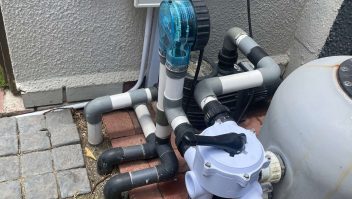
A pool pump leaking water is almost always one of four things: a worn shaft seal between the pump and the motor, a tired lid O-ring on the strainer basket, a loose or cracked fitting on the pipes, or a cracked pump housing. Where the water appears tells you which one it is.
The one you shouldn’t ignore is a leak from underneath, between the pump and the motor. That’s the shaft seal, and the water it lets past runs into the motor bearings. A seal is a small repair. A rusted motor is a big one.
Where is your pool pump leaking?
- Dripping from the bottom, where the pump body meets the motor: shaft seal. Book a repair soon.
- Seeping around the clear lid on top: lid O-ring, or the lid isn’t seated. Often a quick fix.
- Dripping at the pipe joints or unions: a loose union, a perished O-ring or a cracked fitting.
- Weeping from a crack in the plastic body: cracked housing. The part, or the pump, needs replacing.
- Water in the pump pit but the pump looks dry: it may be rain, the filter or the multiport valve, not the pump.
Why Your Pool Pump Is Leaking Water: The Common Causes
1. A worn shaft seal (pool pump leaking from the bottom)
The shaft seal sits where the motor shaft passes into the wet end of the pump. It keeps pool water on the pump side and the motor dry. When it wears, water dribbles out between the pump and the motor, leaving a wet patch under the pump and often rust or white crust on the motor end.
Seals wear with age, but some things kill them fast:
- Running dry. A blocked skimmer or pump basket, or a water level below the skimmer, lets the pump run without water. The seal faces overheat in minutes and crack.
- Water out of balance. Very low pH or very high chlorine attacks the rubber parts of the seal.
- Salt and hard water. Salt pools and hard Boland water leave crystals on the seal faces that wear them down.
2. The lid O-ring or strainer lid
The clear lid over the pump basket seals on a large O-ring. If that ring is dry, flattened, cracked or has a leaf or grit caught under it, water seeps out around the lid when the pump is off. With the pump running, the same gap often sucks air in instead, so you’ll see bubbles in the basket and the pump may struggle to hold prime. If you also find the pool pump not pumping water properly, our guide to losing prime explains why.
3. Unions, threaded fittings and drain plugs
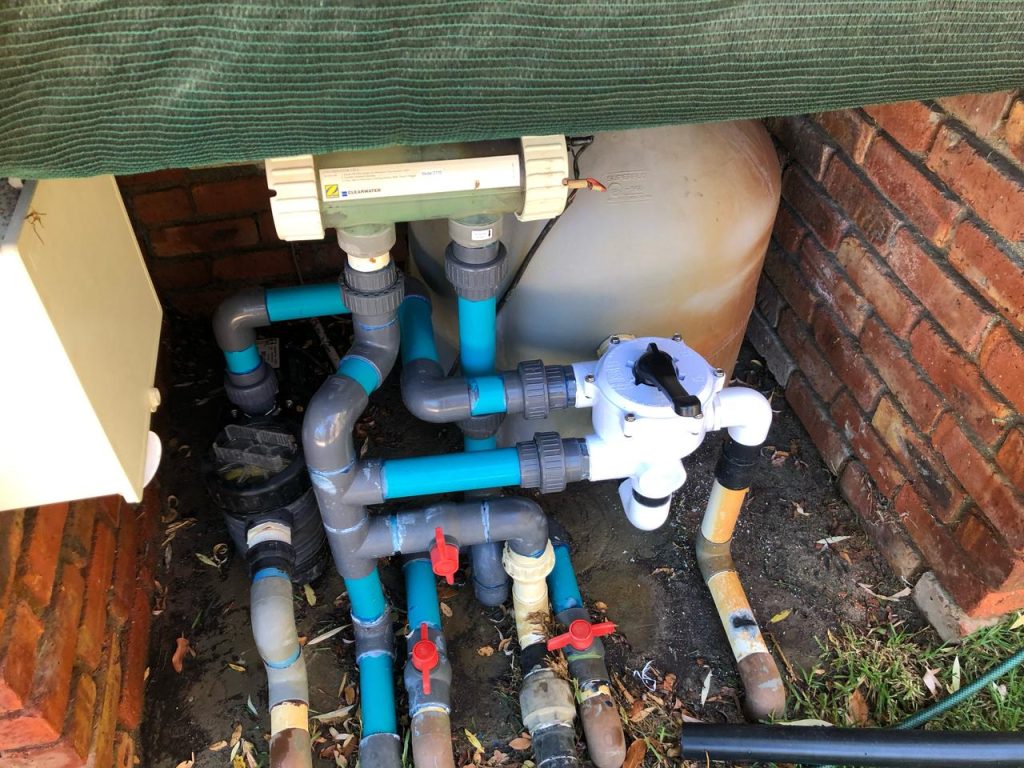
Most pumps connect with screw-on unions, each with its own O-ring, and have small drain plugs at the bottom. Unions work loose, O-rings perish in the sun, and overtightened threaded fittings crack. On the outlet side these leaks drip or spray while the pump runs. If the leak is in the pipework further away from the pump, our post on swimming pool pipes and fittings explains how those are found and fixed.
4. A cracked pump housing or seal plate
The plastic pump body and the plate that holds the seal can crack from a knock, from fittings forced in too tight, or from heat after a long dry run. A cracked housing can’t be glued back reliably, so the part, or the pump, is replaced.
Pool Pump Leaking Water: Symptoms and Fixes at a Glance
| Where the water is | Most likely cause | Usual repair | How urgent |
|---|---|---|---|
| Underneath, between pump and motor | Worn pool pump seal | New shaft seal, often with fresh O-rings | Soon. Water reaches the motor bearings |
| Around the lid | Lid O-ring dirty, dry or perished | Clean and lubricate, or replace the O-ring | Low, but it can cause air leaks |
| At unions or threaded joints | Loose union, perished O-ring or cracked fitting | Retighten, new O-ring or new fitting | Medium. Fix before it gets worse |
| From the pump body itself | Cracked housing or seal plate | Replace the part or the pump | Medium to high |
| Pump pit full, pump dry | Rain, filter, multiport or pipe leak | Find the real source first | Depends on the source |
Safe Checks for a Pool Pump Leaking Water
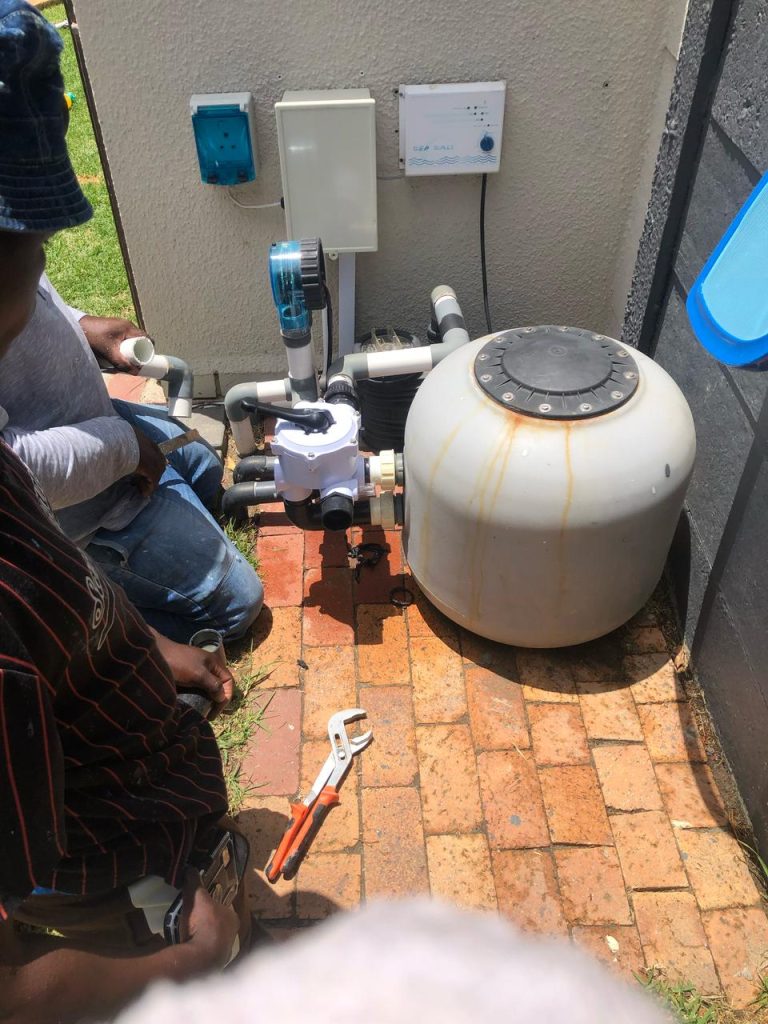
You can narrow down where a pump is leaking without touching anything electrical. Switch the pump off at the board before you put your hands near it.
- Dry the pump, the unions and the floor under it with an old towel.
- Turn the pump on at the board and stand back. Watch where the first drops appear. Then switch it off again at the board.
- Check the lid. Make sure the O-ring is in its groove, clean and free of grit, and that the lid is hand tight. A thin smear of silicone lubricant made for pool O-rings helps. Don’t use petroleum jelly, which swells rubber.
- Check the unions are hand tight. Don’t use tools on plastic unions; they crack.
- If the pump pit is full of water, check whether it’s been raining. Many pits flood in a Cape winter without any leak at all.
Safety first
Never open the motor, unplug wiring or work on a pump with the power on. A pump that leaks onto its own motor and wiring is a real shock risk. If the water is coming from the motor end, or these checks don’t fix it, switch the pump off at the board and call our team.
Repair Options When a Pool Pump Is Leaking Water
Once our team has found where the water is coming from, the repair is usually one of these:
Quick fixes we often do on the spot
- Cleaning and replacing the lid O-ring
- Replacing union O-rings and retightening unions
- Replacing perished drain plug O-rings
- Redoing a leaking threaded joint with fresh thread tape
Bigger repairs that need the pump apart
- Replacing the shaft seal, which means separating the motor from the pump
- Replacing a cracked pump body or seal plate
- Rebuilding the motor if water has already reached the bearings
- Replacing the pump if the motor is rusted through
A shaft seal job means isolating the power, unplumbing the pump, separating the motor from the wet end and removing the impeller to reach the seal. We fit new O-rings at the same time and check why the seal failed, so the new one lasts.
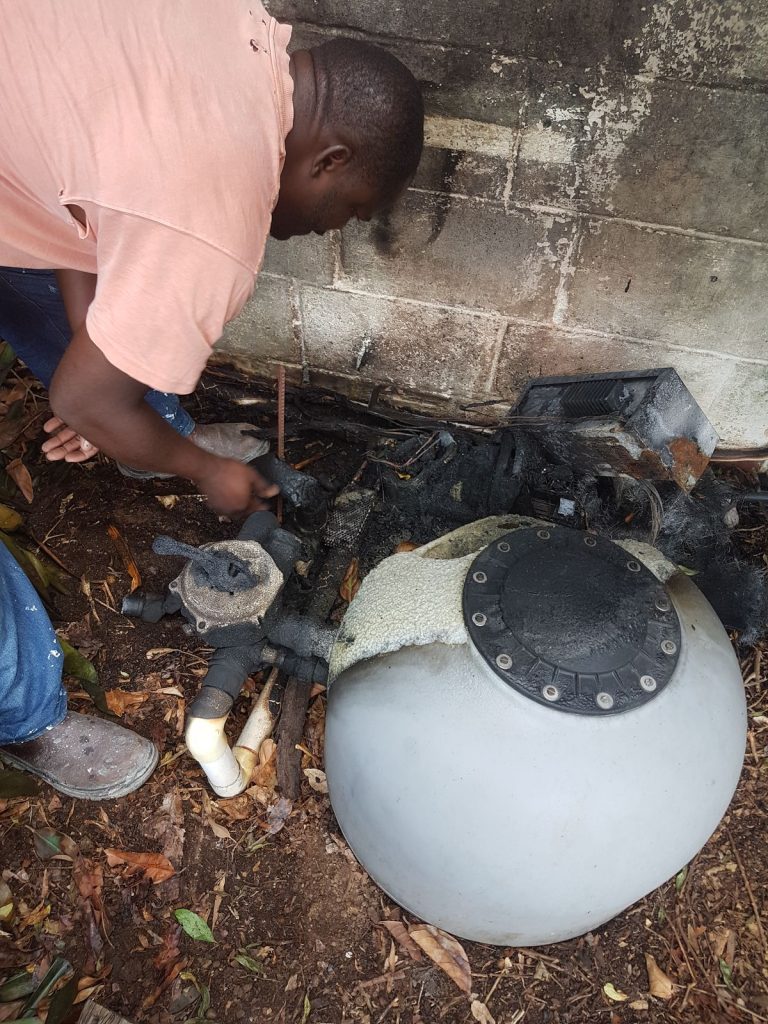
If water has been getting into the motor for a while, you may already hear grinding or screeching from the bearings. Our guide to a pool pump motor that’s making noise explains what each sound means. At that stage a motor rebuild or a new pump may make more sense than a seal. Our pool pump prices guide sets out the costs and how we decide.
Stopping Your Pool Pump Leaking Water Again
- Keep baskets clear. Empty the skimmer and pump baskets often, especially in autumn, so the pump never runs dry.
- Keep the water balanced. Low pH and very high chlorine are hard on seals and O-rings.
- Keep the pump dry and shaded. Raise it above the floor of the pump pit, give the pit a drain, and keep rain off the motor.
- Backwash on time. A clogged filter pushes pressure up on the outlet side. Here’s how to backwash a pool filter properly.
Is the pool still losing water after the pump is fixed? Then the leak is somewhere else, in the pipes, a fitting or the shell. Our pool leak detection uses pressure testing, dye testing and electronic listening to find it.
Pump still leaking?
Switch it off at the board and send us a photo or short video of where the water is coming from. Our team will tell you what it looks like and book a pool pump repair with a price before any work starts.
Call 074 378 6623, WhatsApp us, or email info@poolsreno.co.za.
Pool Pump Leaking Water: Questions We Get Asked
A leak from the bottom, between the pump body and the motor, is nearly always a worn shaft seal. It should be replaced soon, because the water runs towards the motor bearings and can rust them.
A slow drip from the lid or a union can wait a few days if the pump is otherwise fine. A leak from the motor end, or any leak that wets the motor or wiring, means switching off at the board and booking a repair.
It varies a lot with how the pool is run. A seal can last many years in a pump that never runs dry and has balanced water, but a single long dry run can ruin a new seal in minutes.
Usually yes. Lid O-rings, union O-rings and shaft seals are among the cheaper pump repairs. It’s only worth replacing the pump if the housing is cracked, the motor has rusted or burnt out, or the pump is old and due anyway.