Leaking pool pipes are one of the hardest pool problems to spot, because the leak is usually underground or under paving. The pool keeps dropping, the walls look perfect, and nothing seems wrong. The clues are in how the water level behaves, what the pump is doing and what’s happening to the ground around the pool.
The good news: a pool plumbing leak can be pinned down to a single spot and fixed with one small hole, not a trench across the garden. Here’s what to look for, why pool pipes leak, and how our team finds and repairs them.
Signs it’s the pipes, not the pool shell
- The pool loses more water with the pump running than with it off
- Air bubbles blow out of the return jets, or the pump basket keeps filling with air
- A wet patch, soggy lawn or green strip along the route between the pool and the pump
- Paving sinking, lifting or cracking along the pipe route
- Sand or soil turning up in the pool that didn’t blow in
How Pool Plumbing Works, and Where It Leaks
Every pool has two sets of pipes. Knowing which is which tells you a lot about a leak.
Suction lines (into the pump)
- Run from the skimmer and the main drain to the pump
- Under suction while the pump runs, so a crack pulls in air
- Signs: air in the pump, bubbles from the jets, losing prime
- May leak water mainly when the pump is off
Return lines (back to the pool)
- Run from the filter back to the return jets
- Under pressure while the pump runs, so a crack pushes water out
- Signs: more water loss with the pump on, wet ground
- Often under paving close to the pool edge
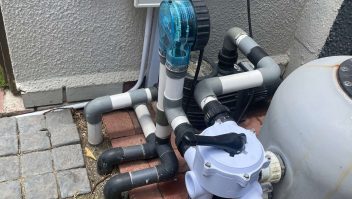
Most home pools in South Africa are plumbed in PVC pipe with glued joints, plus unions and valves at the pump and filter. Leaks turn up in three places: the buried pipe runs, the fittings where the pipes meet the pool wall, and the equipment area.
Signs of Leaking Pool Pipes
A Pool Return Line Leak
Because the return side is under pressure, a broken return line can lose a lot of water quickly while the pump runs. If the level drops noticeably faster on days the pump runs longer, the return side is the first suspect. Damp ground near the pool edge and jets that feel weaker than they used to are other hints.
A Suction Side Leak
A crack on the suction side tends to show itself through air. The pump basket never quite fills, the pump gurgles, and the return jets spit bubbles. Our guide to a pool pump not sucking water covers the simpler causes first, like the lid O-ring and a low water level. If those check out, the pipe is next.
A Pool Pipe Leak Under Paving
Water escaping underground washes out the sand bed under the pavers. Over weeks you’ll see pavers dipping, rocking or lifting, cracks in the grout lines, or a patch that stays damp in dry weather. In summer, a strip of lawn that’s greener than the rest can follow a pipe exactly.
What Causes a Pool Plumbing Leak?
Pipes rarely fail for no reason. These are the causes we find most often in Western Cape gardens:
- Ground movement. Winter rain soaks clay and sandy soils, the ground shifts as it dries, and rigid joints crack.
- Tree roots. Roots find their way to damp joints and slowly push them apart.
- Old or poor glue joints. A joint that wasn’t glued properly can hold for years, then let go.
- Weight on top. Pipes laid too shallow under a driveway or heavy paving get crushed or cracked.
- Fittings at the pool wall. Where a pipe meets the concrete at a return jet or skimmer, small movements open gaps.
- Garden work. A spade, fence post or irrigation trench through a pipe is more common than you’d think.
- The equipment area. Unions, valve seals and O-rings wear out, and pipes exposed to sun turn brittle.
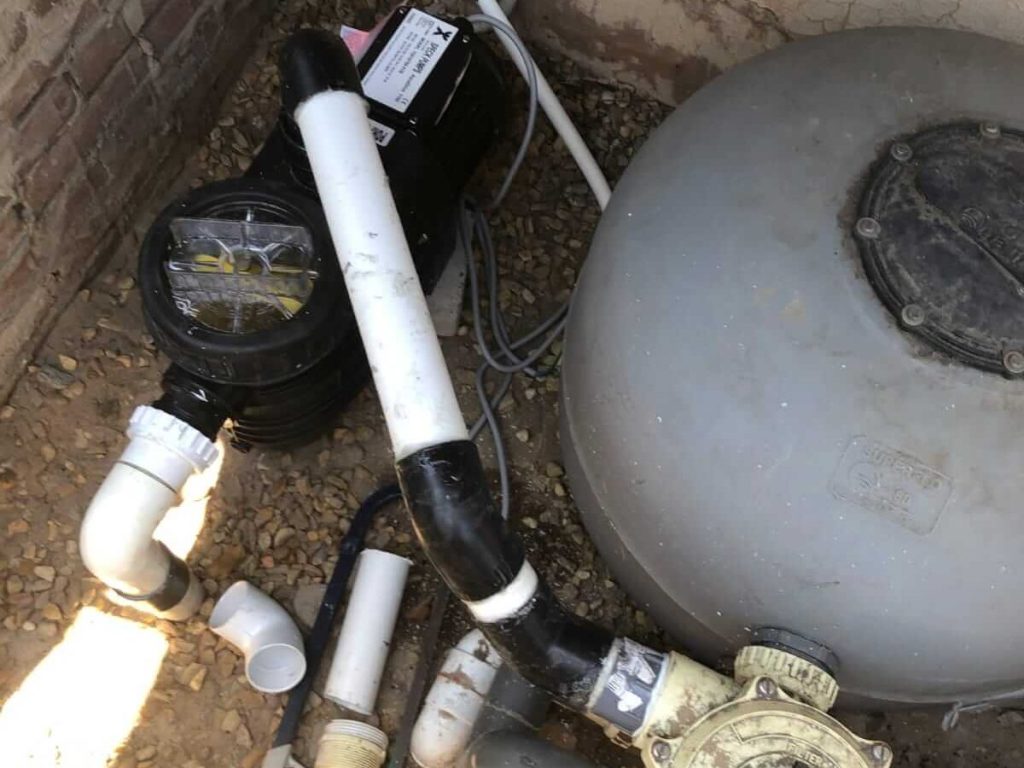
A drip at the pump itself is a different job. If water is running from between the pump body and the motor, that’s a seal, and it falls under pool pump repair rather than plumbing.
Checks You Can Do for Leaking Pool Pipes
You can gather useful clues safely before calling anyone:
- Mark the water level with tape and compare a day with the pump on against a day with it off.
- With the pump running, look and feel around the pump, filter and valves for drips or damp.
- Walk the route between the pool and the pump house. Look for damp patches, sinking pavers or extra-green grass.
- Watch the return jets for bubbles and the pump lid for air.
- Note anything else unusual, like sand in the pool or a higher water bill.
What not to do
Don’t start digging to look for the pipe. You can damage pipes, irrigation and the electrical cable to the pump and pool light, which often runs in the same trench. Don’t drain the pool to hunt for a leak either. Sealant products poured into the pool are a stopgap at best on a cracked pipe. If your checks point to the plumbing, call our team.
Our guide on how to find a leak in a pool goes through the wider checks, including the shell, skimmer and light.
How a Pool Plumbing Leak Is Found
Finding the exact spot is what keeps the repair small. Our team uses three methods:
- Pressure testing each line on its own, so we know whether it’s the skimmer line, the main drain or a return.
- Dye testing at the wall fittings, skimmer throat and jets, where a puff of dye gets drawn into a leak.
- Electronic listening along the buried pipe to pinpoint where the water is escaping, so we dig in one place.
Our page on pool leak detection explains the process in more detail. If the leak turns out to be in the shell rather than the pipes, see how to fix a pool crack for what’s involved.
How Leaking Pool Pipes Are Repaired
Once the leak is pinpointed, a typical underground pipe repair goes like this:
- The pump is switched off at the board and the line is isolated.
- Paving is lifted carefully and stacked so the same pavers go back.
- We dig down to the pipe at the marked spot, keeping the hole as small as the job allows.
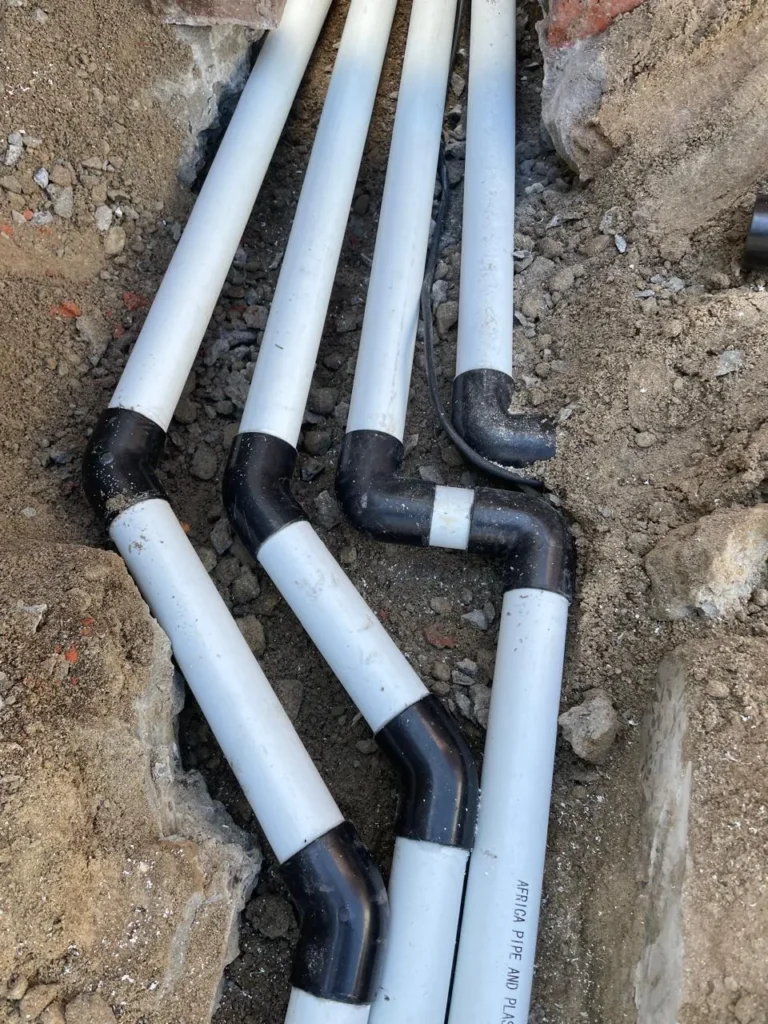
- The damaged section is cut out and replaced with new PVC and proper couplings, glued and left to cure.
- The line is pressure tested again before anything is covered up.
- The trench is backfilled and compacted, and the paving is relaid.

Leaks at the pool wall are handled differently. A leaking return jet or skimmer throat is usually resealed, or the fitting is replaced. Leaks in the equipment area often need new unions, O-rings or a valve. If an old pipe run keeps failing in different places, replacing that whole run can work out cheaper than patching it every season.
When the paving goes back, it’s a good moment to fix any sunken areas around it. Our pool paving team can relay or replace the surround at the same time.
What a Pool Pipe Leak Repair Costs
The price depends on how deep the pipe is, what’s on top of it and how many leaks there are. A single leak under lawn costs far less than one under a concrete driveway. Our price guide to swimming pool leak repairs and other common jobs gives current ranges. Our guide on how to fix a pool leak covers leaks in the shell and fittings too.
Don’t leave it. A pipe leak wastes water every hour the pump runs, washes out the ground under your paving and keeps throwing the water chemistry off.
Think your pool pipes are leaking?
Tell us what you’ve noticed: the water loss with the pump on and off, any wet ground, and any air in the pump. Our team will find the leak and quote for the repair before any work starts.
Call 074 378 6623, WhatsApp us, or email info@poolsreno.co.za. We also offer general swimming pool repair services once the leak is found.
Leaking Pool Pipes: Frequently Asked Questions
The main clues are losing more water with the pump running, air in the pump or bubbles from the jets, and wet or sinking ground along the pipe route. A pressure test of each line confirms which pipe is leaking.
Usually, yes. Once the leak is pinpointed with pressure testing and electronic listening, the repair is normally a single small hole at that spot. Paving is lifted and relaid rather than broken.
That usually points to the return side of the plumbing, where water is under pressure, or a leaking valve at the filter. A pressure test of the return lines will confirm it.
Ground movement after winter rain, tree roots, old or badly glued joints, weight on shallow pipes and wear at the fittings where pipes meet the pool wall. Pipes exposed to sun at the equipment area also turn brittle.
On a cracked or broken pipe, a sealant is a temporary measure at best. The lasting fix is to find the leak and replace the damaged section, then pressure test the line.