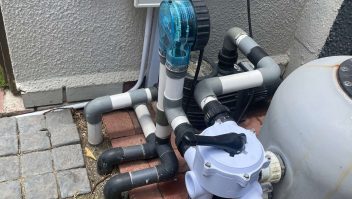
A pool pump tripping the power is the pump, or something on its circuit, leaking current or drawing far more than it should, and the earth leakage or breaker is doing its job by cutting it off. Most of the time the cause is water getting where it shouldn’t, a motor that’s struggling, or a fault on a light or timer that shares the same circuit.
What you can safely do is limited: switch off, look, reset once and note what happens. That still helps, because it tells an electrician or our team where to start. Opening the motor or the wiring is not a DIY job.
If your pool pump keeps tripping, do this first
- Switch the pool circuit off at the board and leave it off while you look
- Look for water: a flooded pump pit, a wet timer box or a dripping pump
- Sniff for a hot or burning smell and look for scorch marks. If you find either, stop there
- Reset the trip switch once. If it trips again straight away, leave it off and call for help
- Never tape a trip switch up or bypass it, even for a day
Pool Pump Tripping the Earth Leakage or the Breaker?
Check which switch dropped. It’s the first thing anyone you call will ask.
| What tripped | What it means | Usual pool causes |
|---|---|---|
| Earth leakage (the unit with a test button) | Current is escaping to earth, often through water or damaged insulation | Wet motor or terminal box, water in the timer or plug, damaged cable, a pool light fault |
| Circuit breaker for the pool or outside plugs | Too much current is flowing, or there’s a short | Seized bearings, a jammed impeller, a failed capacitor, an undersized circuit |
| Both, or the main switch | A serious fault or a short to earth | Leave everything off and get an electrician out |
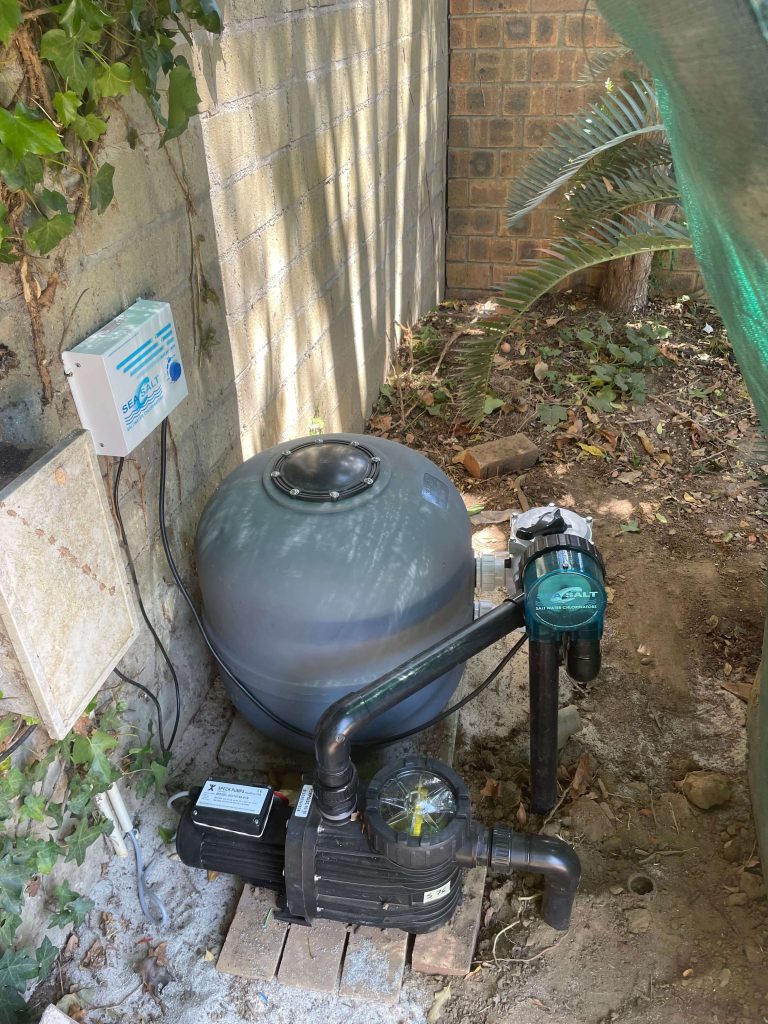
When It Trips Tells You a Lot
- The moment you reset it. A hard fault: a short, a wet connection or a motor that’s failed. Leave it off.
- When the timer switches on. Start-up is when a motor draws the most current. A weak capacitor or stiff bearings often show up here, or the timer itself is faulty.
- After 10 to 30 minutes of running. The motor is overheating. Think blocked baskets, worn bearings or a pump running dry.
- Only after rain or when the sprinklers run. Water is getting into the motor, the terminal box, the timer or a plug.
- Only at night. If the pool light comes on in the evening, suspect the light, not the pump.
Seven Causes of Pool Pump Tripping We Find Most
1. Water in the pump pit
The big one in a Western Cape winter. Many pumps sit in a sunken pit, and after a heavy downpour the water reaches the motor. Even once it drains, damp stays inside and the trip switch keeps dropping. Some pits just need a drain cleared. Others need the pump raised or moved during a proper pool pump installation.
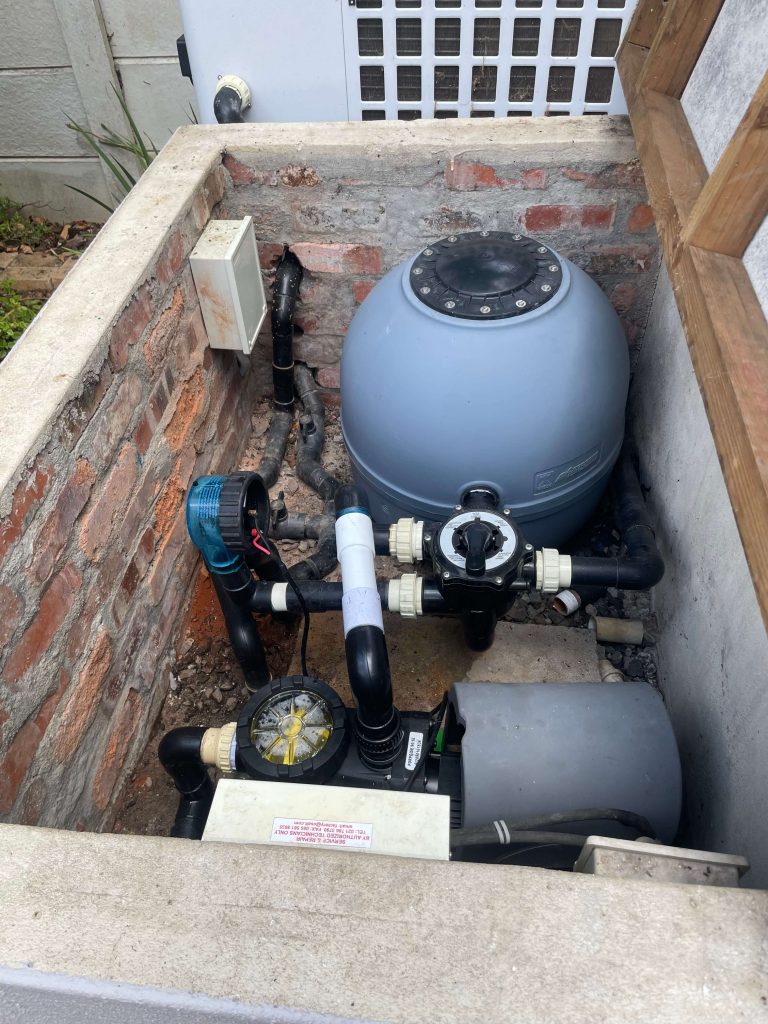
2. A leaking seal that’s let water into the motor
A worn shaft seal drips water from between the pump and the motor. Left alone, that water works its way into the bearings and windings, and the earth leakage starts tripping. If you’ve seen a drip at the back of the pump, our guide to a leaking pool pump seal explains what happens next.
3. A motor that’s struggling to turn
Worn bearings, a jammed impeller or a pump that’s been running dry all make the motor work harder and run hotter until the breaker or the motor’s own overload cuts out. Grinding or screeching before the trip is a strong hint. Our guide to the sounds a pool pump motor makes when it’s in trouble helps you describe it.
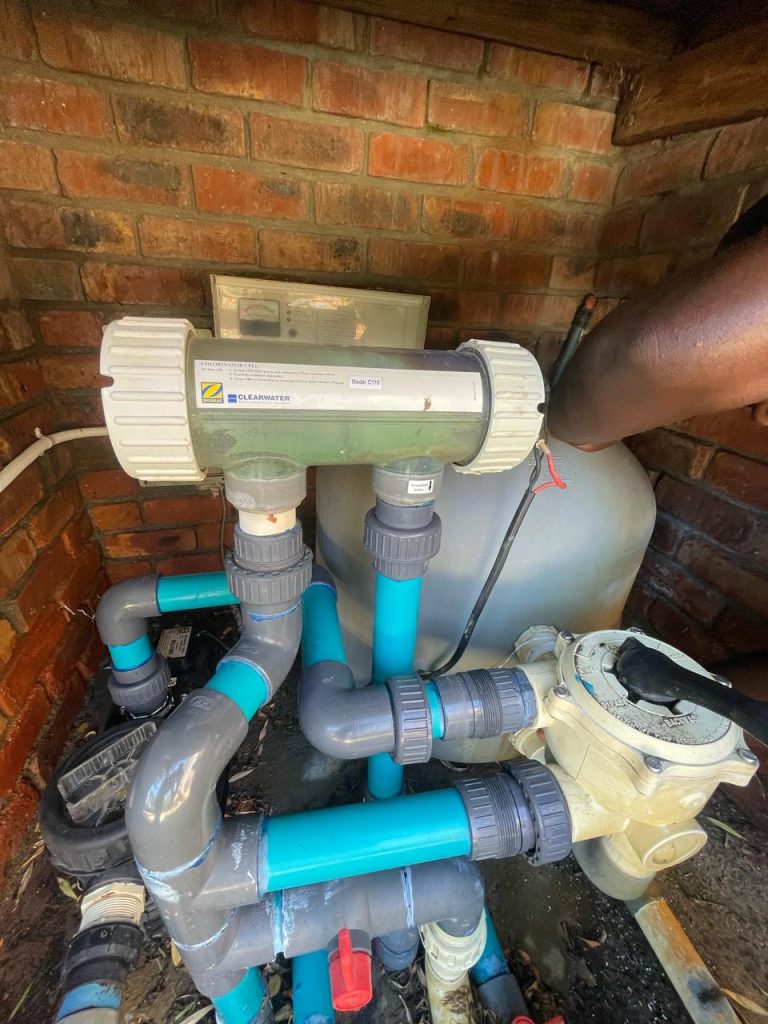
4. A failed capacitor
The capacitor gives the motor its kick to start. When it fails, the pump hums, doesn’t spin, overheats and trips. It’s often one of the cheaper fixes, but testing it means opening the electrical side of the pump, so leave that to us. Here’s how a swimming pool pump capacitor is checked, so you know what the technician is doing.
5. Wet or damaged wiring, plugs and timers
Cables chewed by rodents, cracked by sun or nicked by a spade, a plug left lying on wet paving, a timer box with a broken lid. Near the coast, salt air corrodes terminals and connections. Any of these can leak enough current to trip the earth leakage.
6. The timer or contactor
If it trips exactly when the pump is due to start, suspect the timer. Water in an outdoor timer box is common. A pool pump timer should sit in a sealed, weatherproof enclosure out of the rain.
7. Something else on the same circuit
Pumps often share a circuit with the pool light, garden lights or outside plugs. A light with water in the fitting or a failing pool light transformer will trip the earth leakage, and the pump gets the blame. Old earth leakage units can also become oversensitive with age. Testing and replacing them is a job for an electrician.
Safe Checks for Pool Pump Tripping
These are the only checks we suggest you do yourself. They don’t involve opening anything.
- Switch the pool circuit off at the board. If the pump plugs in, unplug it only if the plug and socket are dry and you’re standing on dry ground.
- Look into the pump pit or box. Standing water, mud lines on the motor or a wet timer box all point to water as the cause.
- With the power still off, check the skimmer and pump baskets and clear leaves. A starved pump runs hot.
- Check the pool water level is above the skimmer opening, so the pump isn’t sucking air and running dry.
- Switch off the pool light and any other pool equipment you can turn off at its own switch.
- Reset the trip switch once and switch the pump back on. Note how long it runs before it trips, if it does.
Stop and call for help if
- It trips again immediately after one reset
- You smell burning, see scorch marks or the motor is too hot to keep a hand near
- There’s water in the pit, the motor or any electrical box
- Anyone has had a tingle or shock from the pump, the water or a metal fitting
Don’t keep resetting, don’t open the motor or the wiring, and don’t run the pump with the earth leakage bypassed. If these checks don’t sort it out, call our team.
If you’re unsure whether to keep the pump going in a storm, our guide on running a pool pump when it rains covers the practical side.
When Pool Pump Tripping Needs an Electrician or Our Team
Often it’s both: the electrician tests the circuit and our team sorts out the pump, the pit or the plumbing.
Call an electrician for
- Testing the earth leakage, breaker and circuit
- Damaged cables, plugs, sockets and isolators
- Any shock or tingle from the pool or equipment
- A certificate of compliance for new or changed wiring
Call our team for
- Finding out whether the pump itself is the fault
- Seals, bearings, impellers and capacitors
- Raising or moving a pump out of a flooding pit
- Deciding whether the pump is worth repairing
Once the cause is found, the next question is usually whether the pump is worth saving. If the motor is burnt out on an old pump, compare the repair against current pool pump prices before you decide.
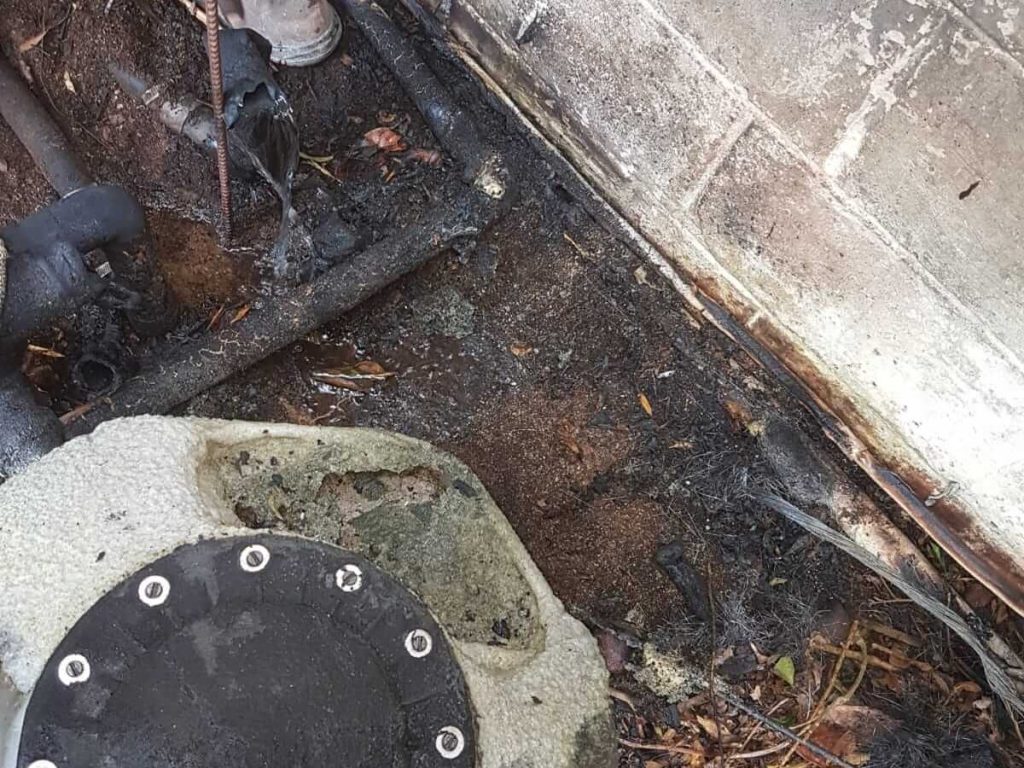
That’s why we take tripping seriously. A trip switch that’s been bypassed can’t protect anyone.
Stopping It From Happening Again
- Keep the pump above the floor of its pit, with a clear drain for winter rain
- Keep rain and sprinklers off the motor, and the timer in a sealed box
- Fix a dripping seal as soon as you see it, before water reaches the motor
- Near the sea, have connections checked for corrosion every year or so
Pump still tripping?
Leave it switched off and get in touch. Our team will find out whether it’s the pump, the pit or the circuit, work alongside an electrician where the wiring is involved, and quote before any work starts.
Call 074 378 6623, WhatsApp us, or email info@poolsreno.co.za. See our pool pump repair service for what we fix on site.
Pool Pump Tripping: Common Questions
Current is leaking to earth, which with pool pumps nearly always means water or damaged insulation. A flooded pump pit, a leaking seal, a wet timer box or a damaged cable are the usual causes. A faulty pool light on the same circuit can do it too.
Yes. When the capacitor fails, the motor can’t start properly, hums, draws too much current and overheats until the breaker or the motor’s overload cuts out. Testing and replacing a capacitor means opening the electrical side, so leave it to a professional.
No. One reset to see what happens is fine. If it trips again, leave it off. Repeated resetting can damage the motor further and keeps putting power into a fault that could be dangerous next to water.
Water is getting into something electrical. The usual suspects are a pump pit that floods, a motor or timer box without proper cover, or a plug and socket that get wet. Fixing drainage and weatherproofing normally cures it.