Every underwater pool light in a South African home pool runs on 12 volts, not the 220 volts in the rest of your house. The pool light transformer is the box that makes that happen. It steps mains power down to a safe low voltage before it goes anywhere near the water.
When the transformer starts to fail, the light flickers, dims, dies or trips the power. When it’s the wrong type or badly installed, it can be a real safety risk. This guide explains what the transformer does, why the 12V part matters so much, and the signs that yours needs attention.
The short version
- A pool light transformer turns 220V into 12V so the light in the water runs on a safe low voltage.
- It must be a proper pool or safety isolating transformer, sized for the lights it feeds.
- Flickering, buzzing, heat, rust in the box and earth leakage trips are the classic signs of trouble.
- Checking, replacing or rewiring a transformer is always a job for a qualified electrician.
What a Pool Light Transformer Does
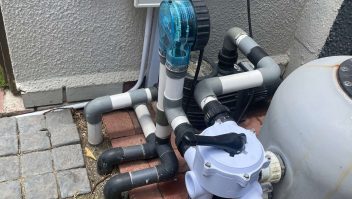
The transformer usually sits in the pool DB box or a weatherproof enclosure near the pump, often sharing the space with the pump’s isolator and a pool pump timer. Mains power goes in, 12V comes out, and a cable carries that 12V to the light in the pool wall.
Inside a proper pool transformer, the 220V side and the 12V side are wound separately with no direct connection between them. That separation is what makes it a safety transformer. Even if something goes wrong at the light, mains voltage has no path into the water.
Why 12V Matters for Pool Lights
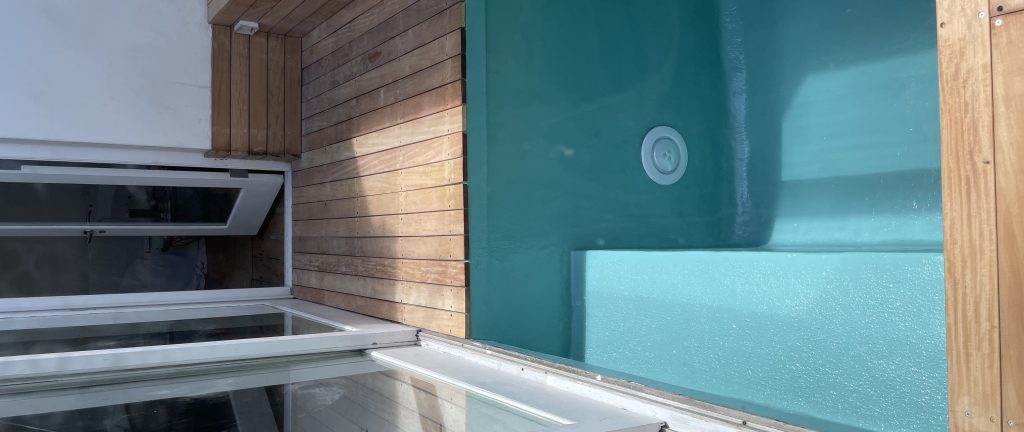
Water and mains electricity are a deadly mix. Running the light on extra-low voltage means that if water gets into the fitting or the cable is damaged, the voltage in the pool stays low. South African wiring rules treat the pool and the area around it as a high-risk zone for exactly this reason.
- Safety in the water. 12V from an isolating transformer is the standard for lights below the waterline.
- The lights are built for it. Standard pool lamps and LED retrofits are 12V. Connected to 220V, a light would fail instantly and dangerously.
- Earth leakage still matters. The mains side of the transformer must be protected by a working earth leakage unit.
- Paperwork. Electrical work on a pool circuit should come with a Certificate of Compliance from the electrician.
Never work on the transformer yourself
Don’t open the DB box or the transformer, don’t test voltages and don’t rewire anything. Pool light transformers combine mains power, damp and water. Our team arranges a qualified electrician for every transformer job.
Choosing the Right 12V Pool Light Transformer
Transformers are rated in VA, which for a simple light circuit you can read much like watts. The rating needs to be higher than the total wattage of every light on it, with some spare capacity so it doesn’t run hot.
| Lights on the circuit | Typical load | Transformer size often used |
|---|---|---|
| One old halogen lamp | About 50W to 100W | Around 105VA to 125VA |
| Two halogen lamps | About 100W to 200W | Around 300VA |
| One to three LED lights | Often well under 60W in total | Around 105VA to 125VA, if suited to LED |
| Lights plus a lit water feature | Add up every fitting | Sized by the electrician on site |
Two other things matter. First, the type: the small electronic transformers sold for downlights are not pool transformers, and some LED pool lights flicker or fail on them. Second, distance. At 12V, power drops away along a long cable, so a light far from the transformer can look dim. Thicker cable, or a transformer placed closer to the pool, fixes that.
Signs of Pool Light Transformer Failure
These are the symptoms our team sees most often. Some point to the transformer, some to the light or the cable, which is why it pays to have the whole circuit checked rather than swapping parts and hoping.
- The light is dead, but the lamp is fine. If a new lamp doesn’t work either, the transformer, cable or connections are the next suspects.
- Flickering or dimming. A tired transformer, loose terminals or a long cable run can all do this.
- A loud buzz or hum from the box. A faint hum can be normal. A loud or changing buzz isn’t.
- Heat, a burning smell or a discoloured casing. Switch off at the board and don’t use the light again until it’s checked.
- The earth leakage trips when the light comes on. Often water in the light or junction box, sometimes the transformer itself.
- It fails after rain. Damp in the box or a leaking cable gland, very common in a Cape winter.
- Rust, green corrosion or water inside the box. Visible through a clear lid or when the box is opened by the electrician.
Probably the transformer
- New lamp, still no light
- Box hot, buzzing or smells burnt
- Light dies after a power surge
- Several lights on one transformer all fail together
Probably the light or cable
- Water or fog inside the lens
- Earth leakage trips only when the light is switched on
- Only one of several lights has failed
- Light flickers when touched or when the pump starts
Safe Checks Before You Call Anyone
You can rule out the simple things without opening a single box:
- Check the light switch or timer. A timer knocked out of sync after a power cut is a common culprit.
- Check the breaker and earth leakage at the DB. If it has tripped, reset it once. If it trips again, leave it off and call us.
- Look at the pool DB box from the outside. Is the lid closed and sealed? Is there water pooling under it?
- Listen near the box with the light on. Note any loud buzzing, and any smell of heat.
- Look at the light in the pool. Water or condensation inside the lens points to the fitting, not the transformer.
Our guide to swimming pool lights not working goes through these checks in more detail. If the lamp itself needs swapping, see our swimming pool light replacement guide, and remember that the power must be isolated first. If these checks don’t fix it, call our team.
Why a Pool Light Transformer Fails Sooner in the Western Cape
- Winter rain and damp. Boxes mounted low on a wall or in a pump pit collect water. Damp is the number one reason pool lights trip.
- Coastal salt air. Near the sea, terminals and box hinges corrode quickly. Sealed, corrosion-resistant boxes last much longer.
- Surges and outages. Load shedding and storms are hard on transformers and older lamps.
- Summer heat. A box in full afternoon sun runs hotter, and an undersized transformer runs hotter still.
Replacing or Upgrading a Pool Transformer
If the transformer has failed, it’s replaced with one sized for the lights it feeds, and the electrician checks the cable, the earth leakage and the box at the same time. Many owners swap an old halogen lamp for an LED while they’re at it. If you’re going that route, make sure the new pool transformer suits LED lights, because some older units don’t drive them properly.
| Item | Typical price range | Notes |
|---|---|---|
| Pool light transformer, around 105VA to 125VA | From around R550 to R700 | For one light or a few LEDs |
| Larger 220V to 12V pool transformer | From around R1,400 to R1,900 | For two lights or more |
| Pool DB box with 300VA transformer and time switch | From around R2,300 | Replaces a tired or unsafe box completely |
| Electrician’s labour and testing | Quoted on site | Depends on the box, cable and what’s found |
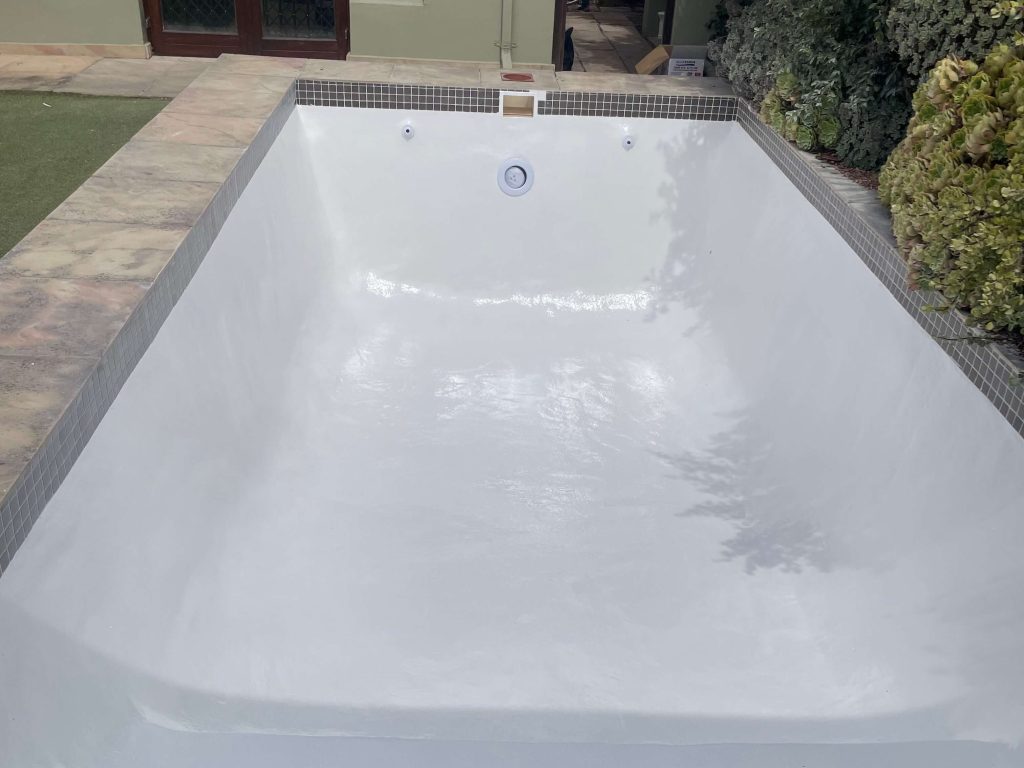
The best time to sort out pool lighting is when the pool is empty for other work. If you’re planning a pool renovation, add the lights and transformer to the same quote. A lit swimming pool water feature can often share the transformer, as long as it’s sized for both.
One last tip: a buzzing transformer and a noisy pool pump often live in the same box, so tell us which one is making the sound. If you have a regular pool service and cleaning visit, ask the technician to mention any rust or water they spot in the box.
Pool light flickering, dead or tripping?
Send us a photo of your pool light and the outside of the DB box. Our team will arrange a qualified electrician to test the transformer, the cable and the light, and we’ll quote before any work starts.
Call 074 378 6623, WhatsApp us, or email info@poolsreno.co.za. We also offer general swimming pool repair services.
Pool Light Transformer: Frequently Asked Questions
Yes. Underwater pool lights in South Africa run on 12V, so they need a transformer to step 220V down to a safe low voltage. It must be a proper pool or safety isolating transformer, installed by a qualified electrician.
The VA rating must be higher than the total wattage of the lights, with some spare capacity. One halogen lamp often uses around a 105VA to 125VA transformer, and two lamps around 300VA. LED lights draw much less, but the transformer must suit LED.
Common signs are a light that stays dead with a new lamp, flickering, a loud buzz, heat or a burning smell from the box, or tripping. Don’t open the box to check. Have an electrician test it.
No. The small electronic transformers made for downlights are not designed for pool lights, and some LED pool lights flicker or fail on them. Use a transformer made for pool lighting, sized and fitted by an electrician.
At the time of writing, pool light transformers sell from around R550 for a small unit to about R1,900 for a larger one. A complete pool DB box with a transformer and time switch starts from around R2,300. Labour is quoted on site.