Emptying a pool looks like the easiest part of any repair. Put a pump in, run a hose to a drain, wait. But knowing how to drain a pool safely matters more than most people think, because an empty pool is at its most vulnerable. Shells can crack, marbelite can craze, and in the wrong conditions a whole pool can lift out of the ground.
Our team drains pools every week before resurfacing, relining and repairs. Here’s the short version:
Draining a pool safely: the short version
- Drain only as far as the job needs. Many repairs only need the level dropped below a fitting.
- Check the groundwater first, especially in winter or after heavy rain.
- Never fully drain a fibreglass shell without a professional checking it.
- Send the water to the sewer, never into the street gutter or stormwater drain.
- Use a submersible pump, not your pool pump, once the level drops below the skimmer.
- Keep the pool empty for as short a time as possible, then refill straight after the repair.
Do You Need to Drain the Pool at All?
Often, no. A lot of the pools we’re asked to drain only need the water dropped a little, or not touched at all. Here’s what common jobs actually need:
| Job | How far to drain | Notes |
|---|---|---|
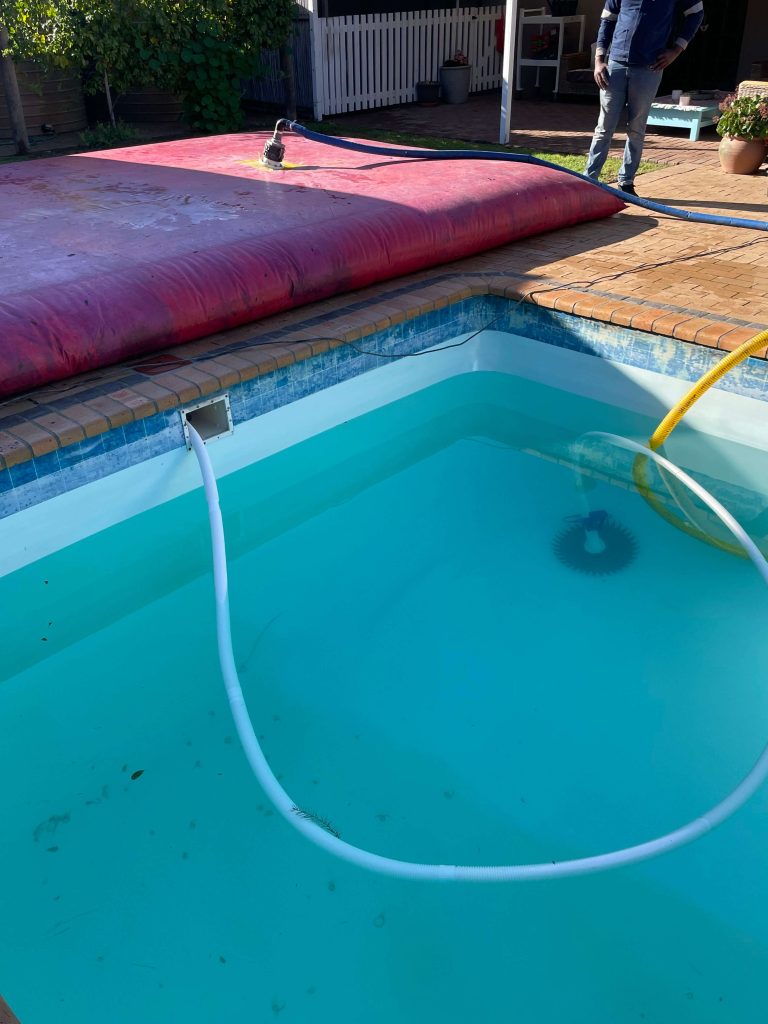
| Skimmer or weir repairs | Just below the skimmer mouth | A partial drain, usually a few hours’ work |
| Return jet or fitting replacement | Just below the fitting | No need to empty the deep end |
| Waterline tile or coping repairs | About 300mm below the tile line | Gives the adhesive room to cure |
| Crack repairs, acid wash, painting | Fully drained | Surfaces must be dry to bond properly |
| Marbelite resurfacing or fibreglass relining | Fully drained | Planned so the pool isn’t empty longer than needed |
| Leak detection | Don’t drain | The water level is the evidence we test against |
| Green or cloudy water | Usually don’t drain | Chemistry and filtration clear most pools |
That leak detection row catches a lot of people out. Proper pool leak detection uses pressure testing, dye testing and electronic listening, and all three need a full pool. Drain it first and you’ve thrown away the clues. The same goes for algae. A proper green pool treatment clears most pools without wasting thousands of litres.
When Not to Drain a Pool
Safe to go ahead when
- It’s the dry season and there’s been no heavy rain for a while
- The pool is concrete or gunite and structurally sound
- The repair team is booked and ready to start
- You know where the water is going and it’s legal
- The weather isn’t forecast to hit the mid-30s for days on end
Stop and get advice if
- It’s a fibreglass shell or a vinyl-lined pool
- It’s mid-winter or the ground is waterlogged after rain
- You live in a low-lying, sandy area or near a vlei, river or the coast
- There are already cracks, bulges or hollow-sounding patches
- Nobody knows how old the pool is or how it was built
Fibreglass shells are the big one. Full, a fibreglass pool is held down by tonnes of water. Empty, the shell is light, and the backfill around it can shift. If a fibreglass swimming pool shell has already started to lift or bulge, read our guide on what to do next before anyone touches the water.
Groundwater: The Risk Nobody Sees
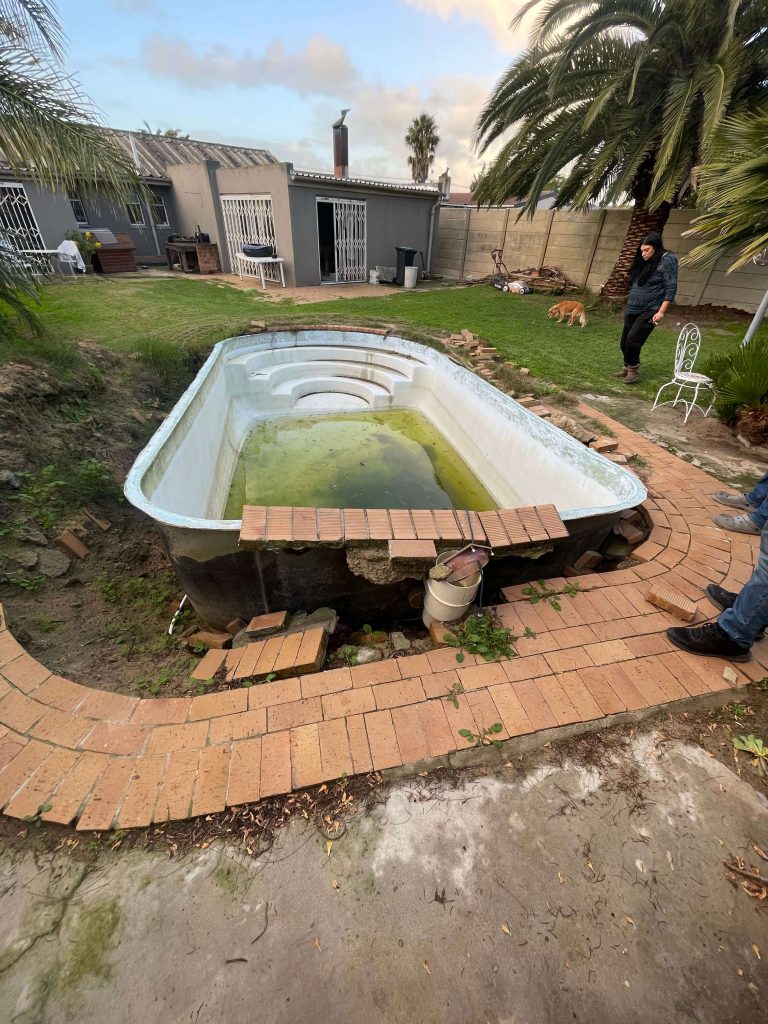
Under every pool there’s soil, and in a lot of the Western Cape there’s water in that soil too. When the pool is full, the weight of the pool water holds the shell down. Drain it, and the groundwater pushes up from underneath with nothing to resist it. That pressure is called hydrostatic pressure, and it’s what pops pools out of the ground and cracks floors.
The risk is highest in our winter. Between about May and August the Cape gets most of its rain, and the water table rises, sometimes to within a metre of the surface in sandy, low-lying suburbs. A pool that drained safely in February can be a very different story in July.
- Wellpoint owners: the water level in your wellpoint gives a rough idea of how high the groundwater sits.
- Hydrostatic valves: some pools have a relief valve in the floor of the deep end that lets groundwater in before it lifts the shell. Many older pools don’t, or it’s blocked.
- Water seeping in: if water starts coming through the floor or cracks as the level drops, stop draining.
Concrete pools can lift too, not just fibreglass. If your gunite pool already has cracks or hollow spots, a sudden push from below can turn a small repair into a big one.
How to Drain a Pool Step by Step
If the job needs a full drain and the conditions are right, this is the order we work in:
- Book the repair first. The pool should sit empty for as short a time as possible, so drain to the repair team’s start date, not before.
- Switch off at the board. Turn off the pump, the timer and any salt chlorinator so nothing runs dry when the level drops.
- Decide where the water goes. In Cape Town, chlorinated pool water must go into the sewer, usually through the gully your backwash runs to. Never into the street or a stormwater drain.
- Use a submersible drainage pump. Most move roughly 8,000 to 15,000 litres an hour, so a family pool takes most of a day.
- Watch the gully. If it starts backing up, slow down. An overflowing gully sends pool water across the paving and into the stormwater.
- Check the shell as the level drops. Look for water seeping in, new cracks or movement around the coping. If you see any, stop and call us.
- Refill promptly. Once the repair has cured, start refilling straight away.
How to Drain a Pool Using the Pool Pump
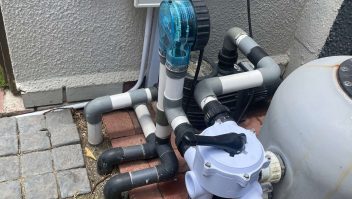
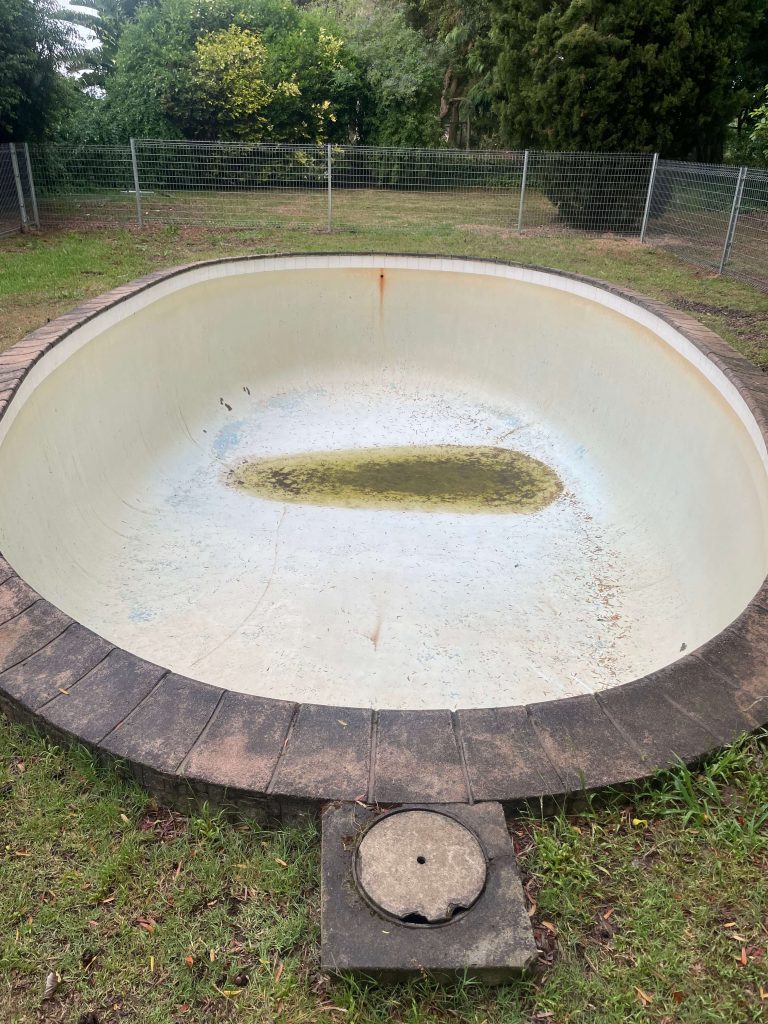
You can start with the pool pump. Switch it off, set the multiport valve to Waste, and switch it back on. The pump sends water straight out of the waste line, bypassing the filter.
The catch is that it only works until the water drops to the skimmer mouth. After that the pump sucks air, loses prime and runs dry, which ruins seals in minutes. Stand next to it, switch it off as soon as the flow changes, and finish the job with a submersible pump. Never turn the multiport handle while the pump is running.
How to Drain a Pool Without a Pump
Siphoning with a garden hose only works if the far end of the hose can sit lower than the pool floor, which is rare on a flat property, and it’s painfully slow. For most homes, hiring a submersible pump for a day is quicker and safer.
How Long Can a Pool Stay Empty?
As short a time as possible. A few days for a planned repair is normal. Weeks is asking for trouble. Swimming pool marbelite that dries out in hot sun and summer wind can craze and crack. Fibreglass gelcoat fades and chalks. And the shell is exposed to groundwater the whole time it’s empty.
That’s why we plan pool relining and pool resurfacing jobs so that draining, preparation, the new surface and refilling run back to back.
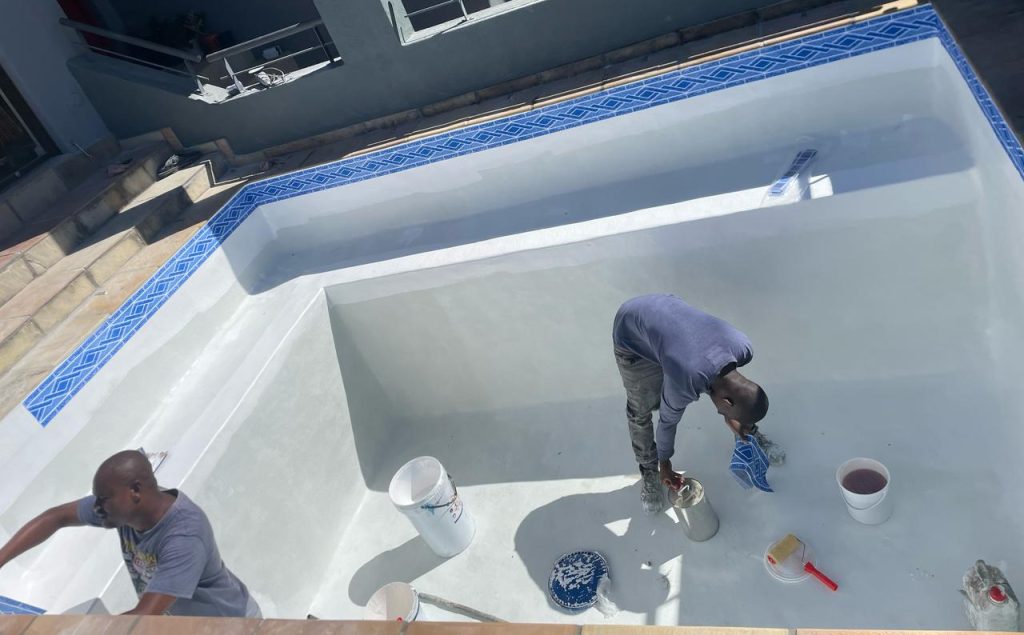
Safety first
Keep children and pets away from an empty or half-empty pool. A drop onto a hard floor causes serious injuries, and a little water left in the deep end is still a drowning risk.
Keep electrical drainage pumps, extension leads and plugs away from water, and use a plug point with earth leakage protection. If anything about the shell looks wrong as the water goes down, stop and call our team.
Not sure if your pool should be drained?
Send us a photo and tell us what the repair is. We’ll tell you whether it needs a full drain, a partial drain or none at all, and we’ll handle the draining as part of the job if it does.
Call 074 378 6623, WhatsApp us, or email info@poolsreno.co.za. See our swimming pool repair services for the work we take on.
How to Drain a Pool: Frequently Asked Questions
It can be, if the pool is sound, the groundwater is low and the repair is ready to start. It isn’t safe to fully drain most fibreglass shells without professional advice, or any pool when the ground is waterlogged after heavy rain.
Into the sewer system, usually through the gully your backwash already runs to. Chlorinated or salt pool water must not go into the street gutter or a stormwater drain, and the City can fine property owners who do this.
Partly. With the multiport on Waste, the pool pump will lower the water until it reaches the skimmer. After that it sucks air and can burn out, so switch it off and use a submersible drainage pump for the rest.
A typical family pool of 40,000 to 60,000 litres takes most of a day with a submersible drainage pump. Small pumps or a narrow sewer gully can stretch that out, so start early and stay with it.
Groundwater under the pool pushes upwards. A full pool is heavy enough to resist it, but an empty one isn’t. It’s most common with fibreglass shells and in winter, when the water table is high.