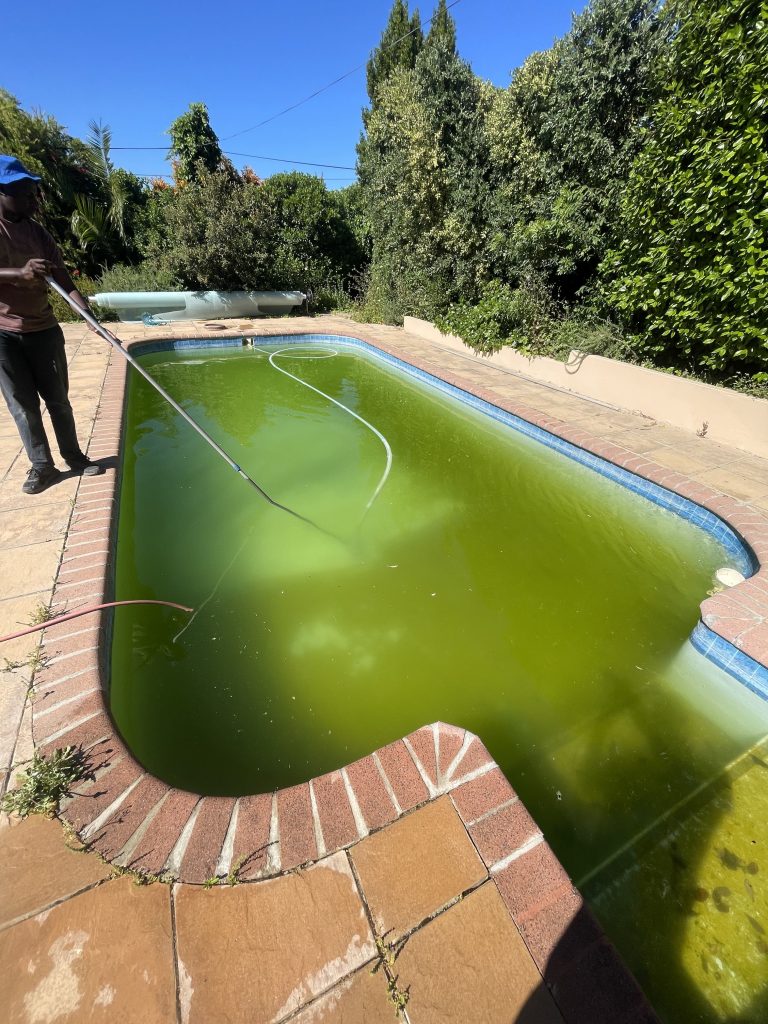
A pool that’s turned green overnight looks like a disaster, but most of the time it isn’t. Green water is algae, and algae dies when the filter is working, the pH is right and the chlorine is strong enough for long enough. Here’s how to clean a green pool safely, in the order that actually works.
Clearing a green pool in short
- Get the pump and filter working properly first. Chemicals can’t clear water that isn’t moving.
- Test the water and bring the pH into range before you shock.
- Brush every surface, then shock with chlorine in the evening.
- Run the filter around the clock, backwash often and vacuum the dead algae off the floor.
- A swamp you can’t see into, a broken pump or a pool that keeps going green is a job for our team.
Chemical safety rules we never bend
- Always add chemicals to water, never water to chemicals.
- Never mix acid and chlorine, or two different chlorine products. Add them separately, hours apart, with the pump running.
- Follow the label on your product for the dose, the method and the protective gear.
- Wear gloves and eye protection, and keep children and pets away while you work.
- Nobody swims until the water is clear and the chlorine and pH are back in range.
Why Your Pool Is Green
Algae is always waiting for a gap. A pool goes green when the chlorine drops too low to kill it, and in the Western Cape that happens for a handful of predictable reasons:
- Rain. A heavy Cape winter downpour dilutes the chlorine and washes soil, leaves and fertiliser into the water.
- Heat and long days. In midsummer the sun burns off chlorine fast, especially if the stabiliser level is low.
- Short pump hours. A timer knocked out by a power cut, or a pump that only runs a couple of hours, leaves water standing.
- A tired filter. Caked sand or a torn cartridge lets algae spores straight back into the pool.
- High pH. When the pH creeps up, chlorine becomes much weaker even if the test says there’s plenty.
- Borehole or wellpoint water. Topping up with untreated groundwater can bring in nutrients and metals that feed or tint the water.
Pool Is Green but the Chlorine Is High?
This one confuses a lot of people. Usually it means one of three things: the stabiliser level is so high that it’s locking up the chlorine, the test strips or reagents are old and giving a false reading, or the green isn’t algae at all but dissolved metals. Metal green water tends to be clear rather than cloudy and won’t brush off. Take a sample to a pool shop for a full test before you keep pouring in chlorine.
How to Clean a Green Pool, Step by Step
Work through these in order. Skipping the early steps is the main reason people go through bucket after bucket of chlorine with nothing to show for it.
1. Get the Water Moving
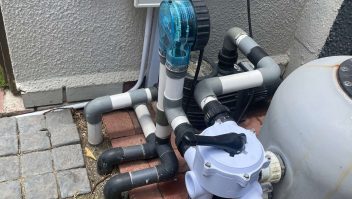
Switch the pump off at the board, empty the skimmer and pump baskets and scoop out leaves with a net. Check the water is above the middle of the skimmer opening. Then backwash the filter. If you’re not sure how, here’s how to backwash a pool filter properly. Switch the pump back on and check it’s pulling strongly.
2. Test and Balance the pH First
Test chlorine, pH, alkalinity and stabiliser. Chlorine works best with the pH between about 7.2 and 7.6. If the pH is high, bring it down first with acid, added to the pool water as the label directs, and let the pump circulate it for several hours before any chlorine goes in. If your stabiliser is very low, our pool stabiliser calculator works out what’s needed.
3. Brush Everything
Brush the walls, steps and floor, paying attention to corners and behind the ladder or light. Brushing breaks up the slimy layer that protects algae from chlorine. It’s hard work on a big pool, and it’s the step most people rush.
4. Shock the Pool in the Evening
A green pool needs a shock dose: far more chlorine than your normal weekly top-up. The right amount depends on the volume of water and how green it is, so don’t guess. Our calculator shows how to shock a green pool for your volume, and the pool chlorine calculator helps you keep the level up afterwards. Always check the dose against the label on your product.
- Shock after sunset so the sun doesn’t burn the chlorine off before it works.
- If the product label says to pre-dissolve granules, fill a clean bucket with pool water first, then add the granules to the water.
- Pour it slowly around the edges with the pump running.
- Never add acid at the same time. Keep acid and chlorine hours apart.
5. Run the Filter and Backwash Often
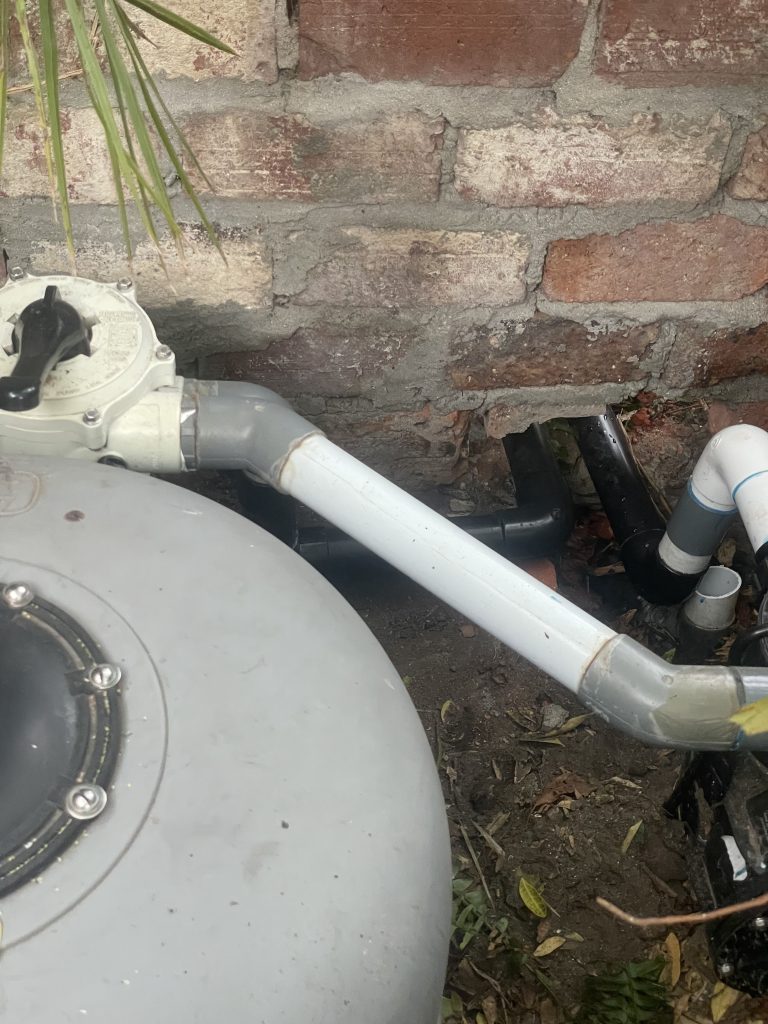
Leave the pump running day and night until the water clears. The filter does the real work of removing dead algae, so it clogs quickly. Check the pressure gauge a couple of times a day and backwash when it rises. If the sand is old and caked, the pool filter may need new media before the pool will ever clear.
6. Vacuum the Dead Algae
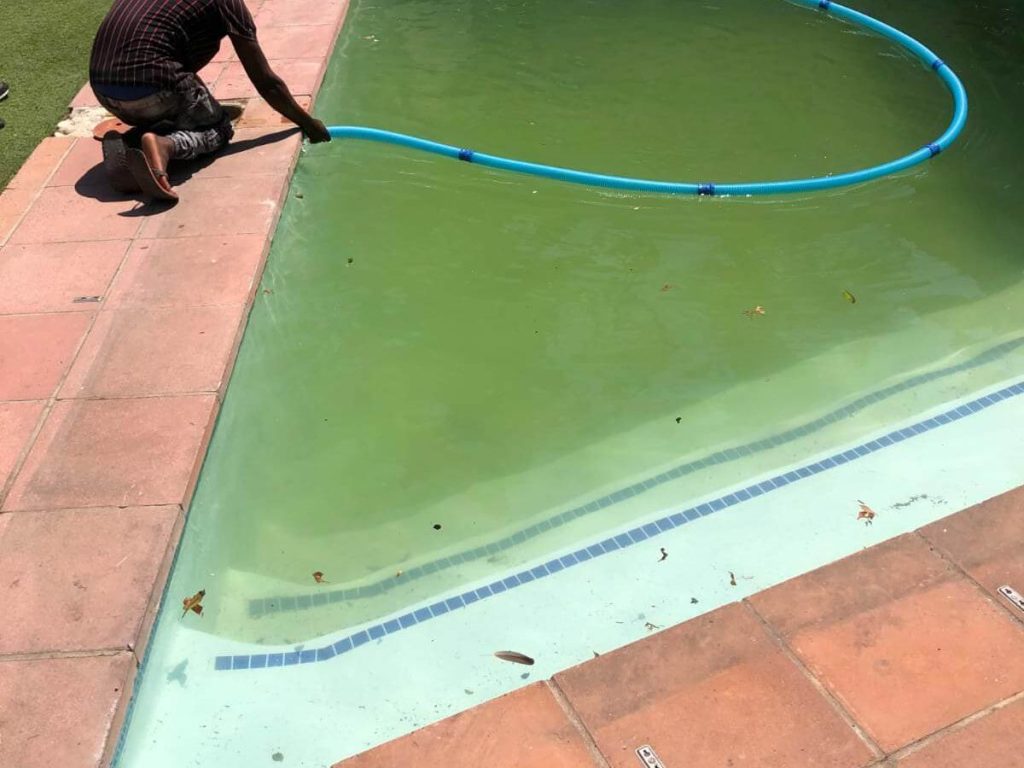
As the algae dies, the water turns from green to a cloudy grey-blue and a layer of dust settles on the floor. Vacuum it out, ideally to waste if your valve has that setting, so you’re not pushing it back through the filter. Top up the water afterwards.
7. Retest, Repeat and Rebalance
Test again the next morning. If the chlorine has dropped to nothing and the water is still green, the algae used it all up, so brush and shock again. Once the water is clear, rebalance the pH and alkalinity. An algaecide can help stop it coming back, but it’s a pool algae remover for the follow-up, not a replacement for chlorine.
How Long It Takes to Clean a Green Pool
It depends on how far gone the pool is and how well the filter works. As a rough guide from the pools our team clears:
| What you see | Typical time to clear | What it usually needs |
|---|---|---|
| Hazy, light green, floor visible | About 1 to 2 days | Brush, one shock, filter running |
| Mid green, floor just visible | About 2 to 4 days | Brush, shock once or twice, regular backwashing |
| Dark green, can’t see the floor | About 4 to 7 days or more | Several shocks, heavy vacuuming, filter attention |
| Swamp with leaves and sludge | Often a week or longer | Debris removed first, sometimes a partial or full drain |
When to Call a Team to Clean a Green Pool
You can usually do it yourself if
- You can still see the floor, or nearly
- The pump and filter are working
- It went green recently after rain or a few missed days
- You’re comfortable handling pool chemicals safely
Call our team if
- It’s a swamp with a layer of leaves and sludge
- The pump won’t prime or the filter pressure stays high
- It’s been shocked twice and is still green
- There are stains, black spots or a rough surface underneath
- You’d rather not handle the chemicals at all
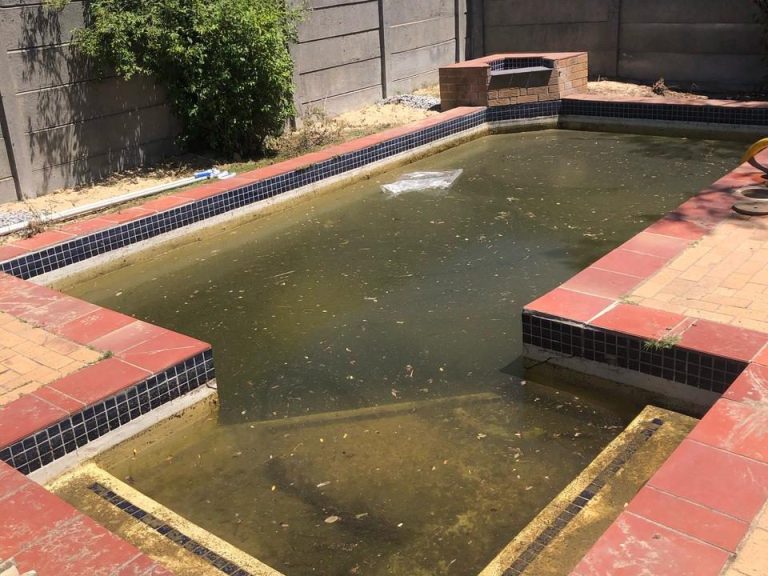
Don’t drain a badly neglected pool yourself to get rid of the water, especially in winter. An empty pool with a high water table around it can lift or crack, and the old surface can be damaged by sun and frost. If draining makes sense, we’ll plan it properly.
Our pool cleaning services include green pool clean-ups, and we’ll check the pump, filter and surface while we’re there. At the time of writing, a professional clean-up generally starts from around R2,000 for a mild case, and more for a swamp that needs several visits, extra chemicals or new filter sand. Ask our team for a quote for your pool.
Keeping It From Going Green Again
- Run the pump long enough each day, and check the pool pump timer after every power cut.
- Test the water at least once a week, and after heavy rain or a busy weekend of swimming.
- Brush the walls weekly, even when the pool looks clean.
- Keep the stabiliser in range in summer so the sun doesn’t strip the chlorine.
- Clear leaves before they sink and rot, especially in autumn.
If the water turns green with black spots that won’t brush off, read our guide to the different types of algae, including green algae in pool water and the tougher kinds. And if you’d rather hand the weekly work over, here’s what pool service and cleaning covers when you hire it out.
Pool still green? Our team can clear it
Send us a photo of the pool and tell us what you’ve tried. If it’s a quick fix we’ll tell you, and if it needs a proper clean-up we’ll give you a price before we start.
Call 074 378 6623, WhatsApp us, or email info@poolsreno.co.za.
How to Clean a Green Pool: Your Questions Answered
Usually the chlorine ran out. Heavy rain, a hot spell, a power cut that reset the pump timer or a busy weekend of swimming can use it up quickly, and algae grows fast once there’s nothing to stop it.
No. Green water means the chlorine isn’t doing its job, so bacteria can grow along with the algae, and you can’t see the floor if someone gets into trouble. Wait until the water is clear and tests in range.
A pool that’s only slightly green can clear in a day or so with a working filter. A dark green pool takes several days, and a swamp can take a week or more. Products that promise overnight results still need the filter to remove the dead algae.
Chlorine does the killing. Algaecide is a follow-up that helps stop algae coming back once the water is clear. Follow the label and don’t add algaecide and chlorine at the same moment.
Most green pools can be cleared without draining. Draining is a last resort for a true swamp, and it carries risks, so get advice first rather than draining it yourself.