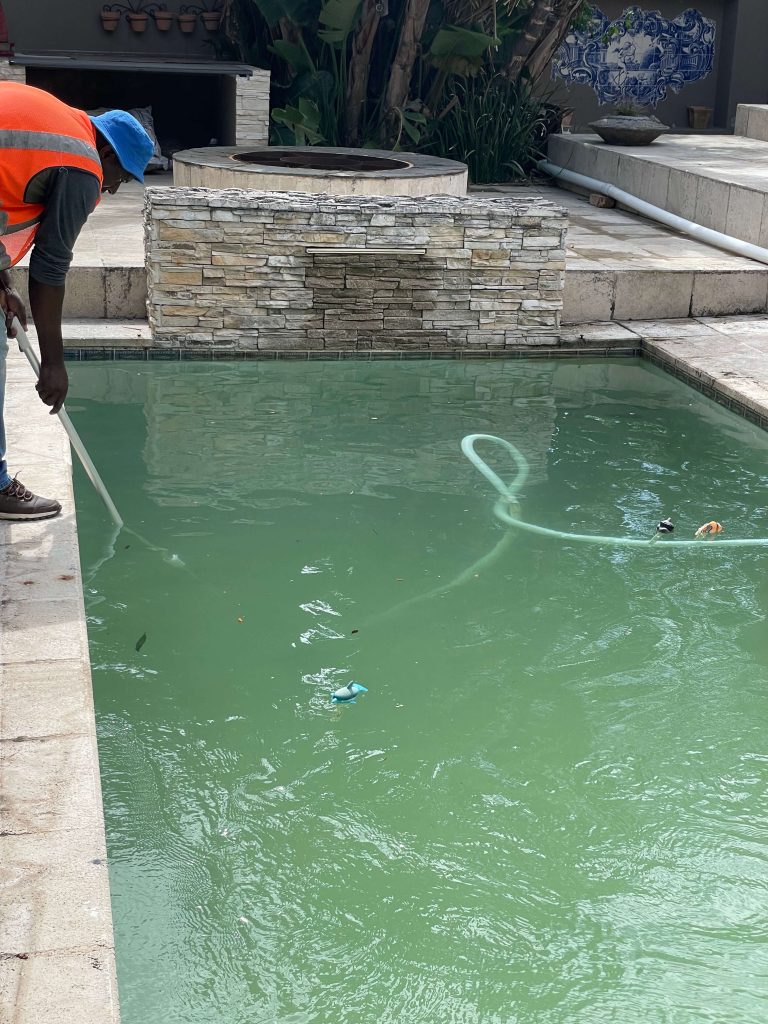
Cloudy pool water nearly always comes down to one of three things: the chemistry is off, the filter isn’t doing its job, or something has gone into the pool faster than the system can deal with it. Of all the pool problems, cloudy water is one of the most common, and one of the most fixable.
The trick is working out which cause you’ve got before you start adding things. Pouring in more chlorine won’t fix a blocked filter, and a clarifier won’t fix high pH. Start with a water test.
Quick checks before you add anything
- Test the water: free chlorine, pH and total alkalinity at the very least
- Look at the filter gauge: high pressure means the filter needs a backwash
- Check the timer: has the pump been running enough hours, especially after a power cut?
- Think back: heavy rain, a pool party, a recent shock dose or a top-up from a borehole?
Seven Causes of Cloudy Pool Water
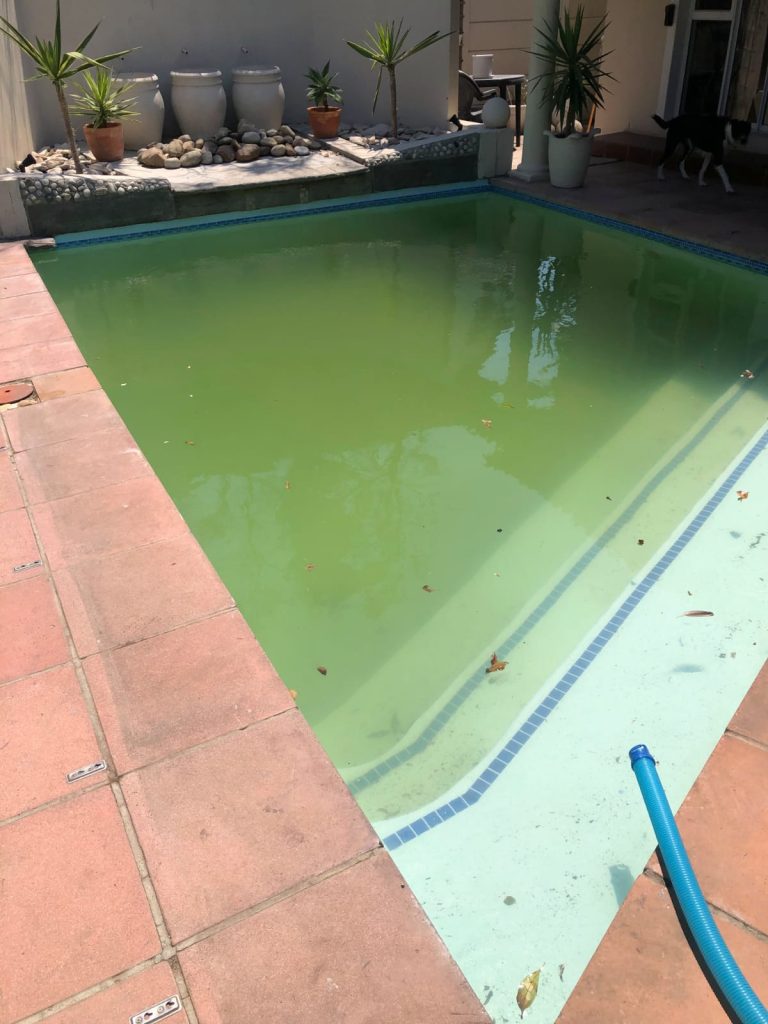
Here’s the short list, then the detail on each one:
| Cause | Typical sign | First fix |
|---|---|---|
| 1. Low chlorine | Dull, hazy water, often after hot weather or heavy use | Raise the chlorine |
| 2. High pH or alkalinity | Milky haze, scale on the tile line | Bring pH back to 7.2 to 7.6 |
| 3. Hard water | White, milky water that won’t polish | Balance the calcium and pH |
| 4. A dirty or failing filter | High gauge, short runs between backwashes | Backwash, then check the sand |
| 5. Too little circulation | Cloudy patches, dirt in corners | Run the pump longer |
| 6. Shock treatment | Milky water the morning after a shock dose | Filter and wait 24 to 48 hours |
| 7. Dirt, rain and early algae | Cloudy after storms or wind, a slight green tint | Chlorine, filtering and brushing |
1. Low Chlorine
When free chlorine drops, tiny particles and bacteria build up faster than they’re killed off, and the water dulls. Hot weather, lots of swimmers and rain all burn chlorine quickly. Test it, then work out how much pool chlorine to add for your pool’s volume.
If the chlorine keeps disappearing in the sun, check the stabiliser. Too little and the sun strips the chlorine out by midday. Too much and the chlorine you have works slowly. Our pool stabiliser calculator helps with both.
2. High pH or Alkalinity
This is the cause we find most often. Above about 7.6, chlorine works much less effectively and calcium starts coming out of the water as a fine white haze. Salt pools are especially prone to it, because a salt chlorinator pushes pH up all the time.
The fix for high pH in pool water is acid, added carefully and in small doses as the label directs. If the alkalinity reads low instead, see our guide to how to increase pool alkalinity.
3. Hard Water
Pools topped up from boreholes and wellpoints, and many pools in the Boland, have high calcium. Add a high pH and the calcium turns the water milky and leaves crusty scale on the tile line and in the filter. Using calcium-based shock in already hard water makes it worse. Bringing the pH down helps quickly. Bringing the calcium down usually means partly replacing the water.
4. A Dirty or Failing Filter
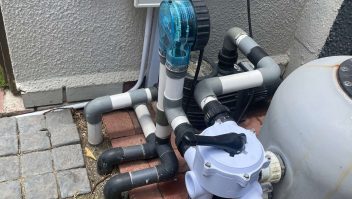
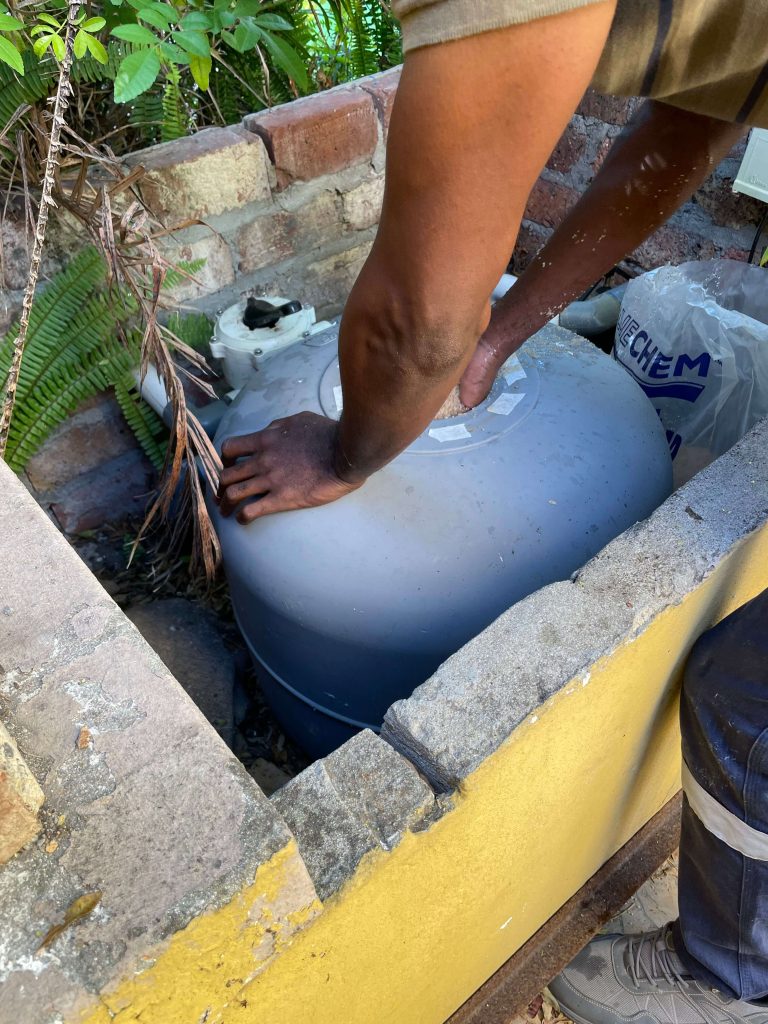
If the chemistry tests fine and the water still won’t clear, look at the filter. Sand that’s five years old or more, clumps of grease and scale, a cracked lateral or a filter that’s too small for the pump all let fine dirt straight through. So does a worn gasket in the pool multiport valve, which lets water slip past the sand.
Backwash first. If the gauge is high again within a day or two, the pool filter may be undersized or due for new sand.
5. Too Little Circulation
Most home pools need the whole volume through the filter at least once a day. In a Cape summer that usually means 6 to 8 hours of pump time. A timer that’s been reset by a power cut, or cut back to save electricity, is a very common cause. Check your pool pump timer and aim the return jets so the water turns and nothing sits still in the corners.
6. Cloudy Pool After Shock
A milky pool the morning after you shock is normal. The shock has broken down organic dirt, and calcium-based shock leaves fine undissolved particles. Leave the pump running on Filter for 24 hours, backwash, and brush the walls. It should clear within a day or two. If it doesn’t, one of the other causes is involved, most often high pH.
7. Dirt, Rain and Early Algae
Winter rain washes soil, leaves and fertiliser into Cape pools, and the summer south-easter blows dust and pollen in. Both overload the filter and use up chlorine. A cloudy pool with a slight green tint is usually algae starting. Catch it now with chlorine, filtering and brushing. Leave it a week and you’ll need a full green pool treatment.
How to Clear Cloudy Pool Water, Step by Step
Whatever the cause, the order matters. Fixing things in the wrong order wastes chemicals and time.
- Test the water. Free chlorine, pH and alkalinity first, then calcium and stabiliser if you can.
- Balance the pH and alkalinity. Chlorine and clarifiers both work better once the pH is between 7.2 and 7.6.
- Bring the chlorine up. Dose for your pool’s volume and follow the product label.
- Run the filter. Leave the pump on Filter for 24 hours, then backwash and rinse.
- Brush the walls and floor. This stirs up dirt so the filter can catch it.
- Add a clarifier or flocculant if it’s still hazy. See the table below for which to use.
- Retest after 24 to 48 hours and adjust before swimming.
| Clarifier | Flocculant | |
|---|---|---|
| How it works | Clumps fine particles so the filter can catch them | Drops the cloudiness to the floor as a layer of sludge |
| Speed | Slow, usually 2 to 4 days | Fast, often overnight |
| Pump setting | Keep running on Filter | Pump off while it settles |
| Afterwards | Backwash once the water clears | Vacuum the sludge to Waste and top up the water |
| Best for | Mild haze | Very cloudy water you want clear quickly |
Chemical safety rules
- Always add chemicals to water, never water to chemicals.
- Never mix acid and chlorine, in a bucket or in storage. Add them separately, hours apart, with the pump running.
- Follow the label on your product for the dose and the waiting time before swimming.
- Wear gloves and eye protection, and keep children and pets away while you dose.
When Cloudy Pool Water Needs a Professional
Call our team if the water is still cloudy after three or four days of balanced chemistry and steady filtering. The same goes if the gauge climbs straight back up after every backwash, or sand, scale or a crusty white build-up keeps appearing in the pool. Those usually point to a filter, valve or water balance problem that chemicals alone won’t solve.
If you’d rather not test and dose every week, our guide to pool services explains what a weekly visit covers and what it costs to hand it over.
Pool still cloudy?
Send us a photo of the pool and your latest test readings. We’ll tell you what’s most likely causing it and, if it needs a visit, we’ll test, check the filter and get the water clear.
Call 074 378 6623, WhatsApp us, or email info@poolsreno.co.za.
Cloudy Pool Water: Frequently Asked Questions
Usually the pH or alkalinity is too high, the water is hard, or the filter isn’t catching fine particles. Test the pH first, then check the filter pressure and when the sand was last changed. Running the pump too few hours can also cause it.
With balanced chemistry and the pump running, a mildly cloudy pool usually clears in one to three days. A flocculant can clear it overnight, but you then have to vacuum the settled dirt to waste.
It’s best not to. You can’t see the floor, which is a drowning risk, and cloudy water often means the chlorine isn’t keeping up. Wait until you can clearly see the main drain and the chlorine and pH are back in range.
Shock breaks down organic dirt and some types leave fine particles behind, so a milky pool the next day is normal. Run the filter for 24 hours and backwash. If it hasn’t cleared in two days, check the pH and the filter.
Yes, for mild haze. It clumps very fine particles together so the filter can catch them, but it works slowly and only if the filter is in good condition. It won’t fix a chlorine or pH problem.