The pool multiport valve is the handle on top or on the side of your sand filter. Turn it and you change where the water goes: through the filter, backwards through the sand, straight to waste or around the filter altogether. Most of the time it sits on Filter and nobody touches it, which is exactly why people forget what the other settings do.
Here’s what every setting means, which one to use for everyday jobs, and the signs that a valve is past repair.
| Setting | What it does | Use it for |
|---|---|---|
| Filter | Pool water goes down through the sand and back to the pool | Normal daily running |
| Backwash | Water flows up through the sand and out of the waste line | Cleaning a dirty filter when the pressure is high |
| Rinse | Water flows down through the sand and out of the waste line | Settling the sand for 30 to 60 seconds after a backwash |
| Waste | Water bypasses the filter and goes straight out of the waste line | Vacuuming heavy dirt or lowering the water level |
| Recirculate | Water bypasses the filter and goes straight back to the pool | Mixing chemicals, or running while the filter is faulty |
| Closed | Blocks all flow | Isolating the filter for repairs, with the pump off |
The Golden Rule: Pump Off Before You Turn the Handle
Inside every pool multiport valve is a rubber gasket shaped like a star, often called the spider gasket. It seals each channel from the next. Turn the handle while the pump is running and the water pressure tears or twists that gasket. Do it often enough and the valve starts leaking water to waste all day, every day.
Safety first
Always switch the pump off at the timer or the board before you move the handle. Press the handle down, turn it until it clicks into the new position, then switch the pump back on.
Never run the pump on Closed, and never open the valve or the filter while it’s under pressure. If the handle won’t move, don’t force it. Call our team.
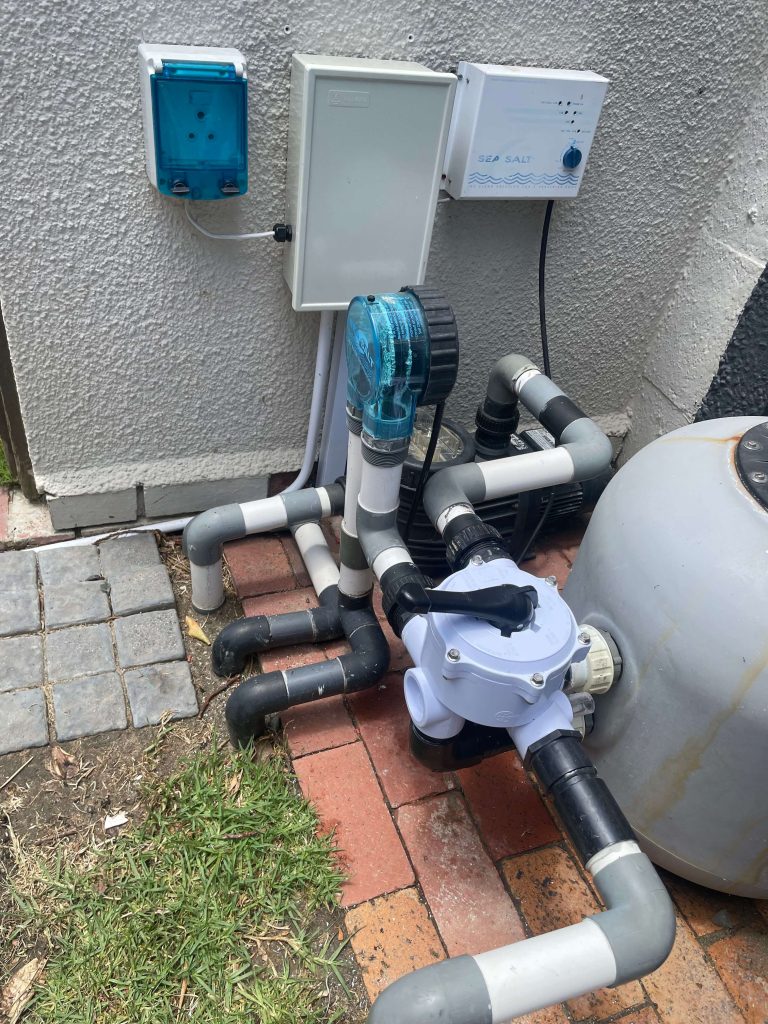
Pool Multiport Valve Settings in Plain English
Filter
The everyday setting. Water comes from the skimmer and main drain through the pump, down through the sand and back to the pool through the return jets. Your gauge reading on Filter, just after a backwash, is your clean baseline. Our guide to the pool filter pressure gauge explains what to look for.
Backwash and Rinse
When the gauge reads well above that clean baseline, the sand is full of dirt. Backwash reverses the flow, lifts the sand and flushes the dirt out of the waste line. Rinse then runs the water the normal way, but to waste, so the sand settles and the cloudy water doesn’t go back into the pool. For the full routine, see how to backwash a pool.
Waste
Waste skips the filter completely. Use it when you’re vacuuming up something the sand would only clog on, like the dead algae after a green clean-up or the heavy layer left by a flocculant. It’s also how you lower the water level after heavy winter rain. Watch the level, because Waste empties the pool quickly, and in Cape Town that water must go to the sewer, not the stormwater drain.
Waste only works until the water reaches the skimmer. If you need to go lower for a repair, switch off and use a pool drain pump instead.
Recirculate and Closed
Recirculate moves water around the pool without filtering it. It’s handy for mixing in chemicals, or for keeping water moving if the filter is broken and waiting for repair. Don’t leave it there, because nothing is being filtered. Closed shuts everything off and is only for isolating the filter while work is done, with the pump switched off.
Which Multiport Valve Setting to Use for Common Jobs
| Job | Setting | Tip |
|---|---|---|
| Normal daily running | Filter | Note the gauge reading after a backwash as your baseline |
| Gauge reading high | Backwash, then Rinse | Backwash until the waste water runs clear, then rinse briefly |
| Vacuuming a normal pool | Filter | Backwash afterwards if the pressure has climbed |
| Vacuuming algae or flocculant | Waste | Top up the water as you go |
| Pool overfull after rain | Waste | Stop at the middle of the skimmer opening |
| Cleaning the pump basket | Pump off at the board | The valve setting doesn’t matter, but the power does |
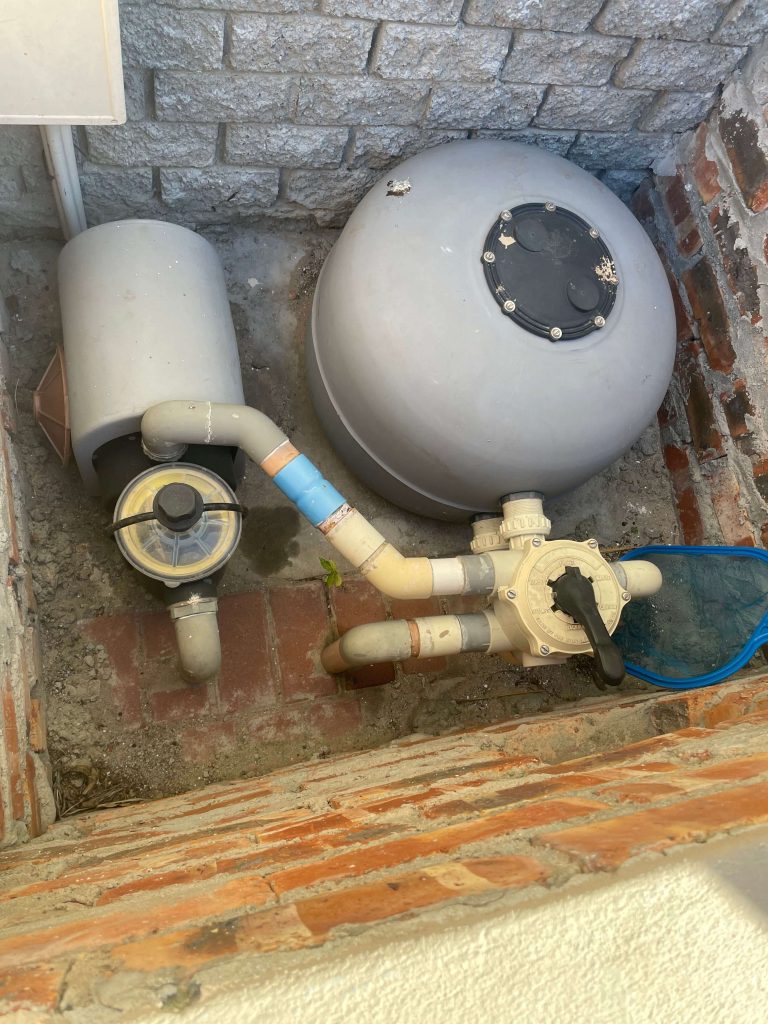
Pool Multiport Valve Leaking? The Usual Causes
Most valve problems show up as water where it shouldn’t be. These are the faults we see most often:
| What you notice | Likely cause | Usual fix |
|---|---|---|
| Water trickling out of the backwash line while on Filter | Worn or torn spider gasket | Replace the gasket, or the valve top if it’s worn |
| Water dripping around the handle | Worn shaft O-ring | New O-ring and lubricant |
| Leak where the valve meets the filter | Perished O-ring or a loose clamp band | New O-ring, reseat and tighten the clamp |
| Hairline crack in the valve body | Sun damage or over-tightened fittings | Replace the valve |
| Handle very stiff or won’t click into place | Scale, dried lubricant or a broken spring | Strip, clean and service, or replace the top |
| Air bubbles from the return jets | Air leak at the valve or pump fittings | Find and reseal the leak |
A valve that lets air in on the suction side can also make the pool pump lose prime and run hot. If the leak is coming from the pump rather than the valve, book a pool pump repair before the seal damage spreads to the motor.

Why Valves Wear Out Faster in the Western Cape
- Summer sun. Valves in open pump areas bake every afternoon. The plastic goes brittle and the body cracks.
- Hard water. In parts of the Boland, scale builds up inside the valve, so the handle stiffens and the gasket stops sealing.
- Coastal salt air. Near the sea, clamp bands, screws and the gauge corrode quickly.
- Flooded pump pits. Winter rain that fills a pump pit leaves silt in the valve and the gauge.
When to Replace a Pool Multiport Valve
Repair it if
- Only the spider gasket or an O-ring is worn
- The handle is stiff but the body isn’t cracked
- Parts for that make of valve are still available
- The filter itself is in good shape
Replace it if
- The valve body or top is cracked
- It’s had the same gasket replaced more than once in a short time
- Parts are no longer made for that model
- The filter is also old and due for replacement
At the time of writing, a complete replacement pool multiport valve sells from around R550 to R1,600, depending on the make and size. Fitting is extra. The new valve must match your filter: side-mount or top-mount, the same thread or clamp, and the right pipe size, usually 40mm or 50mm. Ask our team for a current fitted quote.
If the filter is cracked or the sand is old, it can make more sense to replace the whole unit. Our guide to choosing a pool filter and pump pairing explains how to size the new one. The signs of a failing tank are covered in our guide to swimming pool sand filter replacement.
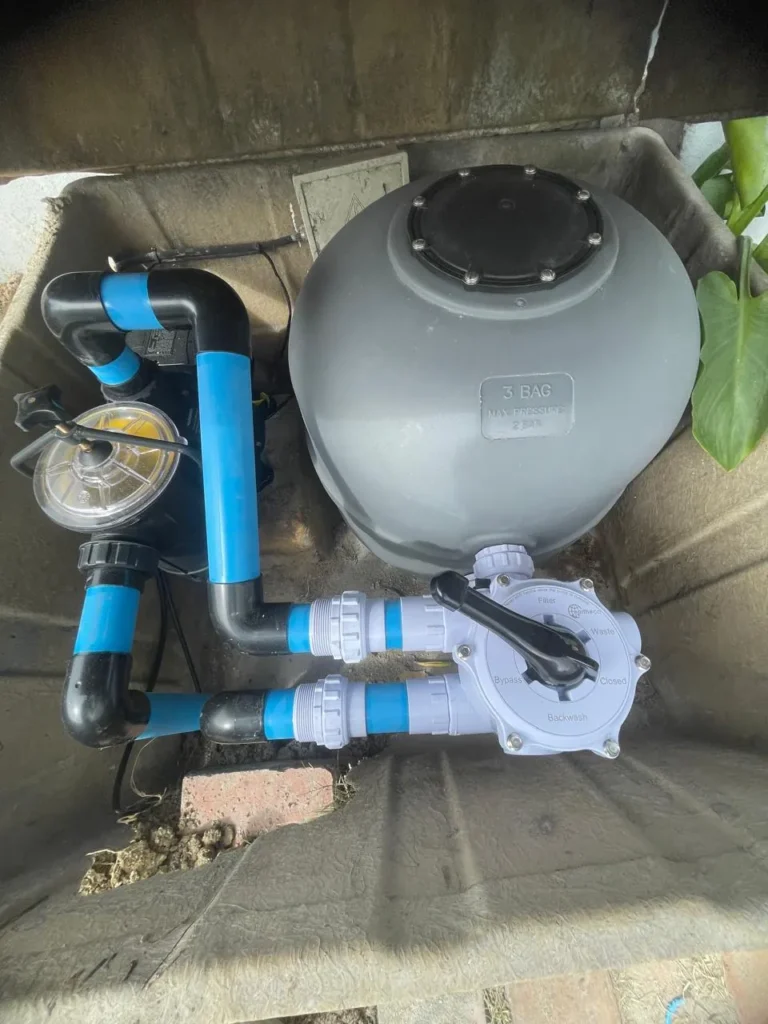

If the valve still leaks, sticks or sends water to waste after these checks, switch the pump off and call our team.
Valve leaking or stuck?
Send us a photo of your filter and valve, and the label if you can see it. We’ll tell you whether it’s a gasket job or a new valve, and give you a price before any work starts.
Call 074 378 6623, WhatsApp us, or email info@poolsreno.co.za. We also offer regular pool cleaning services.
Pool Multiport Valve: Frequently Asked Questions
Filter, for normal daily running. Use Backwash and Rinse to clean the filter, Waste for vacuuming heavy dirt or lowering the water, and Recirculate only for short periods. Always switch the pump off before changing the setting.
Usually the spider gasket inside the valve is worn or has twisted out of place, so water slips past it to the waste line. It’s often caused by turning the handle with the pump running. A new gasket or valve top normally fixes it.
No. Changing the setting under pressure damages the spider gasket and can crack the valve. Switch the pump off, change the setting until it clicks into place, then switch the pump back on.
At the time of writing, a complete replacement valve sells from around R550 to R1,600, depending on the make and size. Fitting is extra, and the valve must match your filter’s mounting and pipe size.
Backwash pushes water backwards through the sand to clean the filter, then out to waste. Waste skips the filter completely and sends pool water straight out, which is used for vacuuming heavy dirt or lowering the water level.