Walk into any pool shop and you’ll find a whole wall of pool cleaning tools. Most home pools need five of them: a good pool brush, a leaf net, a telescopic pole, a way to vacuum the floor and a test kit. The rest is nice to have at best, and some of it can damage your pool.
Our team services and repairs pools across the Western Cape, so we see which tools owners actually use and which ones end up behind the pump house. Here’s the short list, how to pick a pool brush that suits your surface, and what to leave on the shelf.
The short list (shelf prices at the time of writing)
- Pool brush, 450mm to 560mm: from around R140 to R500
- Leaf net or deep leaf rake: from around R190 to R390
- Aluminium telescopic pole: around R700 for a good pole that extends to about 6m
- Manual vacuum head and hose: a few hundred rand for the head, plus a hose long enough to reach the far end
- Test kit or strips: a small, regular cost that saves you a fortune in chemicals
- Starter sets with a vacuum head, net, pole and test kit sell from around R660 to R1,230
The Pool Cleaning Tools You Actually Need
Every tool on this list earns its place on a normal Cape Town pool. Buy decent versions once and they’ll last years.
| Tool | What it does | How often you’ll use it |
|---|---|---|
| Pool brush | Lifts dirt and early algae off walls, steps and the waterline so the filter can catch it | Once a week, more in hot weather |
| Leaf net or leaf rake | Takes leaves off the surface before they sink, stain and rot | Every day or two in autumn and after wind |
| Telescopic pole | Carries the brush, net and vacuum head to the deep end | Every time you clean |
| Vacuum head and hose, or an automatic cleaner | Clears dirt that settles on the floor | Daily with a cleaner, weekly by hand |
| Test kit | Tells you what the water needs before you add anything | Once or twice a week |
If you’d rather not own any of it, a regular service brings its own kit. Our pool cleaning services page explains what a visit covers.
Choosing a Pool Brush for Your Pool’s Surface
This is the one tool people most often get wrong. The right pool brush depends on what your pool is lined with, not on what’s on special.
- Fibreglass, painted and vinyl pools: nylon bristles only. Steel or combination bristles scratch gelcoat, cut through vinyl and strip pool paint.
- Marbelite and plaster pools: a nylon brush for the weekly clean. A stainless steel or combination brush is for stubborn algae spots on bare plaster, used now and then, not every week.
- Curved or wide brushes: a curved 450mm to 560mm head follows the corner where the wall meets the floor, which is where dirt and algae like to sit.
- A small step brush: handy for steps, benches and around return jets, where a big head can’t reach.
How to Use a Pool Brush Properly
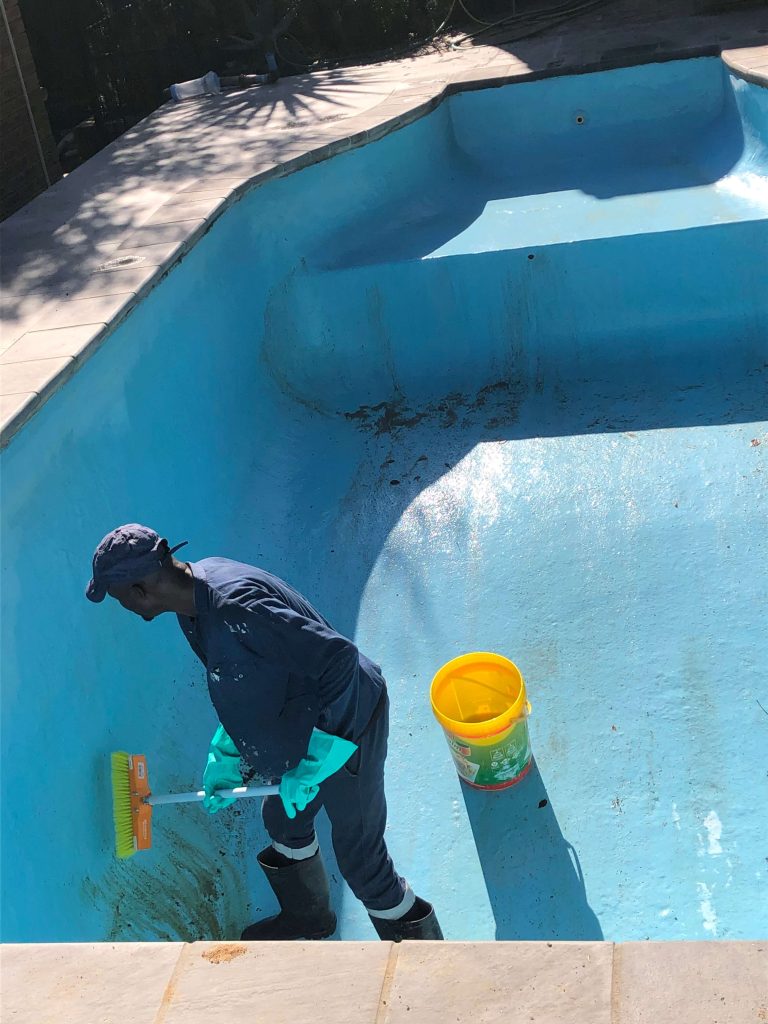
Brush from the shallow end towards the deep end and the main drain, so the dirt ends up where the filter can pull it in. Do the waterline first, then the walls, then the floor. Run the pump while you brush and for a few hours after.
Once a week is enough for most pools. Brush more often in a hot spell, after heavy rain washes soil in, and anywhere the water doesn’t move much, like behind the steps.
Leaf Nets: Flat Skimmer or Deep Leaf Rake?
A flat skimmer net is fine for a few insects and the odd leaf. If you have oaks, plane trees or a hedge near the pool, buy a deep leaf rake. The bag holds a pile of leaves before you need to empty it, and it can scoop leaves that have already sunk.
A good swimming pool net has a strong frame, a fine mesh and a clip that locks onto the pole. Cheap frames bend the first time you scoop a wet pile off the floor.
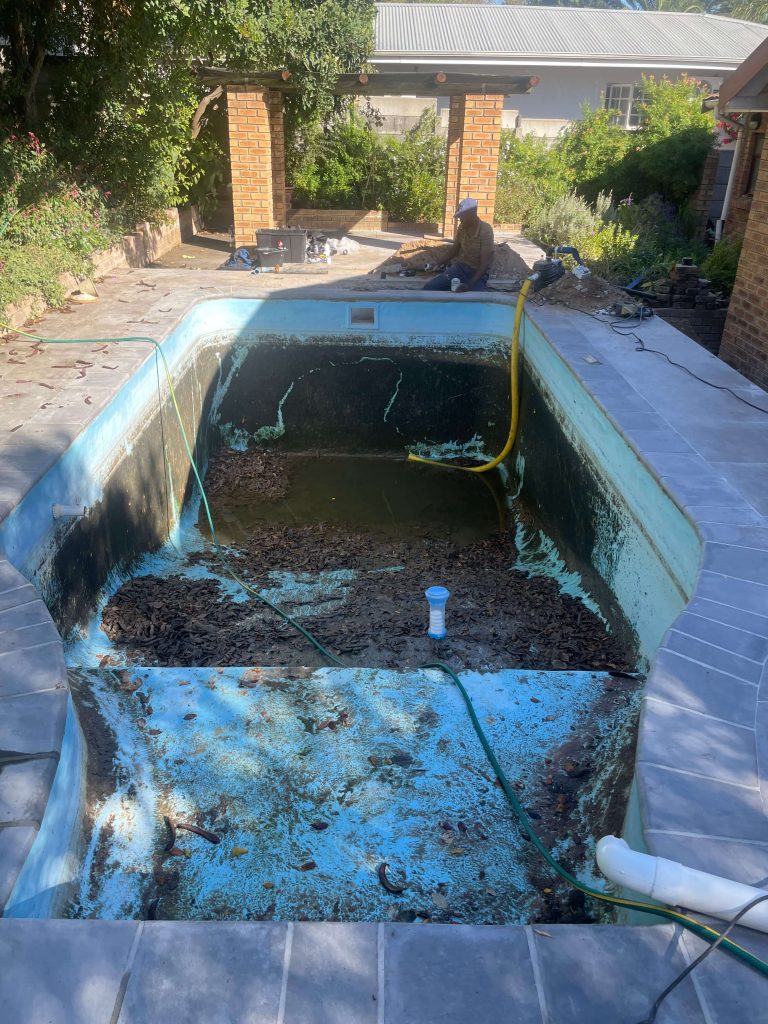
Leaves that sit on the floor for weeks stain marbelite, feed algae and block the pool skimmer basket. In a Cape autumn, a few minutes with the net every day or two saves hours of work later.
Pool Vacuum Options: Manual Head or Automatic Cleaner
You need some way to get settled dirt off the floor. There are two routes, and plenty of owners use both.
Manual vacuum head and hose
- Cheap to buy and nothing to break
- Best for heavy dirt after a storm or a clean-up
- Can vacuum to waste so fine dirt skips the filter
- Needs your time, usually half an hour or more
Automatic pool cleaner
- Runs every day while the pump is on
- Keeps a normal pool tidy with little effort
- Diaphragms, hoses and tyres wear and need replacing
- Still needs a brush for walls, steps and corners
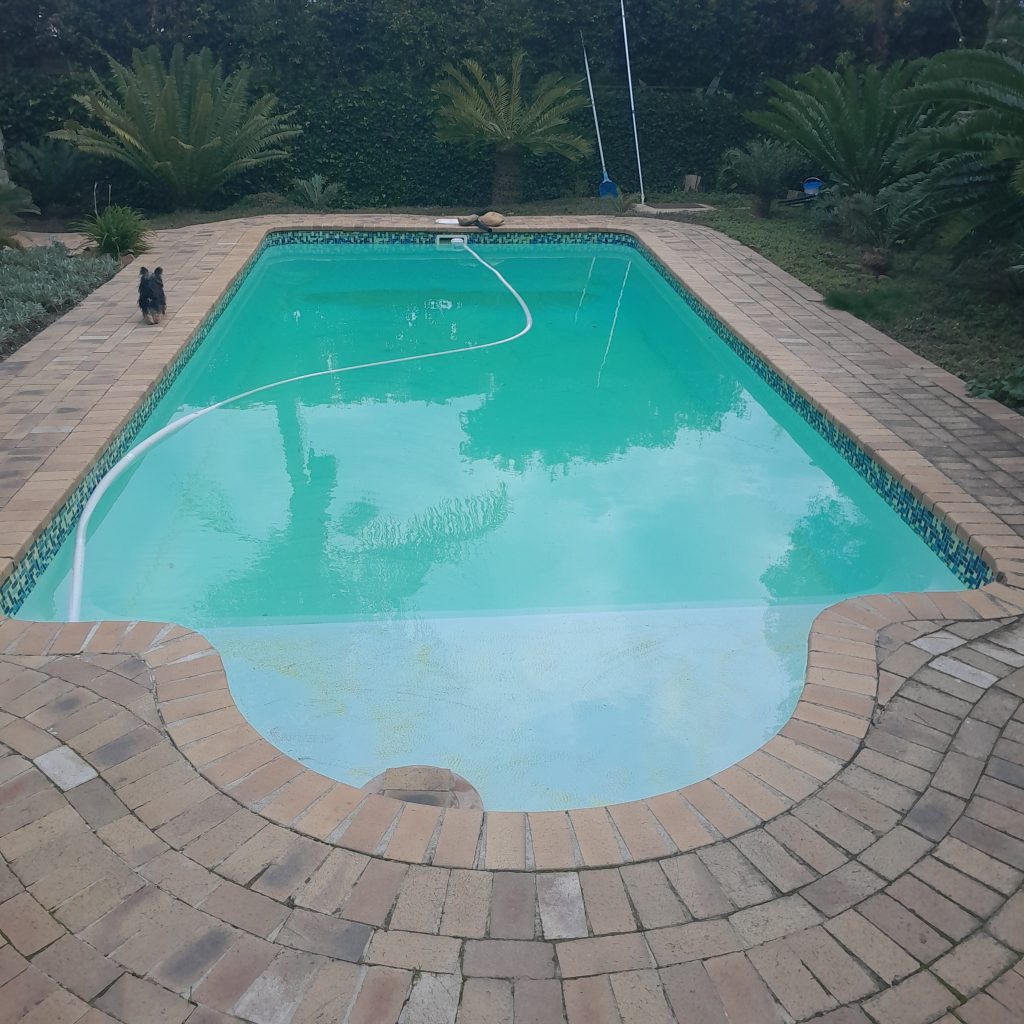
If you’re choosing a pool cleaner, match it to your pool’s size, shape and surface. For the manual route, our guide to a clean pool vacuum by hand covers priming the hose and the valve settings. If you vacuum to waste, top the pool up afterwards and check our guide on how to backwash a pool so the filter gets a proper clean too.
A Telescopic Pole and a Test Kit Round Out Your Pool Cleaning Tools
Buy one solid aluminium pole that reaches the middle of the deep end with room to spare. Poles are sold in several lengths, from roughly 2m up to about 6m fully extended. Check that the locking collar grips firmly, because a pole that slips while you’re scrubbing is maddening.
A test kit is the tool that saves the most money. Strips are quick. A drop kit is more accurate. Either way, test before you add anything, add chemicals to water and never the other way round, and follow the label. Our guide to the 3 C’s and 3 B’s covers how to keep the pool chemicals in balance alongside the cleaning.
Pool Cleaning Tools to Skip
Not everything sold as a pool cleaning tool is worth having. These are the ones we’d leave on the shelf:
- A steel brush on the wrong surface. On fibreglass, paint or vinyl it does real damage, and the repair costs far more than the brush.
- Floating chlorine dispensers. When the pump stops they drift into a corner and can bleach or etch the surface underneath.
- Flimsy one-piece poles and bargain kits. Thin poles bend and cheap clips snap. You end up buying twice.
- A pricey robot for a small splash pool. A brush and a manual vacuum head do the job for a fraction of the cost.
- Products that promise to replace brushing. Clarifiers and algaecides have their place, but nothing replaces a weekly brush and a working filter.
Look after the tools you buy
Rinse brushes and nets in clean water after use and store them out of the sun. Cape summer UV makes plastic brittle within a season or two. Replace a brush once the bristles splay or wear short, and check net frames for cracks before autumn starts.
When a Pool Brush and Net Aren’t Enough
Good tools keep a healthy pool healthy. They won’t fix a pool that has gone green, a floor covered in stains, or a surface so rough it shreds brush bristles in a month. That’s usually a deep clean, a stain treatment or a sign the surface is wearing out.
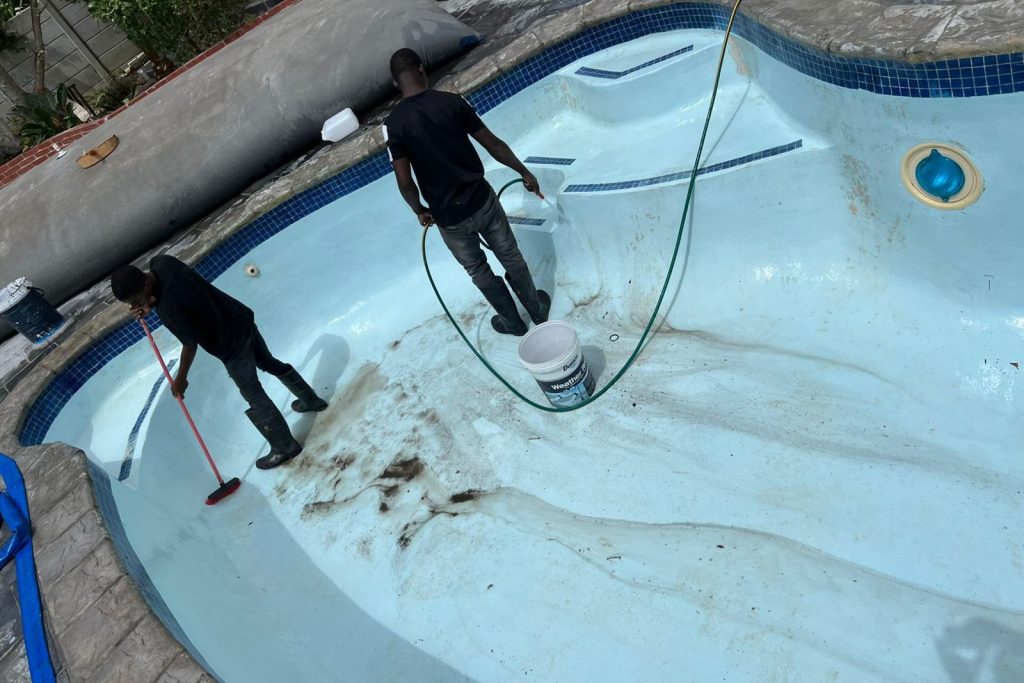
Our guide on how to remove stains from marbelite pool surfaces explains what can be lifted and what can’t. If you’d rather hand the whole job over, our team offers regular maintenance of swimming pool equipment and water, from a once-off clean to a weekly visit. And keep those baskets empty: a pump starved of water runs hot, and our guide to pool pump prices shows what that can cost.
Not sure which pool brush suits your pool?
Send us a photo of your pool and the tools you have, and our team will tell you what’s worth keeping and what to replace. If the pool needs more than a brush, we’ll quote for the clean-up before any work starts.
Call 074 378 6623, WhatsApp us, or email info@poolsreno.co.za.
Pool Cleaning Tools: Frequently Asked Questions
Use a nylon brush on fibreglass, painted and vinyl pools. On marbelite or plaster, a nylon brush does the weekly clean and a stainless steel or combination brush can be used now and then on stubborn algae spots. Never use steel bristles on fibreglass or paint.
Once a week suits most pools. Brush more often in hot weather, after heavy rain and in corners where the water doesn’t circulate well. Run the pump while you brush so the filter catches what you lift.
Not quite. An automatic cleaner keeps the floor tidy, but it doesn’t scrub walls, steps or the waterline. You still need a pool brush once a week and a leaf net in autumn.
A pool brush that suits the surface, a leaf net, a telescopic pole, a vacuum head and hose or an automatic cleaner, and a test kit. That covers almost everything a home pool needs.
At the time of writing, a decent pool brush sells from around R140 for a basic curved brush to about R500 for a wide, heavy-duty one. Prices vary between shops, so compare before you buy.