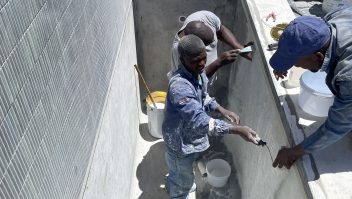
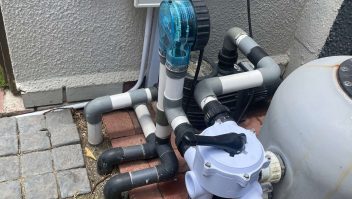
How long does it take to build a pool? On site, a fibreglass shell pool usually takes 2 to 4 weeks and a concrete or gunite pool around 6 to 10 weeks. But the build is only part of it. Design, quotes and building plan approval come first, and in Cape Town that can add a month or more before anyone picks up a spade.
Here’s the full timeline our team works to, from the first site visit to the day you swim, with what speeds it up and what slows it down.
| Pool type | Planning and approval | On-site build | First call to first swim, roughly |
|---|---|---|---|
| Fibreglass shell pool | About 4 to 6 weeks | 2 to 4 weeks | About 6 to 10 weeks |
| Concrete or gunite pool | About 4 to 6 weeks | 6 to 10 weeks | About 10 to 16 weeks |
Before the Build: Design, Quote and Plans
The weeks before construction are easy to underestimate. This is what happens and roughly how long each step takes:
- Site visit and design, about 1 to 2 weeks. We look at the space, access for machines, slopes, trees, where the pipes and pump will go, and talk through size and shape.
- Quote and decisions, about 1 week. Pool type, finish, coping, paving and equipment. The more you decide now, the fewer delays later. Our guide to a swimming pool quotation shows what it should cover.
- Building plan approval, up to about 30 days. In Cape Town a swimming pool needs an approved building plan. The City’s target for a complete application on a smaller project is 30 days, sooner if everything is in order. Other municipalities work along similar lines.
- Booking and materials. Fibreglass shells are made in moulds, so if the shape you want isn’t in stock, add the factory lead time.
If you’re still deciding on the pool itself, our tips on how to build a swimming pool in Cape Town and our guide to the cost of building a swimming pool are good places to start. It also pays to choose your swimming pool contractors carefully.
How Long Does It Take to Build a Pool in Concrete or Gunite?
Concrete and gunite pools are built in place, so there are more stages and more waiting for things to cure. This is how a typical 6 to 10 week build breaks down:
| Stage | Typical time | What happens |
|---|---|---|
| Set-out and excavation | 2 to 5 days | The shape is pegged out and dug. Hand digging on tight sites takes longer. |
| Steel, plumbing and forms | About 1 week | Reinforcing steel goes in, and pipes for the skimmer, jets and drain are laid. |
| Shell | 1 to 5 days | Gunite is sprayed in a day or two. Block and concrete walls take longer. |
| Curing | About 4 weeks | The shell cures to full strength. Coping, plumbing and equipment carry on around it. |
| Plaster, waterproofing and finish | About 1 to 2 weeks | The shell is plastered, waterproofed and finished with marbelite, fibreglass lining, paint or tiles. |
| Coping, paving, equipment, electrics | Overlaps the above | Coping and paving go down, the pump and filter are fitted, and lights are wired by an electrician. |
| Fill and balance | 1 to 3 days | The pool is filled and the water balanced before the first swim. |
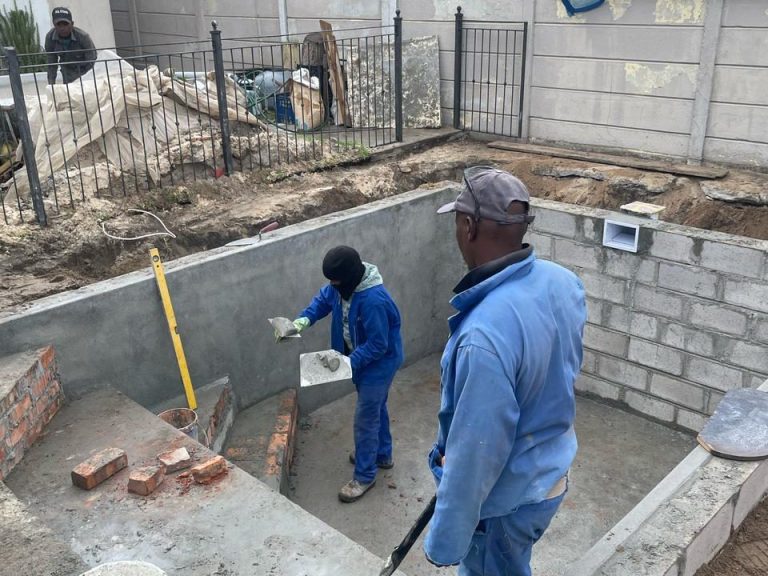
The curing stage is why concrete pools take longer. The shell needs time to reach full strength, which our gunite pool guide puts at about 28 to 30 days. A good builder uses that time for the work around the pool, so the site doesn’t sit idle.
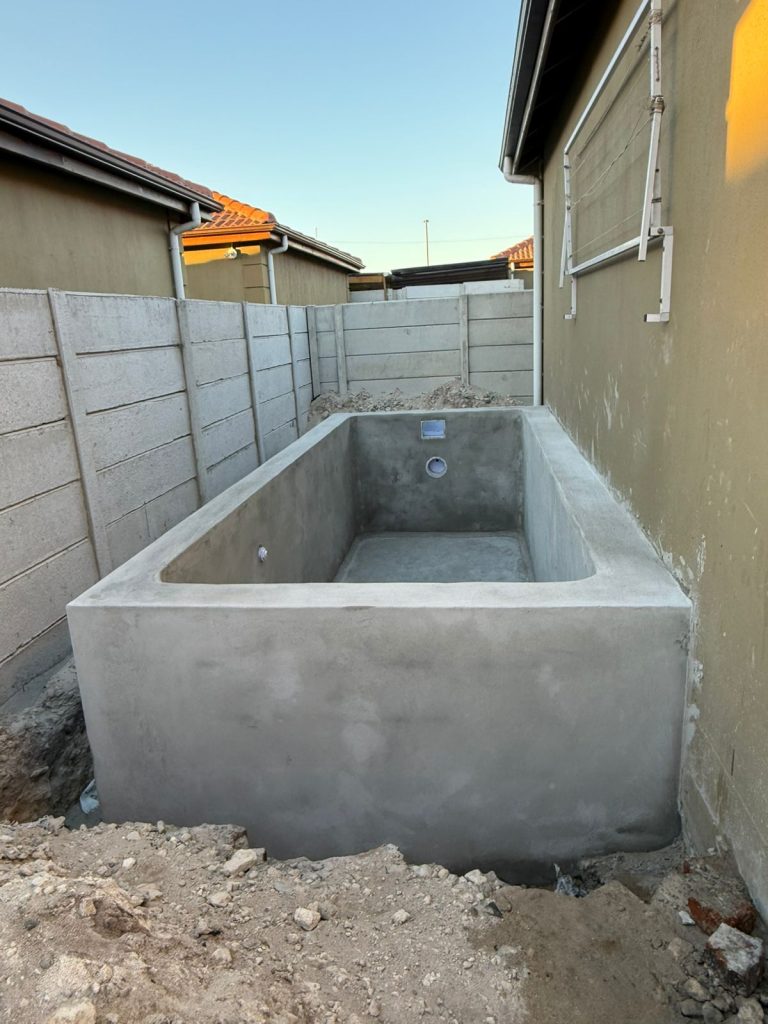
The finish stage depends on what you choose. A steel-reinforced concrete pool with a fibreglass lining needs a dry shell and a few dry days for laminating. Marbelite goes on in a day but needs careful water balance afterwards.
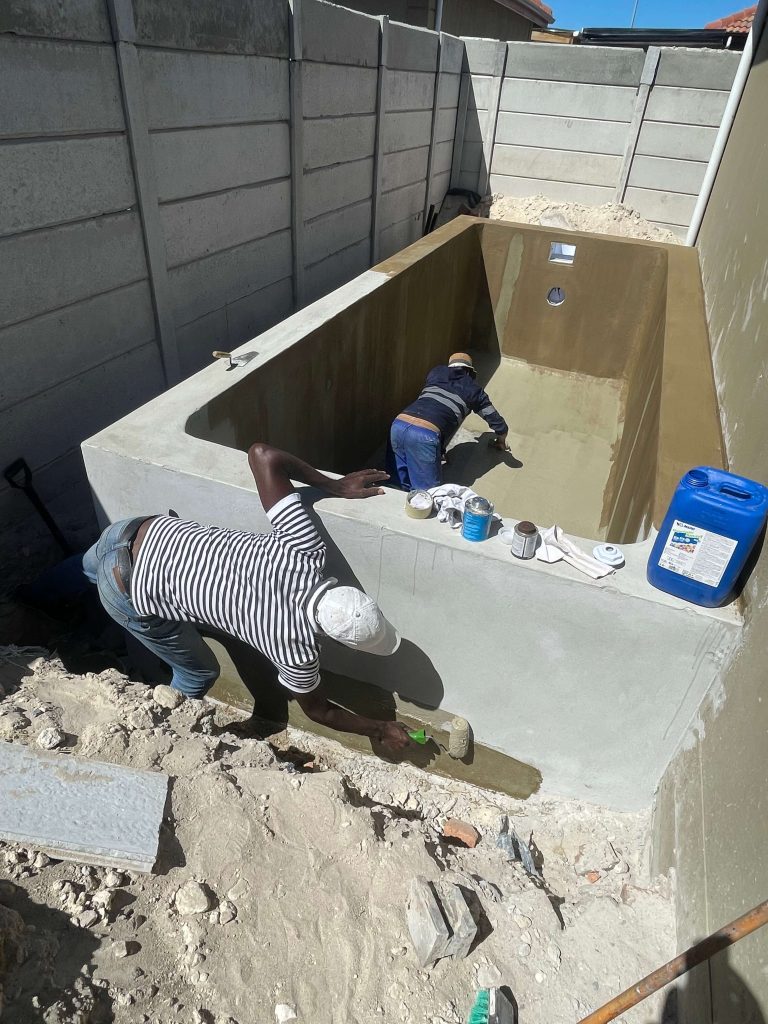
How Long Does It Take to Build a Pool With a Fibreglass Shell?
A fibreglass shell arrives finished, so most of the on-site time goes into the hole, the base, the plumbing and the surrounds:
- Excavation and base, 2 to 4 days. The hole is dug slightly bigger than the shell and a level base is laid.
- Setting the shell, 1 day. Usually lifted in by crane, so access for the truck matters.
- Plumbing and backfill, about 1 week. The pipes are connected and the gap around the shell is backfilled while the pool fills, so the pressure stays even inside and out.
- Coping, paving and equipment, 1 to 2 weeks. The surround is finished and the pump, filter and electrics go in.
Backfill is the step that decides how well the shell behaves for the next 20 years. Our guide to installing fibreglass pools explains the process in more detail.
What Slows a Pool Build Down
Common causes of a few extra days
- Rain during excavation or plastering
- Narrow access that means hand digging
- Soil carted away in small loads
- Small changes to the design mid-build
- Waiting for a dry spell to finish the surface
Causes of longer delays
- Rock or old rubble in the excavation
- A high water table in winter flooding the hole
- Building plans sent back for changes
- A fibreglass shell that has to be made to order
- Big changes after the shell is built
Winter is the big one in the Western Cape. Excavations fill with water after a cold front, sandy ground collapses back into the hole, and finishes like fibreglass need dry weather. Many owners start planning in winter so the build runs through spring and the pool is ready for the December holidays. Book early, because spring and early summer fill up fast.
Extras That Add Time
- Water features and raised walls add building and tiling days.
- New pool coping and paving around the whole pool, rather than a simple edge.
- Lighting, which needs an electrician on site for the wiring.
- Equipment upgrades such as an inverter pool pump or salt chlorinator, which take little extra time if planned from the start.
Do Small Pools Take Less Time?
A little. A plunge pool has less to dig, less steel and less surface to finish, so it sits at the shorter end of the range. But the slow parts, plan approval and curing, take about as long for a small concrete pool as a big one.
Filling Your New Pool and the First Swim
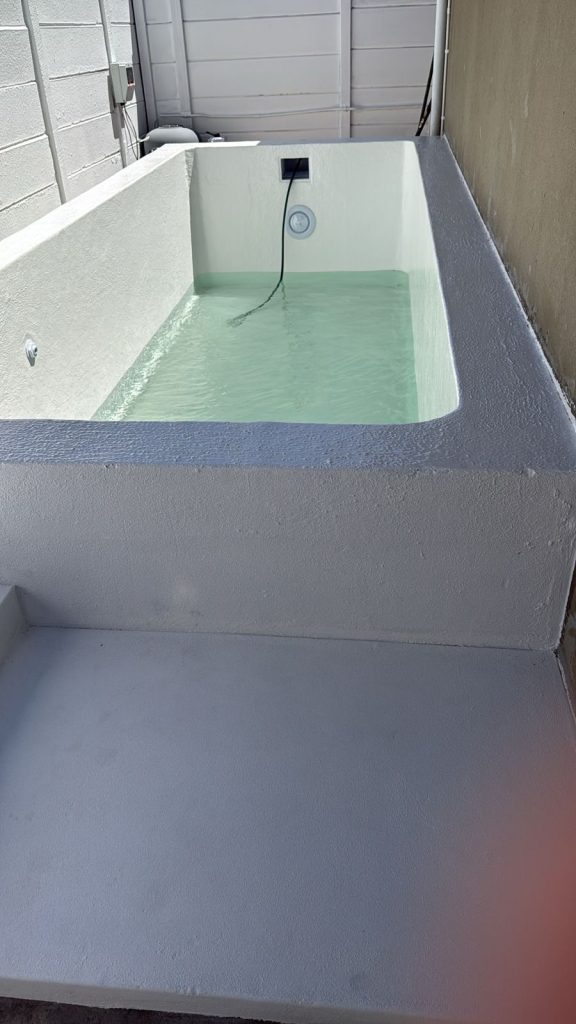
Filling with a garden hose can take a day or two for a typical pool, depending on your water pressure. Once it’s full, the water is balanced and the equipment is set up. On a new marbelite pool, the first weeks need regular brushing and careful water balance while the surface settles. Our team talks you through the routine at handover.
Planning a new pool?
Tell us what you have in mind and when you’d like to swim. Our team will visit, give you a written quote and a realistic timeline for your site, including the planning stage.
Call 074 378 6623, WhatsApp us, or email info@poolsreno.co.za. See our swimming pool construction page for the types of pools we build.
How Long Does It Take to Build a Pool: FAQs
On site, a concrete or gunite pool usually takes around 6 to 10 weeks, partly because the shell needs about four weeks to cure. Add design and plan approval before the build starts.
A fibreglass shell pool usually takes 2 to 4 weeks on site, from excavation to the surrounds and equipment. If the shell has to be made to order, add the factory lead time.
Yes. The City of Cape Town lists swimming pools as minor works that need an approved building plan before building starts. A complete application on a smaller project is usually assessed within about 30 days.
Planning in winter and building through spring works well, because the dry months suit excavation and finishes, and the pool is ready for summer. Spring bookings fill up quickly.
Yes, but expect delays. Rain floods excavations, wet sand collapses, and finishes like fibreglass lining need dry days.