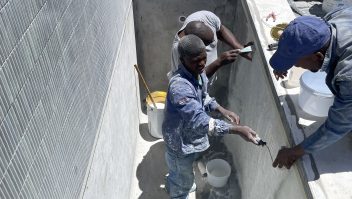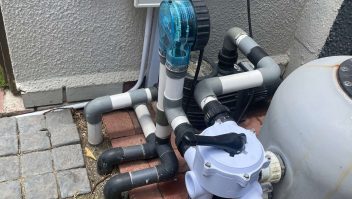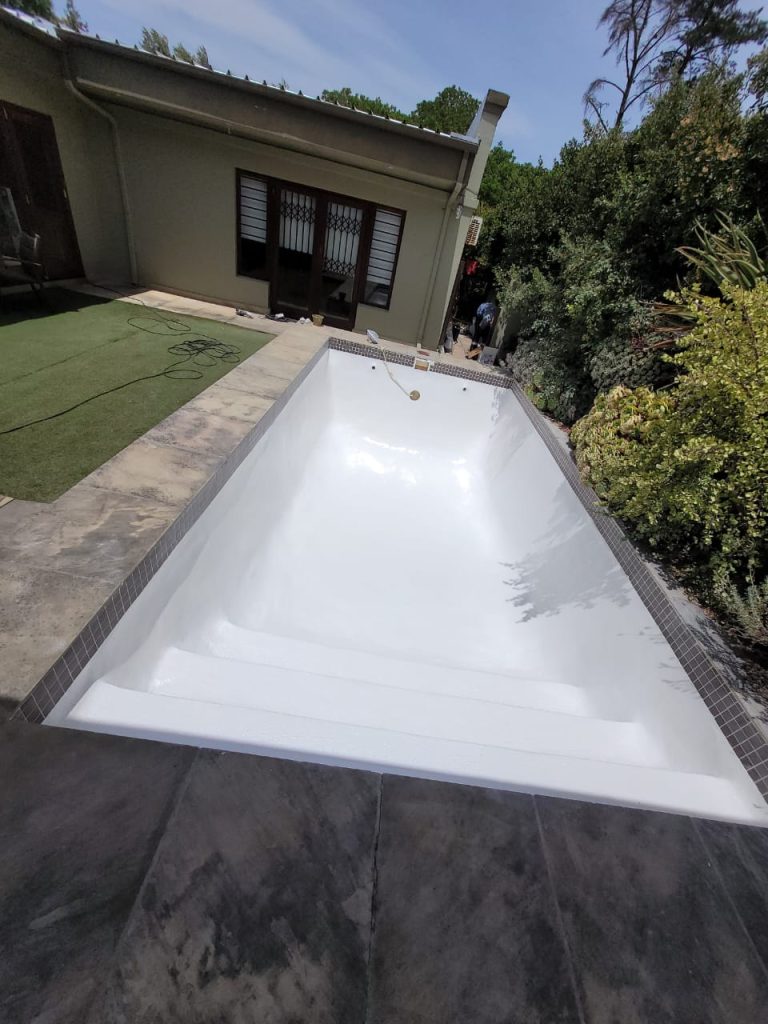
If your swimming pool has become rough, cracked, stained, porous or difficult to maintain, you may not need to demolish the existing pool.
A properly assessed concrete, gunite or marbelite pool can often receive a new fibreglass pool lining and a completely different appearance.
However, professional fibreglass pool lining involves much more than applying resin and fibreglass to an old surface.
The quality of the finished pool depends on what happens before the first layer of fibreglass goes down.
Surface preparation, substrate repairs, bonding, reinforcement, resin selection, moisture conditions and finishing all influence the final result.
For that reason, Pools Reno approaches fibreglass lining, relining, surfacing and resurfacing as a complete pool renovation process.
The aim is simple: prepare the existing pool correctly, select the appropriate system and deliver a smooth, durable and attractive new interior.
What Is Fibreglass Pool Lining?
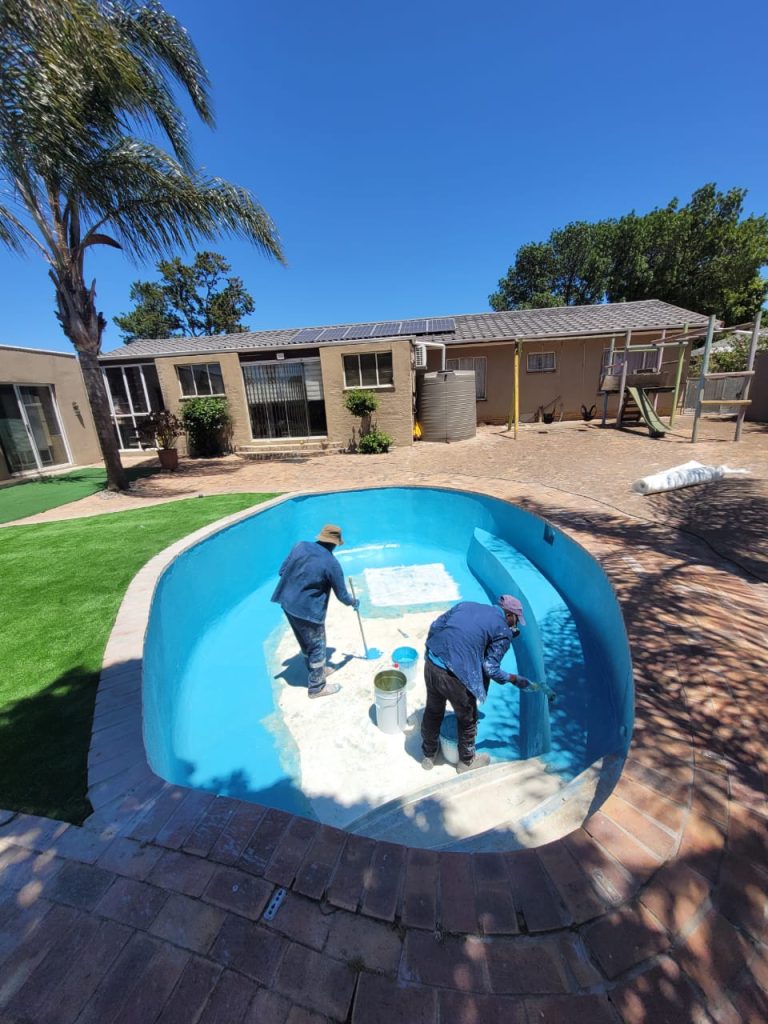
Fibreglass pool lining involves installing a reinforced composite laminate over a suitable swimming pool substrate.
The system can incorporate:
- surface preparation
- substrate repairs
- compatible primer or bonding system
- fibreglass reinforcement
- polyester or vinyl ester resin
- additional reinforcement where required
- poolcoat
- decorative mosaic systems
- compatible clear protective coatings
Once the composite system cures, it creates a new internal surface over the existing pool shell.
Consequently, a structurally suitable pool can sometimes undergo a substantial renovation without removing the entire concrete or marbelite shell.
Fibreglass Pool Lining vs Relining vs Resurfacing
Homeowners use several different terms when searching for this service.
Fibreglass pool lining
This generally describes installing a fibreglass composite surface over an existing suitable pool shell.
Fibreglass pool relining
Relining usually refers to renewing an existing pool interior that has deteriorated or failed.
For example, the existing pool might have old marbelite, paint, cement-based finishes or a previous fibreglass system.
Fibreglass pool resurfacing
Resurfacing describes renewing the internal surface of the swimming pool.
The terminology can vary between contractors.
From a homeowner’s perspective, however, the important question is not which term appears on the quotation.
The important question is:
What complete system will the contractor install, and how will the existing pool be prepared?
Why Fibreglass Pool Relining Has Become a Popular Cape Town Renovation Option
Cape Town swimming pools experience constant exposure to sunlight, pool chemicals, temperature fluctuations and moisture.
Over time, traditional pool finishes can deteriorate.
Marbelite can become rough or porous. Concrete surfaces can crack or deteriorate. Paint can peel. Previous repairs can fail.
Meanwhile, some homeowners simply want to modernise an old swimming pool without undertaking a complete rebuild.
Fibreglass relining provides a potential solution for suitable pool shells.
The finished surface can provide a smooth, sealed interior that is easier to clean and visually transforms an ageing swimming pool.
Can You Fibreglass Over an Existing Marbelite Pool?
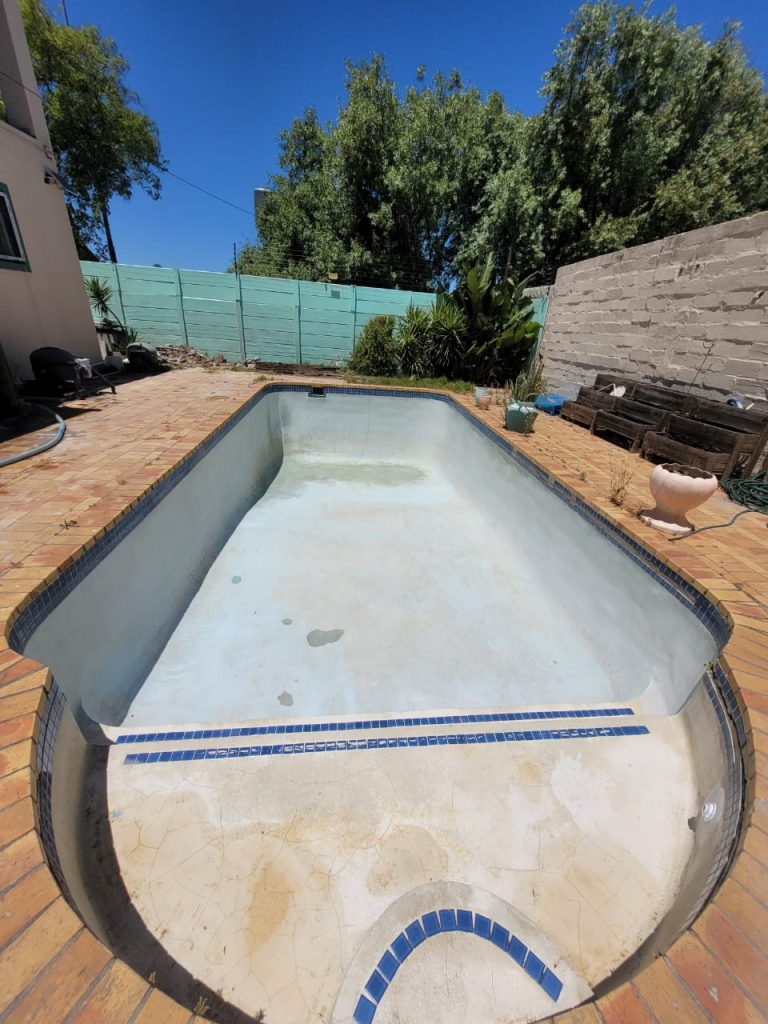
In many suitable situations, yes.
However, the installer should inspect the marbelite before choosing the lining system.
An older marbelite pool can contain:
- hollow areas
- loose material
- cracks
- weak sections
- stains
- chemical deterioration
- old coatings
- previous repair materials
Those problems need attention before the new laminate goes down.
Therefore, marbelite pool fibreglass lining in Cape Town should begin with substrate assessment and preparation, not simply with resin application.
Can You Fibreglass Line a Concrete Pool?
A structurally suitable concrete pool can often receive a fibreglass lining system.
The preparation requirements depend on the existing substrate.
A typical project can involve:
- Pool inspection
- Draining
- Cleaning
- Removal of unsuitable material
- Acid cleaning where appropriate
- Mechanical sanding or grinding
- Crack and surface repairs
- Dust and contamination removal
- Compatible primer or bonding system
- Fibreglass reinforcement
- Resin application
- Final finishing
- Curing and inspection
The exact system should always match the pool’s condition and the materials being used.
Surface Preparation Is the Most Important Part of Fibreglass Pool Lining
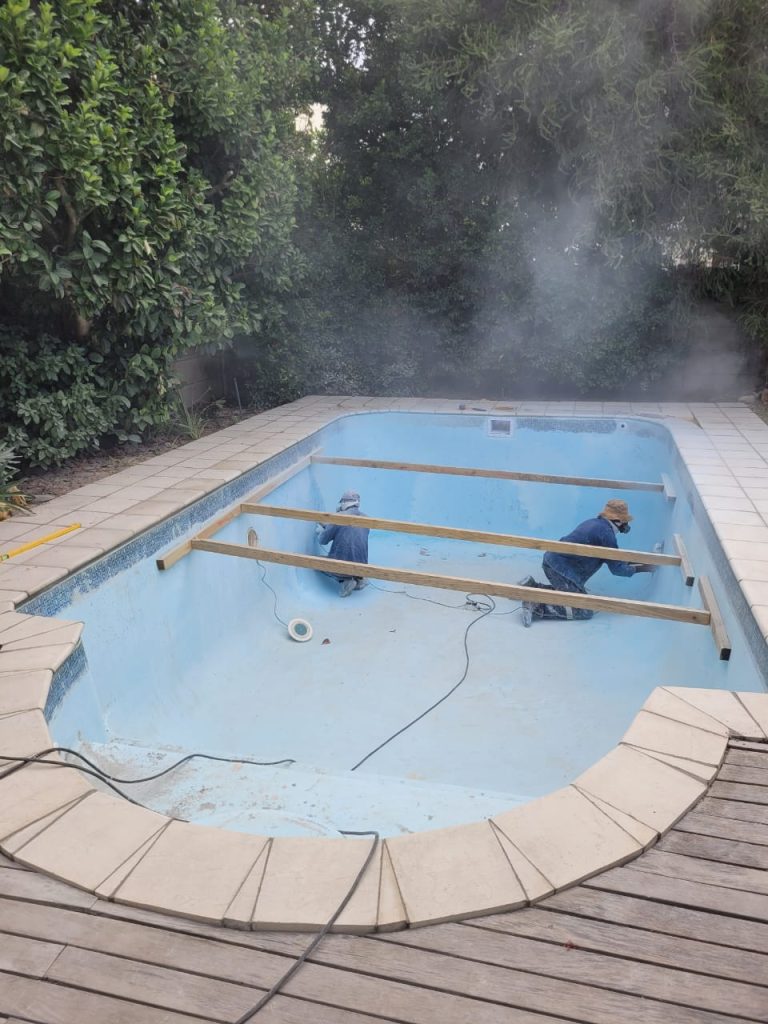
A beautiful finished pool starts with preparation that the homeowner may never see.
The new laminate needs a suitable surface to bond to.
Therefore, the installer must identify and deal with:
- loose marbelite
- hollow areas
- weak concrete
- old coatings
- dust
- grease
- contaminants
- damaged areas
- unsuitable previous repairs
- cracks
- poorly prepared fittings
Simply covering a problem does not make the problem disappear.
A high-quality resin system cannot compensate for an unsuitable substrate.
That is why Pools Reno places significant emphasis on thorough surface preparation before installing a new fibreglass lining.
Acid Cleaning Before Fibreglass Pool Relining
Depending on the existing substrate, acid cleaning can form part of the preparation process.
It can help remove certain deposits and contaminants from the surface.
However, acid cleaning should not be confused with complete preparation.
After chemical cleaning, the surface may still require:
- thorough rinsing
- drying
- sanding
- grinding
- profiling
- dust removal
The installer should select the preparation method according to the existing pool surface and the requirements of the specified fibreglass system.
Why Sanding and Grinding Matter
A visually clean surface is not necessarily a properly prepared bonding surface.
Mechanical preparation can remove weak material and create a suitable surface profile.
Depending on the condition of the pool, the work may include:
- sanding
- grinding
- edge preparation
- corner preparation
- removal of old coatings
- preparation around fittings
- surface profiling
This step becomes particularly important when working on old marbelite, painted pools or surfaces that have previously received other coatings.
Crack Repairs Before Fibreglass Relining
Cracks require investigation.
Some cracks are superficial. Others can indicate movement or a more serious structural problem.
Possible causes include:
- shrinkage
- settlement
- ground movement
- previous repairs
- structural movement
- local damage
For that reason, a professional contractor should determine the nature of the cracking before installing a new internal finish.
Fibreglass can provide reinforcement and a new waterproof surface in suitable applications.
It should not, however, be marketed as a cure for a fundamentally unstable pool shell.
Fibreglass Reinforcement: The Glass Matters
Fibreglass lining is a composite system.
The glass reinforcement provides the reinforcing component, while resin forms the matrix around the fibres.
The installer needs to correctly:
- position the fibreglass mat
- wet out the reinforcement
- consolidate the laminate
- manage overlaps
- work around corners
- detail fittings
- minimise unwanted air entrapment
The number and specification of layers should depend on the application and selected system.
Therefore, asking only:
“Which resin do you use?”
does not tell you enough.
A much better question is:
“What complete fibreglass laminate system are you specifying for my pool?”
GP Polyester Resin vs Vinyl Ester Resin
Resin selection can influence both performance and project cost.
GP polyester resin
GP, or general-purpose polyester resin, can provide a cost-effective solution for appropriate fibreglass applications.
Where the operating conditions and specification allow it, GP resin can form part of a suitable pool lining system.
Vinyl ester resin
Vinyl ester resin belongs to a different resin family.
It can offer performance characteristics that make it useful for more demanding composite applications.
For example, HETRON vinyl ester systems can be considered where the application calls for enhanced chemical and performance characteristics.
The important point is that vinyl ester should not automatically be described as better for every pool.
Instead, the contractor should consider:
- water temperature
- chemical exposure
- pool use
- laminate construction
- substrate
- environmental conditions
- manufacturer requirements
That approach produces a specification based on the actual pool rather than simply choosing the most expensive resin.
Fibreglass Lining for Heated Swimming Pools
Heated swimming pools deserve additional consideration.
When water temperature increases, the lining system experiences different operating conditions.
Consequently, the specification may need to consider:
- thermal exposure
- resin chemistry
- chemical resistance
- laminate construction
- poolcoat compatibility
- substrate condition
This is especially relevant when a homeowner plans to add a heat pump or solar heating system after the renovation.
If your pool is heated, tell the contractor before the quotation is prepared.
A specialist lining specification can then be considered rather than treating a heated pool exactly like an unheated pool.
For a deeper technical discussion of heated pools, GP resin, HETRON vinyl ester and osmosis protection, link this article to your existing technical guide.
Osmosis Protection for Fibreglass Pools
Osmosis is another subject that homeowners should understand before choosing a lining system.
Moisture can migrate through composite materials under certain conditions.
Risk can increase when a pool has:
- persistent groundwater
- high water tables
- moisture beneath the shell
- previous osmotic blistering
- moisture trapped beneath coatings
- inadequate substrate drying
An osmosis barrier system can form part of the specification where the pool’s conditions justify additional protection.
However, an osmosis barrier does not eliminate groundwater or hydrostatic pressure.
If groundwater is affecting the pool, the underlying moisture conditions may require separate investigation and management.
Fibreglass Pool Lining in High Water Table Areas
Groundwater deserves particular attention when renovating a swimming pool.
Draining a pool changes the pressure relationship between the empty shell and the surrounding soil.
Therefore, a contractor should consider:
- groundwater levels
- hydrostatic pressure
- drainage
- shell condition
- moisture migration
- previous lining failures
Depending on the site, additional moisture protection may form part of the fibreglass specification.
In more serious cases, however, drainage or structural intervention may be necessary.
The goal should always be to identify the underlying condition rather than simply cover its symptoms.
Fibreglass Pool Surfacing and Resurfacing
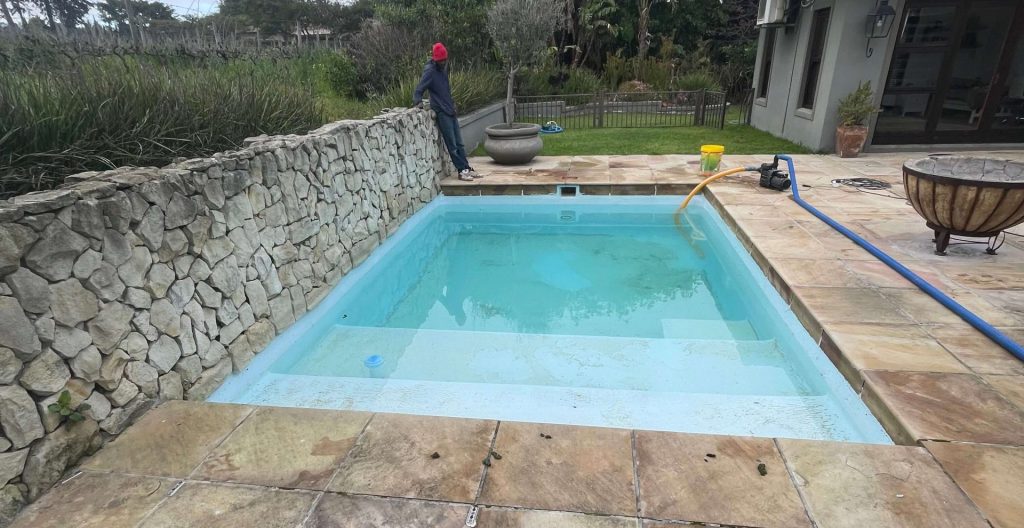
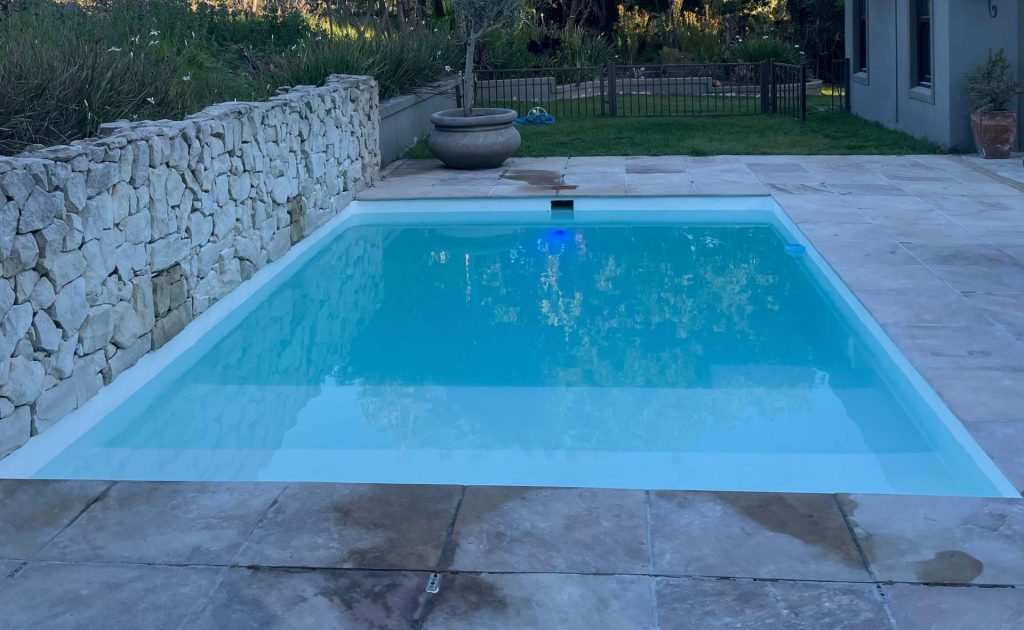
The terms surfacing and resurfacing appear frequently in searches for swimming pool renovation.
Fibreglass can provide a new internal surface for a suitable existing pool.
That makes it relevant to homeowners searching for:
- fibreglass pool surfacing Cape Town
- fibreglass pool resurfacing Cape Town
- swimming pool resurfacing Cape Town
- pool renovation Cape Town
- concrete pool resurfacing
- marbelite pool resurfacing
However, the terminology should never replace a proper assessment.
A pool with stable substrate and minor surface deterioration requires a different approach from a pool with major cracking, groundwater or failed previous coatings.
Fibreglass Pool Relining for Old Marbelite
Old marbelite remains one of the most common candidates for swimming pool renovation.
Typical complaints include:
- roughness
- staining
- surface erosion
- cracks
- algae growth
- difficult cleaning
- an outdated appearance
A properly prepared marbelite pool can potentially receive a new fibreglass lining.
The preparation stage remains critical.
Where loose or hollow areas exist, those areas should be investigated and treated before the new laminate is installed.
Fibreglass Pool Relining for Old Concrete Pools
Concrete pools can also deteriorate over time.
Common problems include:
- surface cracking
- exposed aggregate
- rough surfaces
- staining
- leaking
- old coatings
- damaged steps
- deteriorated edges
Fibreglass relining can provide a new internal surface where the existing shell is suitable.
The project may also provide an opportunity to renovate:
- steps
- benches
- waterline areas
- lights
- fittings
- mosaic features
Can Fibreglass Pool Lining Stop Leaks?
It depends on the cause of the leak.
A pool can lose water through:
- surface cracks
- plumbing
- lights
- skimmers
- drains
- return fittings
- structural defects
- shell movement
Fibreglass can address certain surface-related water-loss problems.
However, it should not be presented as a universal leak cure.
If the source is plumbing or a damaged fitting, the underlying problem needs attention.
For that reason, leak investigation can be valuable before undertaking a major pool renovation.
Fibreglass Pool Lining Can Also Transform the Appearance
Pool renovation isn’t only about waterproofing.
Homeowners also want a swimming pool that looks modern and feels comfortable.
Fibreglass finishes can provide a smooth internal surface with different colour options.
Popular design directions include:
Light blue
Creates a bright and classic swimming pool appearance.
White
Produces a clean, crisp finish and can make the water appear exceptionally bright.
Grey
Provides a contemporary architectural appearance.
Charcoal and darker finishes
Create a dramatic, high-end visual effect.
However, darker colours require careful consideration because UV exposure and pool chemistry can influence long-term colour stability.
Adding Mosaic to a Fibreglass Pool
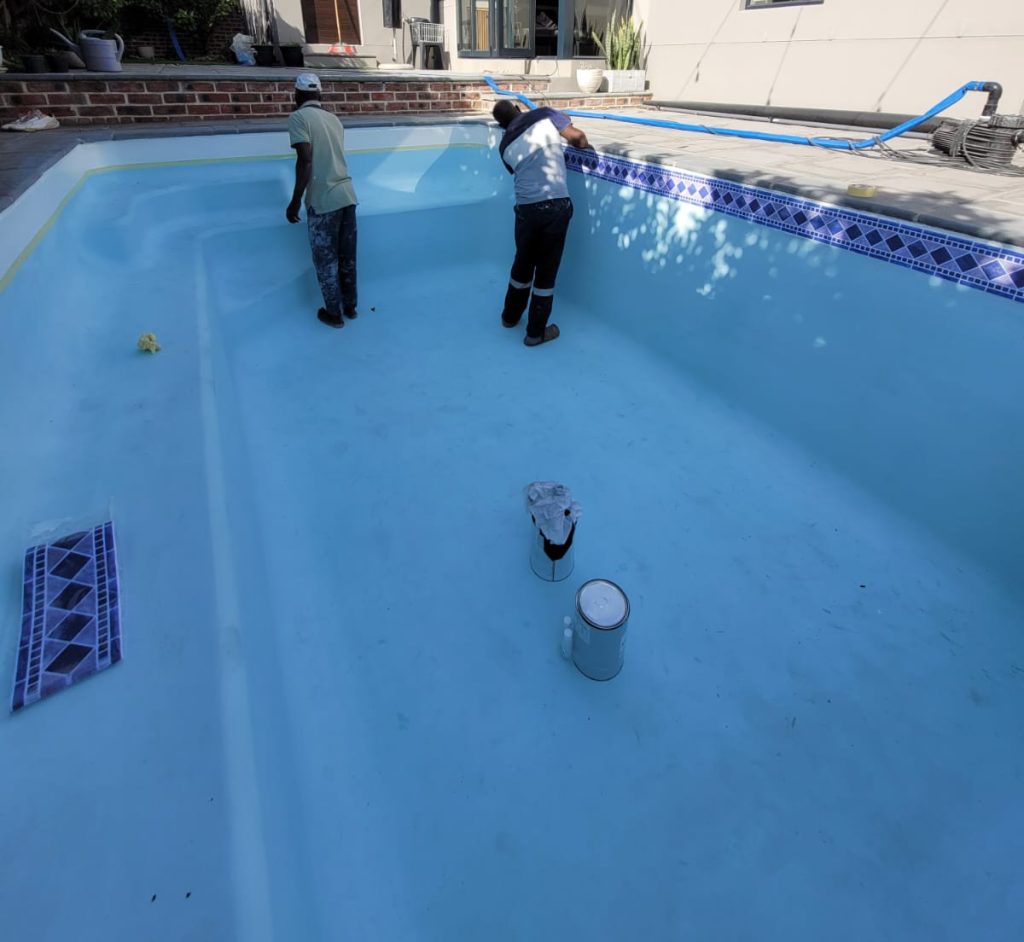
A fibreglass-lined swimming pool does not have to remain completely plain.
Suitable mosaic applications can create:
- waterline borders
- feature panels
- step detailing
- decorative bands
- custom motifs
Mosaic selection should take the fibreglass substrate and coating system into account.
Where a clear protective coating is required, the materials must work together as part of a compatible system.
Fibreglass Pool Lining vs Marbelite Resurfacing
Homeowners often compare these two options.
Marbelite resurfacing
Marbelite can provide a traditional South African pool appearance.
It can also offer a lower initial-cost renovation option in suitable circumstances.
Fibreglass lining
Fibreglass provides a composite surface that can offer:
- smoothness
- low porosity
- easy cleaning
- modern colour options
- a new waterproof surface
- reduced exposure of the underlying substrate
Neither option is automatically right for every swimming pool.
The correct choice depends on the shell, surface condition, budget, desired appearance and intended use.
Fibreglass Pool Lining vs Simply Painting the Pool
Pool paint can provide a relatively inexpensive cosmetic refresh.
However, painting does not create the same type of reinforced composite laminate as fibreglass.
If the existing pool has:
- recurring leaks
- serious surface deterioration
- rough marbelite
- failing coatings
- widespread cracking
a more comprehensive renovation may make more sense.
In contrast, a sound pool needing only a cosmetic refresh may not require fibreglass.
A good contractor should explain the difference rather than automatically recommend the most expensive option.
What Makes Professional Fibreglass Pool Lining Different?
The finished surface attracts attention.
The preparation determines whether the project has a sound foundation.
A professional installation therefore considers the entire sequence:
Inspection
↓
Drainage and cleaning
↓
Surface preparation
↓
Repairs
↓
Primer/bonding system
↓
Fibreglass reinforcement
↓
Resin
↓
Additional laminate where specified
↓
Poolcoat or decorative finish
↓
Curing
↓
Final inspection
Each stage affects the next.
For example, poor surface preparation can compromise bonding.
Likewise, unsuitable resin selection can create an inappropriate system for the pool’s operating environment.
What Should a Cape Town Fibreglass Pool Lining Quote Include?
Before comparing contractors, ask for a written scope.
The quotation should clearly identify, where applicable:
Preparation
- cleaning
- acid cleaning
- sanding
- grinding
- removal of loose material
- dust removal
Repairs
- cracks
- hollow areas
- damaged steps
- fittings
- surface defects
Bonding
- primer
- bonding system
- substrate preparation
Laminate
- fibreglass reinforcement
- resin type
- additional reinforcement
- finishing layers
Moisture protection
- osmosis barrier where specified
- groundwater considerations
Finishing
- poolcoat
- colour
- mosaic
- clear protective coating
Site work
- labour
- transport
- rubble removal
- waste disposal
- final clean-up
This approach allows homeowners to compare complete specifications rather than just headline prices.
Why the Cheapest Fibreglass Pool Quote Isn’t Always the Best Value
A very low quotation can look attractive.
Nevertheless, you should ask what the contractor has allowed for.
For example, one quotation may include extensive preparation, repairs, primer, fibreglass reinforcement and a specified resin system.
Another may simply include a basic laminate and finish.
The two prices may look comparable on paper.
The specifications are not.
Consequently, always ask:
“What exactly is included in your fibreglass pool lining quotation?”
That question can save homeowners considerable frustration later.
New Concrete Pools Can Also Benefit From Proper Fibreglass Preparation
Fibreglass isn’t only relevant to old pools.
A new concrete pool can also require careful surface preparation before receiving a fibreglass lining system.
The substrate needs appropriate:
- curing
- cleaning
- preparation
- moisture assessment
- surface profiling
- repair
- bonding
A new concrete pool isn’t automatically ready for fibreglass simply because the concrete looks clean.
The lining system must be compatible with the substrate and installation conditions.
Cape Town Climate and Fibreglass Pool Finishes
Cape Town’s environment makes correct pool maintenance important after renovation.
The finished pool remains exposed to:
- UV radiation
- chlorine
- salt
- pH fluctuations
- temperature changes
- rainfall
- windborne contaminants
Therefore, maintaining appropriate pool chemistry remains essential.
A high-quality lining does not eliminate the need for proper water care.
Instead, the correct maintenance routine helps preserve the finish and prolong its service life.
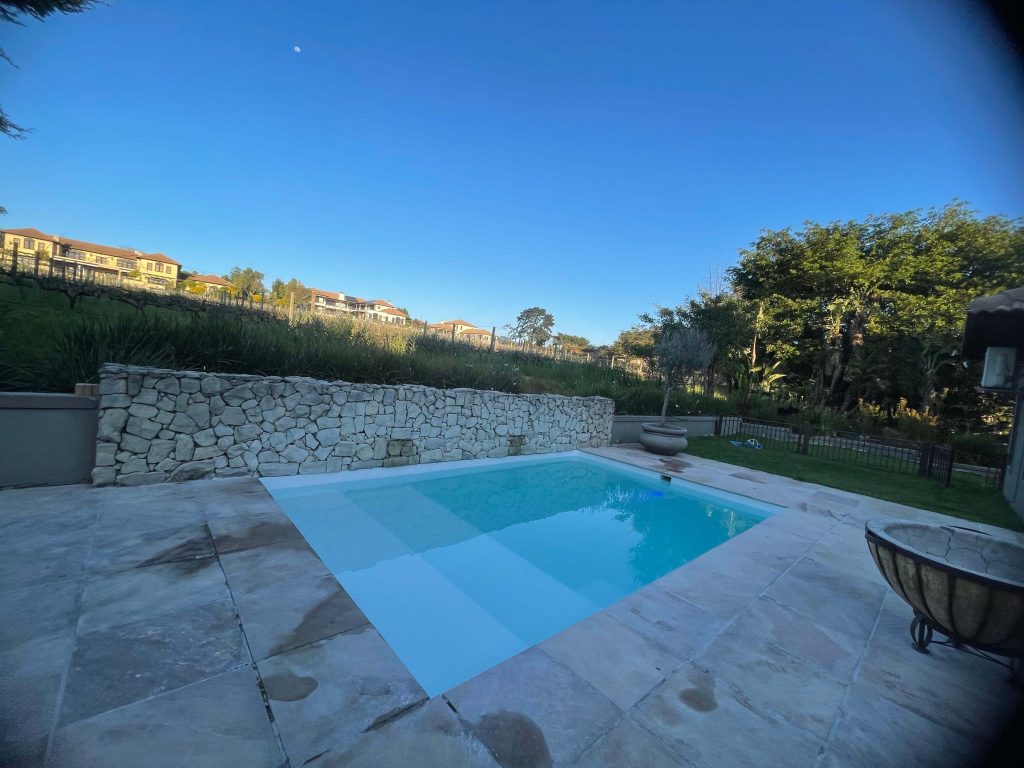
Where Pools Reno Provides Fibreglass Pool Lining
Pools Reno provides fibreglass pool renovation services across Cape Town and the Western Cape.
Our service area includes locations such as:
- Durbanville
- Bellville
- Brackenfell
- Kraaifontein
- Kuils River
- Parow
- Goodwood
- Edgemead
- Milnerton
- Table View
- Bloubergstrand
- Stellenbosch
- Somerset West
- Strand
- Gordon’s Bay
- Paarl
- Wellington
- Franschhoek
- Constantia
- Tokai
- Bergvliet
- Plumstead
- Claremont
- Newlands
- Bishopscourt
- Hout Bay
- Camps Bay
- and surrounding Western Cape areas.
Our existing pool renovation service page also covers fibreglass relining, marbelite finishes and broader pool resurfacing services.
Why Choose Pools Reno for Fibreglass Pool Lining?
At Pools Reno, we don’t believe every swimming pool should receive an identical lining specification.
Instead, we consider:
- existing substrate
- pool condition
- cracks and defects
- moisture conditions
- groundwater
- intended pool use
- heating
- desired finish
- resin requirements
- decorative features
That approach allows the lining system to match the actual project.
For example, a straightforward renovation may require a different specification from a heated pool exposed to demanding conditions or a pool located in an area with significant groundwater.
Your Pool Doesn’t Have to Be Rebuilt to Look New
A tired swimming pool can sometimes look dramatically different without demolishing the existing shell.
Fibreglass pool lining can transform:
rough marbelite
into
a smooth modern interior
It can transform:
stained concrete
into
a fresh finished pool
It can transform:
an outdated swimming pool
into
a contemporary outdoor feature
However, the transformation starts underneath the visible finish.
Preparation comes first.
Get a Professional Fibreglass Pool Lining Assessment in Cape Town
If your swimming pool is:
- cracked
- leaking
- rough
- stained
- porous
- difficult to maintain
- deteriorating
- outdated
- affected by old marbelite
- affected by a failed previous finish
Pools Reno can assess whether fibreglass pool lining or relining is suitable.
Rather than relying on a generic price-per-square-metre estimate, the pool can be assessed according to its actual condition and required specification.
Ready to renovate your swimming pool?
Request a Pools Reno assessment and quotation for professional fibreglass pool lining in Cape Town.
Visit Pools Reno for Fibreglass Pool Lining & Renovation
Frequently Asked Questions
How long does a fibreglass pool lining last?
Service life depends on the laminate system, installation quality, pool conditions, exposure and maintenance. A professional assessment should avoid promising a fixed lifespan for every pool.
Can you fibreglass over marbelite?
Yes, where the marbelite and underlying shell are suitable. The existing surface needs thorough inspection and preparation before the laminate is installed.
Can you fibreglass over concrete?
Yes. Suitable concrete pools can receive fibreglass lining after appropriate preparation, repairs and bonding treatment.
What is the difference between fibreglass lining and resurfacing?
Fibreglass lining creates a reinforced composite surface over a suitable pool shell. Resurfacing is a broader term for renewing an existing pool interior and can include several different finishing systems.
Is fibreglass suitable for heated swimming pools?
A properly specified fibreglass system can be suitable for heated pools. The installer should consider temperature, chemicals, resin chemistry, laminate construction and finishing compatibility.
Should I use GP resin or vinyl ester resin?
The correct choice depends on the application. GP polyester resin can suit appropriate projects, while vinyl ester can provide different performance characteristics for more demanding applications.
Does a fibreglass pool need an osmosis barrier?
Not every pool requires one. Moisture conditions, groundwater, substrate characteristics and previous pool history should determine whether additional osmosis protection is appropriate.
Can fibreglass lining fix a leaking pool?
It can address some surface-related water-loss problems. However, plumbing, fittings and structural defects can also cause leaks, so the source should be investigated first.
Can mosaics be installed on a fibreglass pool?
Yes, suitable decorative mosaic systems can be incorporated into fibreglass pool renovations, subject to appropriate substrate preparation and compatible materials.
Can a new concrete pool receive fibreglass lining?
Yes. The concrete must reach suitable condition and receive the required preparation before the fibreglass system is installed.
Is fibreglass better than marbelite?
Neither material is automatically better for every pool. Fibreglass can provide a smooth, low-porosity composite surface, while marbelite offers a traditional cement-based finish. The correct choice depends on the pool and the homeowner’s objectives.