A rectangular pool suits most modern homes, long narrow gardens and anyone who actually wants to swim. A freeform pool suits irregular plots, sloping or planted gardens and families who mostly want to play and cool off. That’s the quick answer, but the shape also changes what the pool costs to build, how easy it is to clean and what it will cost to renovate in 20 years’ time.
Our team builds new pools and renovates old ones all over the Western Cape, from 1980s kidney-shaped marbelite pools to sharp modern rectangles. Here’s how the two shapes compare once the excitement of the design stage wears off.
| Rectangular pool | Freeform pool | |
|---|---|---|
| Looks best with | Modern and classic homes, straight paving and decks | Older homes, gardens full of plants, rock and natural stone |
| Swimming lengths | Excellent | Limited by the curves |
| Fits awkward plots | Needs a regular space | Bends around trees, slopes and boundaries |
| Coping and edging | Straight runs, simple to cut and fit | Curves need cutting or special pieces |
| Cleaning | Corners collect leaves, cleaners handle flat walls well | No sharp corners, but tight curves can trap dirt |
| Renovating later | Straightforward to measure and reline | More edges and curves add labour |
What a Rectangular Pool Does Well
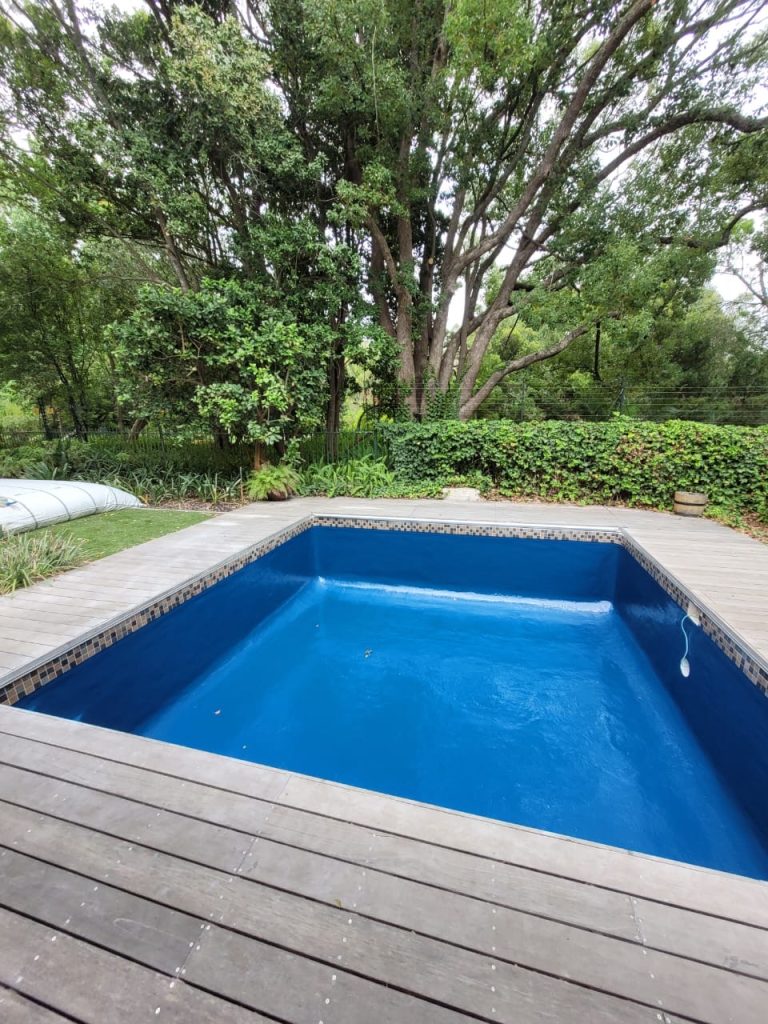
A rectangle is the most efficient shape you can put in a garden. Every square metre is usable water, the pool lines up with the house, the boundary wall or the patio, and nothing is wasted on curves you can’t swim through.
- Swimming. If anyone in the house wants to swim lengths, a rectangle is the only shape that really works.
- Narrow gardens. On a long, thin plot, a rectangle along one side leaves the most lawn.
- Clean lines. It suits modern homes, straight paving and timber decks, and it never looks dated.
- Steps and benches. Full-width steps, a sitting ledge or a built-in bench fit neatly into straight walls.
The trade-off is that a rectangle shows every crooked line. If the coping isn’t dead straight or the paving joints don’t line up with the pool, you’ll notice it every time you walk past. Good setting-out at the start is everything.
Where a Freeform Pool Makes More Sense
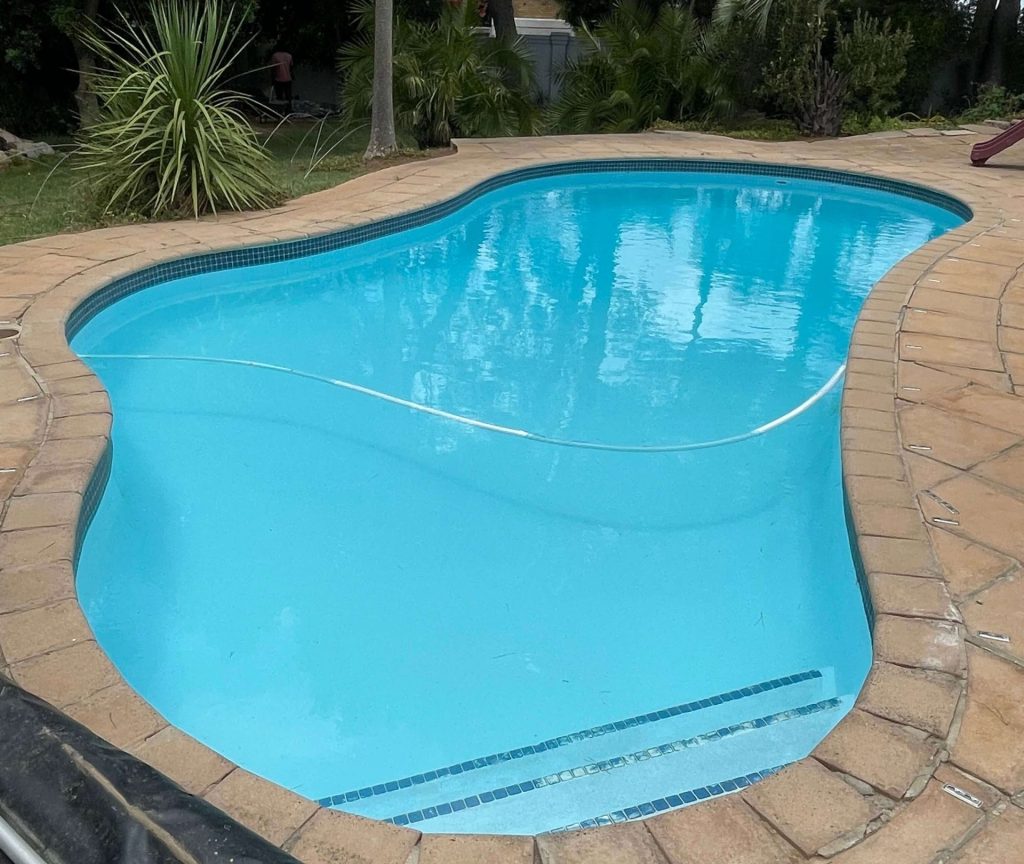
Freeform covers anything that isn’t a geometric shape: kidney, lagoon, figure-of-eight and organic shapes with curved edges. They were the default in South Africa through the 1970s to 1990s, which is why so many established suburbs are full of them.
- Awkward plots. A freeform shape can curve around a big tree, a rocky outcrop or a corner of the house.
- Sloping gardens. Curves and planted edges hide level changes better than a hard rectangle.
- Play and lounging. Shallow bays, beach entries and wide steps suit kids and adults who sit more than they swim.
- Natural looks. With stone, rock features and plants right up to the edge, a freeform pool can look like part of the garden.
Choose a rectangular pool if
- Someone in the house wants to swim lengths
- The garden is long, narrow or a regular shape
- The house is modern or has strong straight lines
- You want decking, paving or a sitting ledge along the edge
- You’d like the simplest pool to renovate later
Choose a freeform pool if
- The plot is irregular, sloped or has trees you want to keep
- The pool is mostly for kids, play and cooling off
- You want a beach entry or a shallow lounging bay
- The garden style is natural, with stone and lots of plants
- You’re matching an older home or an existing garden
Does a Rectangular Pool Cost Less to Build?
Not by as much as people expect. With a concrete or gunite pool, the shell is sprayed or formed on site, so a curve costs much the same as a straight wall. What really moves the cost of swimming pool construction is:
- Size and depth. More water means more digging, more concrete and bigger equipment.
- Perimeter. A freeform shape usually has a longer edge for the same water area, so more coping, more tile line and more paving.
- Coping on curves. Straight pool coping goes down quickly. Tight curves need cutting or curved pieces, which adds labour.
- Features. Beach entries, rock features and lounging bays add cost to either shape.
- Access and soil. A tight site, rock or a high water table matter more than the shape.
With fibreglass pools it’s different. The shell comes from a factory mould, so you choose from the shapes the supplier makes, and both rectangular and freeform moulds are common.
If you’re planning to build a swimming pool, ask for the quote to show coping, paving and tiling separately. That’s where the difference between shapes shows up.
Fitting a Rectangular Pool or a Freeform Pool Into Your Garden
Before you fall for a shape, stand in the garden and think about how it will be used. These are the things that decide it on most Western Cape properties:
- Sun and wind. The pool should sit where it gets the most afternoon sun and some shelter from the summer south-easter. That spot often decides the shape for you.
- Space around the edge. Allow at least a metre of paving or deck all round, more on the side where people sit.
- Trees. Roots crack shells and leaves fill skimmers. A freeform shape can keep its distance from a tree you want to keep.
- The view from the house. A rectangle lined up with the living room doors almost always looks right.
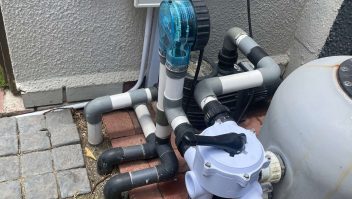
- Pump and filter space. Plan a spot for the equipment, out of sight and out of the winter rain.
On a small erf, the choice is often made for you. Our pool ideas for a small backyard guide covers what fits where, and a compact splash pool is nearly always a rectangle for that reason.
Cleaning and Upkeep by Shape
Day to day, both shapes are easy to look after if the circulation is designed properly. The difference is where dirt settles.
- Rectangular pools collect leaves and grit in the corners, where the return jets don’t reach. Angle the jets to keep the water turning.
- Freeform pools have no sharp corners, but tight bays and the inside of a kidney curve can be dead spots.
- Automatic cleaners usually handle the long flat walls of a rectangle more easily than tight curves. Choose your pool cleaner with the shape in mind.
- Beach entries on either shape need more brushing, because the shallow water warms up and algae starts there first.
What Pool Shape Means When You Renovate
This is the part few people think about when they build, and it’s the part our team sees most. A pool surface lasts years, not forever, and every pool eventually needs resurfacing or relining.
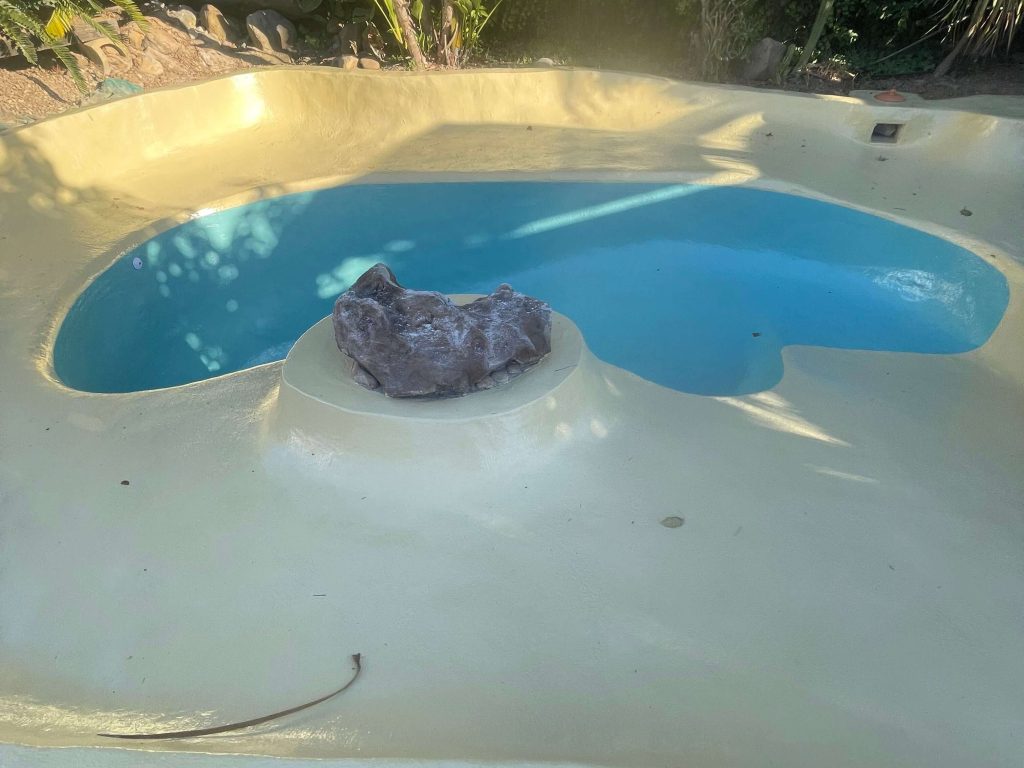
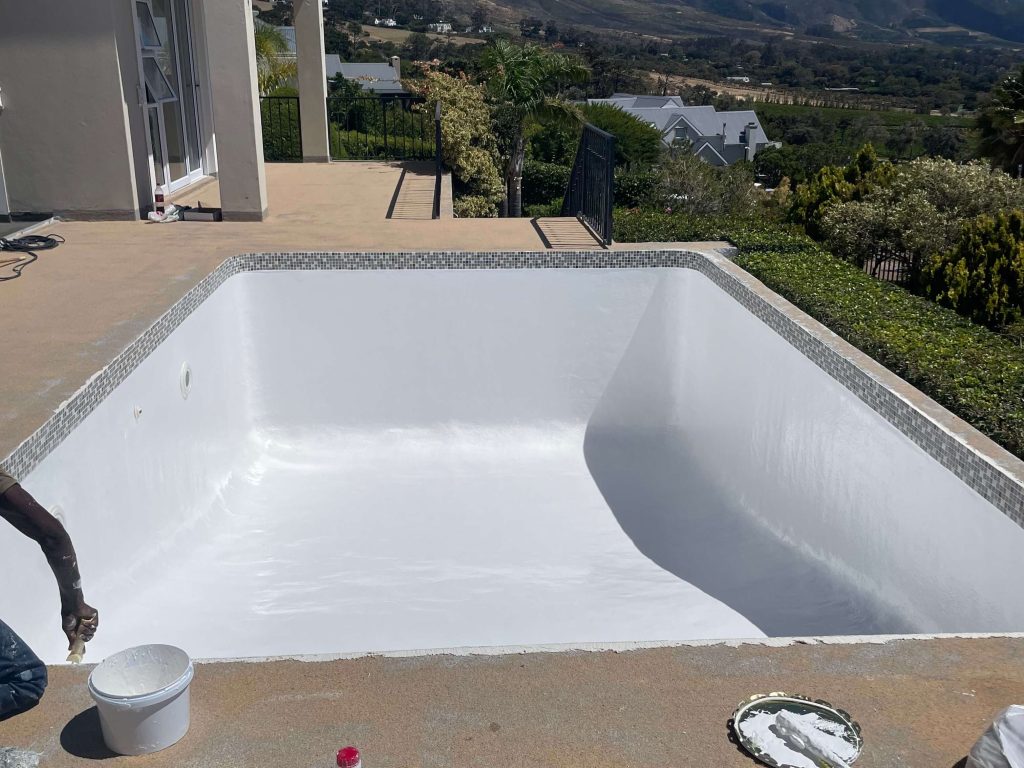
A rectangular pool is the simplest to renovate. The walls are flat, the corners are square and the floor is easy to measure, so the work goes quickly. A freeform pool takes longer. Every curve, bay and step has to be prepared, laminated and finished by hand, and there’s more coping and tile line to deal with.
The good news is that shape doesn’t limit your options. Both take marbelite resurfacing or fibreglass relining well. If you’re deciding between finishes, our guide to fibreglass vs marbelite pools compares the two. And if you’ve inherited an old kidney-shaped pool you don’t love, a pool renovation with new steps, a new colour and new coping can change how it feels without changing the shape.
Planning a new pool or rethinking an old one?
Send us a photo of the garden or the existing pool and a rough idea of how you’ll use it. We’ll talk you through which shape and size suit the space and give you a clear quote.
Call 074 378 6623, WhatsApp us, or email info@poolsreno.co.za.
Rectangular Pool or Freeform: Frequently Asked Questions
Sometimes, but the difference is smaller than most people expect. Size, depth, access and features drive the price more than the shape. Freeform pools often cost a little more in coping, tiling and paving because their edge is longer for the same water area.
Usually a rectangle, because it uses the space most efficiently and fits against a wall or along a boundary. A small freeform pool can work where a tree or an awkward corner gets in the way of a straight shape.
A rectangular pool. It gives you the longest straight line of water, which is what you need for swimming lengths. Freeform pools suit play, lounging and cooling off better than serious swimming.
Small changes are possible, such as adding steps, a bench or a beach entry during a renovation. Completely reshaping a pool means major structural work and usually costs close to building a new one.
Not much. They have no sharp corners, but tight curves and shallow bays can trap leaves and dirt. Well-placed return jets and a cleaner that suits the shape keep both kinds of pool clean with little effort.