Fibreglass pool shapes are set by the factory mould, so you choose from a range rather than designing from scratch. In South Africa that range runs from plunge shells under two metres square to family and lap shells of eight to ten metres. Most shells are between about 2.3 and 3.9 metres wide, because they have to travel whole on the back of a truck, and most are 0.9 to 1.8 metres deep.
The best shell isn’t the biggest one that fits. It’s the one that matches how you’ll actually use the pool, and that your site can take. Here’s how the ranges are put together and how our team helps people choose.
| Size band | Typical length x width | Typical depth | Suits |
|---|---|---|---|
| Plunge and splash | About 1.8 x 1.8m to 3.5 x 2.5m | 0.9 to 1.4m, usually constant | Cooling off, courtyards, small gardens |
| Compact | About 4 to 5m x 2.3 to 3.7m | 1.2 to 1.5m | Townhouses and young families |
| Family | About 6 to 8m x 3 to 3.9m | About 1m sloping to 1.5 or 1.7m | Most family homes |
| Lap | About 6.5 to 10m x 2.2 to 2.4m | About 1.2 to 1.4m | Swimming lengths, narrow gardens |
| Large | About 8 to 10m x 3 to 3.6m | 1.4 to 1.8m | Bigger gardens and active families |
The Main Fibreglass Pool Shapes
Manufacturers give their shells names, but almost every range is built from the same handful of layouts.
Rectangular with full-width steps
The most common modern layout. Straight walls, a set of wide steps across one end and often a bench seat. It suits most homes and is the simplest to surround with paving or decking.
Bay shells
A rectangle with a rounded, shallow bay off one side, like a built-in splash area. Good for families with small children who need somewhere to stand while adults swim.
Patio and sun ledge shells
A wide, shallow shelf at one end or side, deep enough to lie in or put a chair in. Popular for entertaining. It takes some swimming length away, so compare the open water, not just the outside size.
Lap shells
Long and narrow, with a fairly even depth. If anyone in the house wants to swim lengths, this is the shape to look at. They also fit along a boundary on a narrow plot.
Round, square and kidney shells
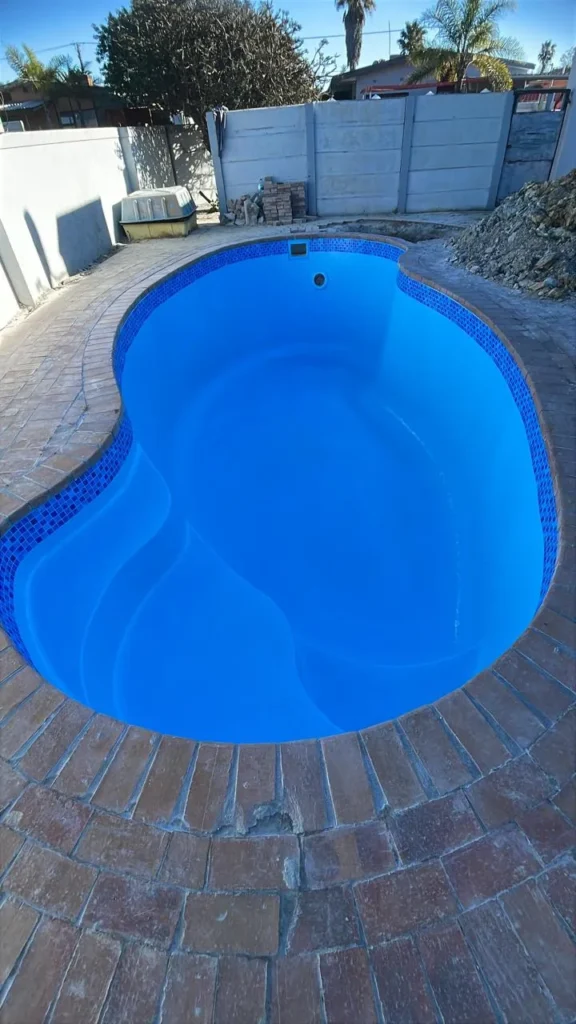
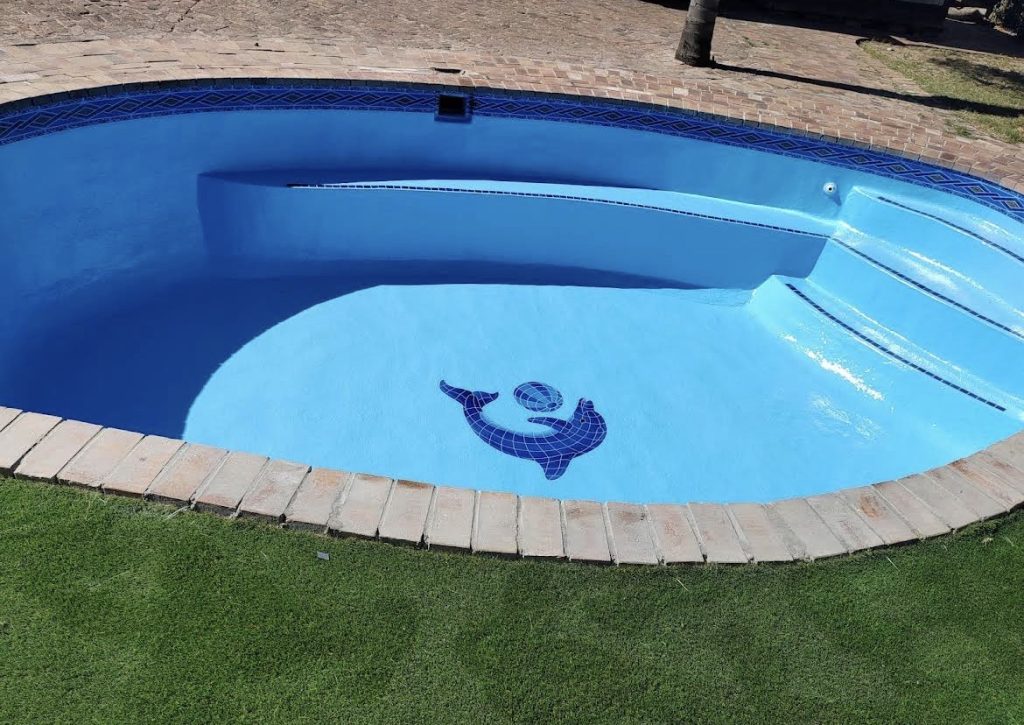
Round and square shells are usually plunge pools. Kidney and freeform shells were common in older ranges and you’ll still find them, often with curved bench steps. If you’re torn between straight lines and curves, our comparison of the rectangular pool and freeform shapes goes into that choice.
Matching Fibreglass Pool Shapes and Sizes to How You’ll Use It
Before you look at brochures, answer one question honestly: what will happen in this pool most weekends?
If it’s mostly for
- Cooling off on hot days
- Small children splashing
- Swimming lengths for fitness
- Sitting in the water with a drink
- A bit of everything for a family
Look at
- A plunge pool or splash shell
- A bay shell with a large shallow area
- A lap shell of 8m or more
- A patio or sun ledge shell with bench seats
- A 6 to 8m family shell with wide steps
A few things catch people out:
- Depth. Residential shells are built for swimming and playing, not diving. None of the standard shells is deep enough to dive into safely.
- Constant or sloping floor. A constant depth of around 1.2 to 1.4m suits adults and games. A sloping floor gives children a shallow end but less standing room at the deep end.
- Steps eat space. Full-width steps and benches are comfortable, but on a small shell they take up a big share of the water.
- Bigger means more upkeep. More water means a bigger pump and filter, more chemicals and more cleaning.
If your garden is tight, our splash pool guide and our pool ideas for a small backyard cover the smallest end of the range in more detail.
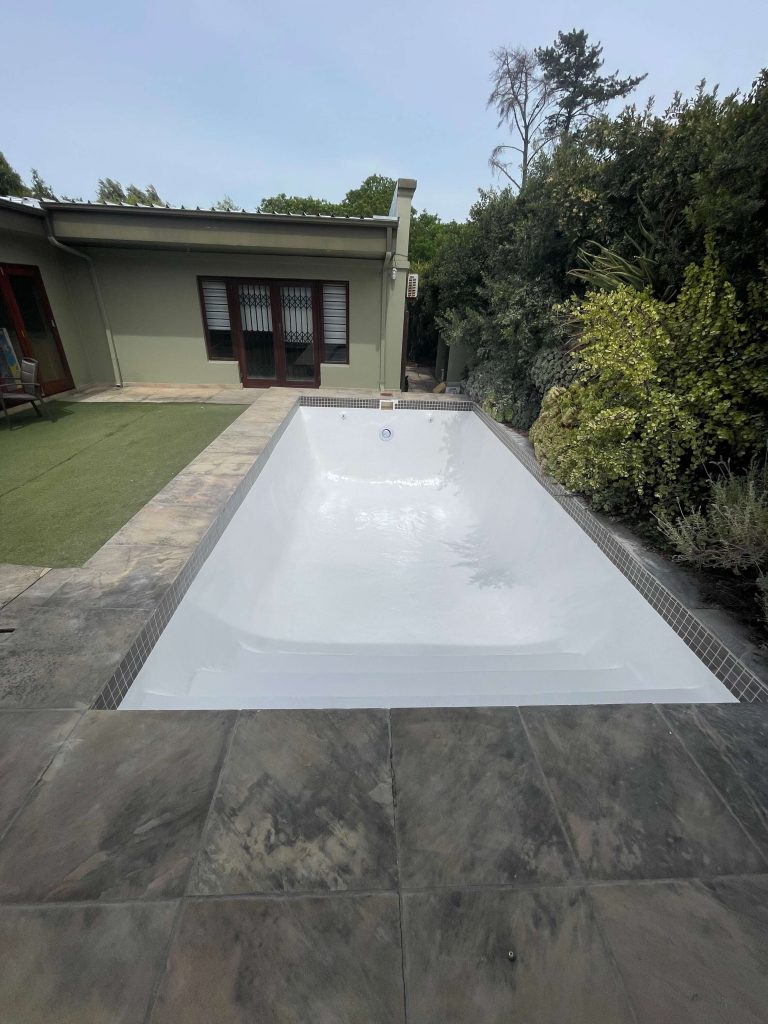
Will the Shell Fit? Site Checks Before You Choose
A shell that looks perfect in the brochure can be impossible to get into your garden. These are the checks our team does on site.
- Delivery and crane access. The shell arrives in one piece and is usually lifted in by crane, over the house or wall if needed. We check the lift path, overhead cables, trees and where the truck can park.
- Space all round. Allow for the dig, the backfill and at least a metre of paving or decking around the edge.
- Trees and roots. Roots can push on a shell over the years and leaves fill skimmers. Keep a good distance from big trees.
- Slope and soil. A sloping garden may need retaining or a partly raised shell. Rock adds digging time.
- Groundwater. In low-lying areas a winter water table can push on a shell, so drainage and correct backfill matter.
- Plans and boundaries. Check with your municipality whether plans are needed and how close to the boundary you can build.
Getting this right is most of the work when installing fibreglass pool shells, and it’s why a site visit should come before any quote.
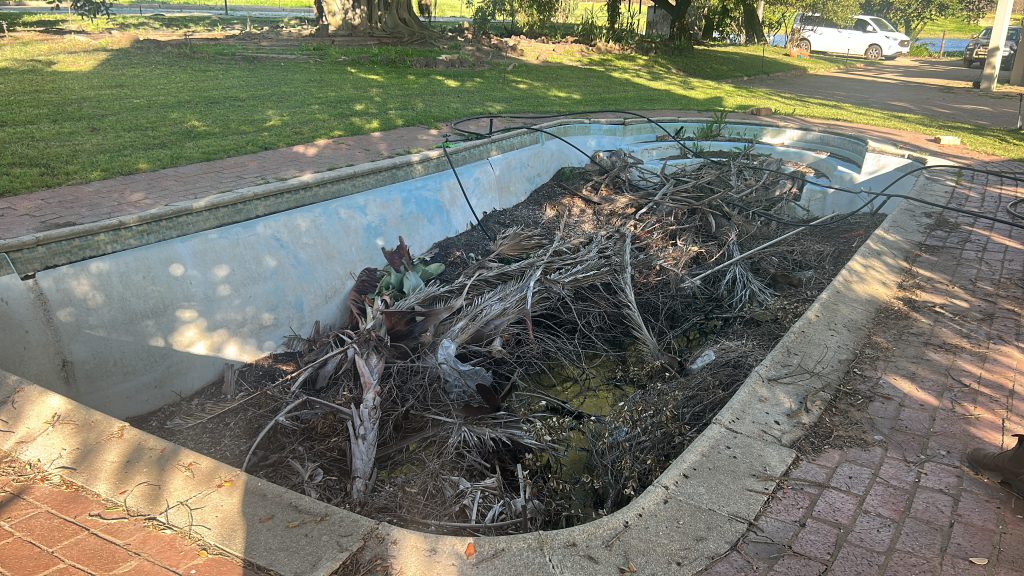
That old shell is what tree roots and poor backfill can do over the years. Damage like this can sometimes be repaired, and our guide to fibreglass pool repairs explains when.
Do Fibreglass Pool Shapes Change the Price?
Size changes the price far more than shape. Two shells of the same length and width cost much the same whether they have a bay, a patio or straight sides. What moves the total is everything around the shell: excavation, crane hire, backfill, plumbing, the pump and filter, coping and paving. Our guide to the cost of swimming pool construction in the Western Cape covers current ranges.
Ask for a quote that lists the shell model and size, the crane and the paving separately. Then you can compare two shells properly.
When No Standard Shell Fits
If none of the moulds suits your garden, for example an awkward corner, a very long narrow strip or a wish for a deeper pool, a concrete or gunite pool can be built to any shape. Our comparison of fibreglass pools against gunite and vinyl sets out the trade-offs.
Not sure which shell suits your garden?
Send us a photo of the space and tell us how you’ll use the pool. Our team will visit, check access and ground conditions, and help you narrow the range down to the shells that will actually work.
Call 074 378 6623, WhatsApp us, or email info@poolsreno.co.za. See how we build a swimming pool from site visit to handover.
Fibreglass Pool Shapes and Sizes: Common Questions
In South Africa, shells range from plunge pools of about 1.8 x 1.8m up to family and lap pools of 8 to 10m long. Most are between about 2.3 and 3.9m wide, because the shell has to be transported in one piece.
Most shells are between 0.9 and 1.8m deep. Plunge and compact shells usually have a constant depth of around 1.2 to 1.4m, while family shells often slope from about 1m to 1.5 or 1.7m. They aren’t designed for diving.
Not really. The shell comes from a factory mould, so you choose from the shapes a manufacturer makes. If you need a custom shape or size, a concrete or gunite pool is the better route.
The smallest plunge shells are around 1.8m square and about 0.9m deep. They’re for cooling off and sitting, not swimming.
Much less than the size does. Shells of a similar length and width cost roughly the same whatever the layout. Access, crane hire, excavation, equipment and paving usually make the bigger difference to the final price.