A Step-by-Step Aftercare Guide for Pool Owners in the Western Cape
Why This Matters
Vacuuming and shocking your pool are essential steps to keeping your water sparkling and safe — but your pool care doesn’t stop there. To truly maintain healthy, crystal-clear water, it’s important to follow the correct aftercare process.
In this post, the Pools Reno Cape Town team explains what to do after vacuuming and shocking your pool, depending on your filter type and pool system. Whether you have a sand, cartridge, or DE filter, these steps will help your water stay balanced, algae-free, and ready for swimming.
Step-by-Step: What to Do After Vacuuming and Shocking Your Pool
Step 1: Keep the Filter Running
Immediately after shocking and vacuuming, turn on your pool pump and let it run continuously for at least 24 hours.
This step helps circulate the chlorine, clear out dead algae, and push debris through your filtration system.
If you’re in Cape Town’s windy summer months, running your pump a bit longer may help prevent cloudiness caused by fine dust or pollen settling back into the water.
When to Run Your Pool Pump for Best Results
Many Cape Town pool owners ask: “When is the best time to run my pool pump — morning or evening?”
The answer depends on your goal: saving electricity, maintaining water clarity, and extending your pump’s lifespan.
Here’s what the Pools Reno Cape Town team recommends:
Morning Operation (Recommended)
Run your pool pump early in the morning — between 6 AM and 10 AM — when electricity demand is lower and the air is cooler.
This allows your pool water to circulate and filter before the heat of the day, helping to:
- Prevent algae growth
- Keep chemicals evenly distributed
- Reduce evaporation and chemical loss due to sunlight
Morning operation is especially useful in Cape Town’s summer months, when UV exposure and wind can quickly unbalance pool chemistry.
Afternoon or Evening Operation
If you shock or vacuum your pool later in the day, run the pump in the afternoon or evening for at least 4–6 hours.
This helps the chlorine and other sanitizers circulate properly overnight.
Pro Tip: For most Western Cape pools, aim to run your pump 8–12 hours daily during summer, and 4–6 hours during winter. If your pool turns cloudy or green, increase the run time until the water clears.
Protecting Your Pump and Water Quality
Consistent filtration prevents your pump from overworking and extends its motor lifespan.
Short, frequent runs are better than one long session — this reduces strain on electrical components and helps maintain balanced water circulation throughout the day.
Step 2: Brush the Pool Walls and Floor
Even after vacuuming, some stubborn algae and fine dirt can cling to your pool’s surfaces.
Use a pool brush to scrub the:
- Walls
- Floor
- Steps and corners
- Areas behind ladders or near aimflows and return jets
Brushing helps loosen remaining debris so that your filter can trap and remove it effectively. For fibreglass or vinyl-lined pools, always use soft-bristle brushes to prevent surface damage.
Step 3: Test the Water After 24 Hours
After running your filter for a full day, it’s time to test your water chemistry. Use test strips or a reliable liquid test kit to check:
- Free chlorine: 1–3 ppm
- pH level: 7.2–7.6
- Total alkalinity: 80–120 ppm
- Cyanuric acid (stabiliser): 30–50 ppm
If your chlorine level is still above 5 ppm, don’t swim yet. Allow more time for the chlorine to stabilise.
Pro Tip: In the Western Cape, where many homeowners use borehole water, testing regularly helps prevent imbalances caused by minerals and metals in natural water sources.
Step 4: Clean or Backwash Your Filter
Once your chemical levels look good, clean your filter to remove trapped debris, algae, and fine dust. Each filter type has its own method.
Sand Filter Maintenance After Vacuuming and Shocking
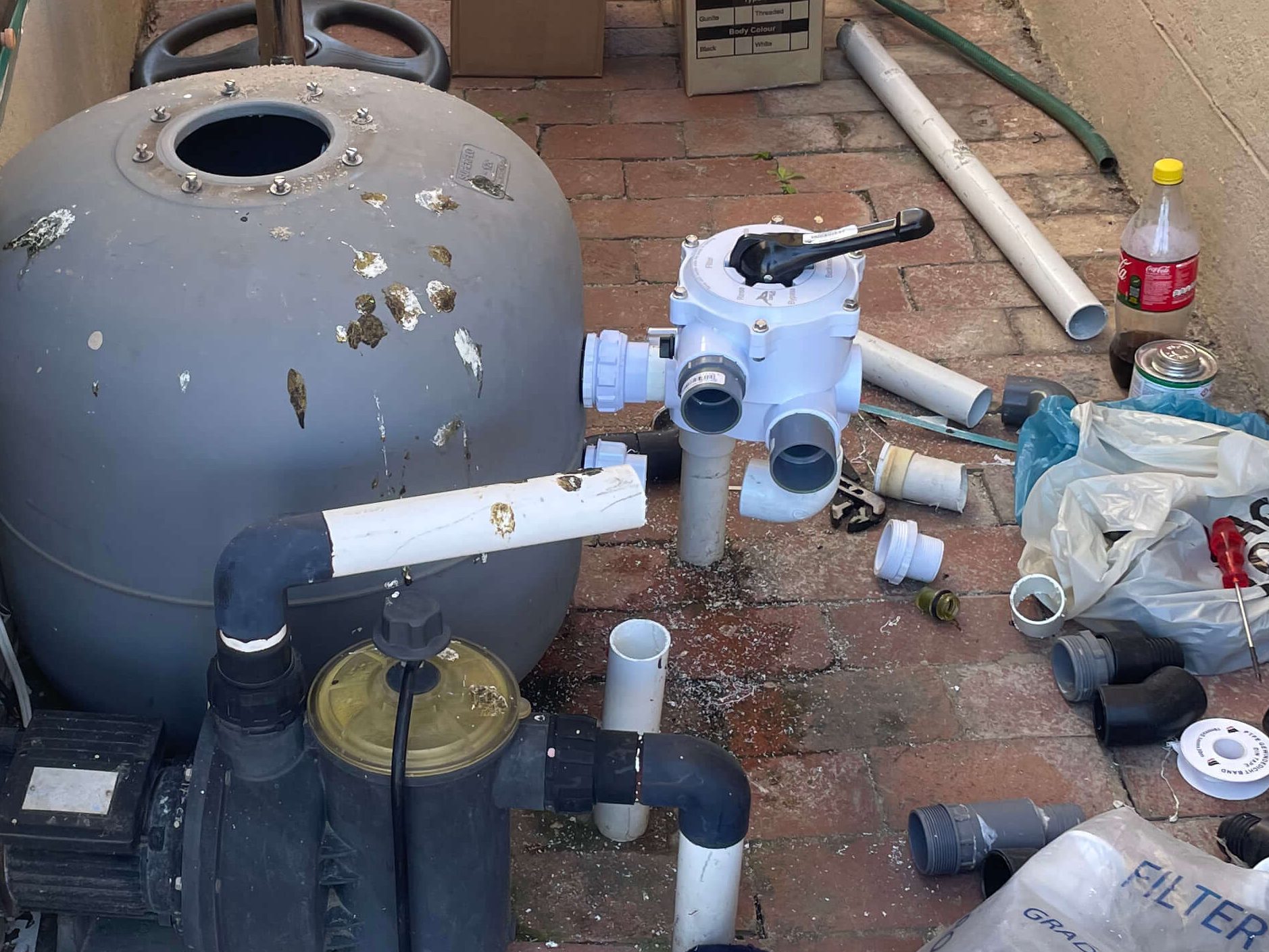
How to Backwash a Sand Filter
- Turn the pump off.
- Set your multiport valve to “Backwash.”
- Turn the pump on and let it run for about 2–3 minutes (until sight glass water runs clear).
- Turn the pump off again and switch to “Rinse.”
- Run for another 30 seconds, then return to “Filter.”
- Turn the pump back on to resume normal operation.
🛑 Important: Always turn the pump off before changing valve positions to prevent damage.
Cape Town Tip: If your filter sand hasn’t been changed in the past 3–5 years, consider a sand replacement service to restore optimal filtration efficiency.
Cartridge Filter Aftercare
How to Clean a Cartridge Filter
- Turn off the pump.
- Open the filter housing carefully (check your manual).
- Remove and rinse the cartridge thoroughly using a hose nozzle.
- Let it dry completely before reinstalling.
- Restart your pump and check for normal flow.
If the cartridge looks worn or brittle, it’s time to replace it. A fresh cartridge improves flow rate and saves energy.
DE (Diatomaceous Earth) Filter Aftercare
How to Backwash and Recharge a DE Filter
- Turn off the pump.
- Set the valve to “Backwash.”
- Turn the pump on for 2–3 minutes or until the sight glass clears.
- Turn the pump off, set to “Rinse,” and run again for 30 seconds.
- Switch back to “Filter.”
- Add fresh DE powder through the skimmer while the pump runs.
Always use DE powder only, not sand or cartridge media.
Step 5: Empty the Baskets
Open both the skimmer and pump baskets and remove leaves, insects, and dirt.
This simple task prevents blockages and improves water circulation — an often-overlooked step that makes a big difference in pool health.

Step 6: Clarify Cloudy Water
If your water remains cloudy 24–48 hours later, add a pool clarifier to bind small particles together so your filter can capture them.
Run your pump continuously for another full day.
Avoid flocculants unless you’re experienced — they require vacuuming to waste and can complicate filter maintenance.
Step 7: Retest Before Swimming
Finally, test your chlorine again.
If free chlorine reads between 1–3 ppm, your pool is safe for swimming.
If levels are still high, give it another 12–24 hours before use.
Extra Pool Maintenance Tips for Cape Town Homeowners
- Backwash or clean your filter any time pressure rises 8–10 psi above normal.
- Replace sand every 3–5 years, and cartridge filters every 1–2 years.
- Inspect fibreglass linings for cracks or bulges annually, especially before summer.
- For persistent algae, contact Pools Reno for a professional chemical clean or acid wash service.
Quick Aftercare Checklist
| Step | What to Do | Applies To |
|---|---|---|
| 1 | Run filter for 24 hours | All filters |
| 2 | Brush pool walls and floor | All |
| 3 | Test water chemistry | All |
| 4 | Clean/backwash filter | Filter-specific |
| 5 | Empty skimmer and pump baskets | All |
| 6 | Clarify water if cloudy | All |
| 7 | Re-test chlorine before swimming | All |
Frequently Asked Questions
Q1: How long after shocking and vacuuming can I swim?
Wait at least 24 hours, and only swim once chlorine levels are below 5 ppm.
Q2: Why is my pool still cloudy after cleaning?
This often happens after heavy algae or dirt removal. Add a clarifier, keep the pump running, and check your filter condition.
Q3: How often should I backwash my filter?
Backwash when your pressure gauge reads 8–10 psi above normal, or after heavy debris cleanup.
Q4: Can I use a robotic pool cleaner after shocking?
Yes — but only once chlorine levels return to normal (1–3 ppm).
Q5: Should I vacuum again after shocking?
Usually once is enough, but if debris settles again or the pool still looks dirty, a second vacuum session helps.
Q6: How do I know if my filter is working properly?
Check water clarity, pressure gauge readings, and return jet flow. If problems persist, contact Pools Reno Cape Town for a filter inspection or replacement.
Q7: What if I added too much shock?
Run your pump continuously until chlorine levels naturally drop. Avoid swimming until it’s safe.
Q8: Can I shock and vacuum on the same day?
Absolutely — it’s the most effective sequence: vacuum first, then shock to kill remaining contaminants.
Final Thoughts
Maintaining your pool doesn’t have to be complicated. With the right aftercare steps and pump schedule, your Cape Town swimming pool will stay clear, healthy, and ready for those hot summer days.
For professional help, Pools Reno provides expert pool cleaning, repairs, fibreglass relining, leak detection, and renovation services throughout Cape Town and the Western Cape.