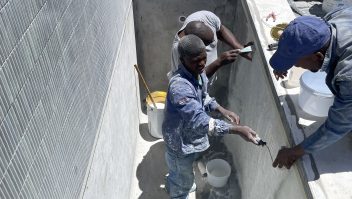
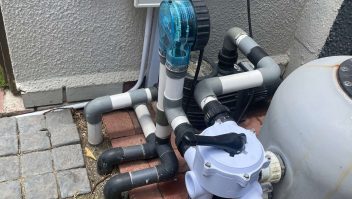
Waterproofing an in-ground concrete swimming pool is one of the most critical steps in ensuring long-term durability, safety, and leak prevention. While concrete offers exceptional strength and design flexibility, it remains naturally porous. Therefore, without proper waterproofing, water will eventually penetrate the structure, leading to cracks, steel corrosion, and costly repairs.
In this guide, we walk through the entire waterproofing process from excavation to final finish, while also highlighting trusted cement additives and waterproofing products available in South Africa. In addition, we explain how to strengthen the structure and explore cost-effective finishing options that still meet high standards.
Why Waterproofing a Concrete Pool Is Essential
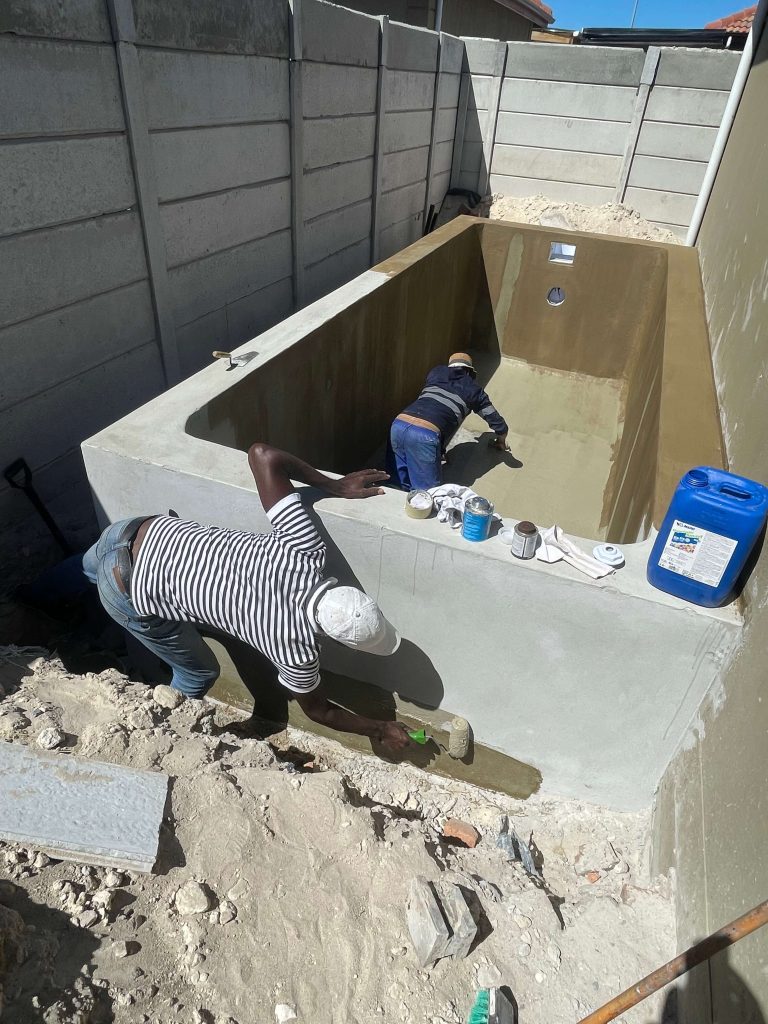


Concrete pools last for decades only when waterproofing is done correctly. Although concrete appears solid, microscopic pores allow moisture to migrate through the shell. As a result, water loss, structural damage, and surface failures often occur.
For this reason, professional pool builders always combine structural strength, chemical waterproofing, and surface barriers. Together, these layers ensure the pool remains watertight, stable, and safe.
👉 Internal suggestion: Swimming Pool Construction & Structural Design Services
Step 1: Planning, Soil Preparation & Excavation
First and foremost, proper planning sets the foundation for a successful pool build.
During this phase:
- Contractors assess soil conditions and groundwater levels.
- Excavation follows engineered depth and shape specifications.
- Drainage systems are installed where necessary.
- Temporary formwork supports the structure during construction.
Most importantly, correct planning reduces future movement in the ground. Consequently, this prevents stress cracks and waterproofing failures later on.
Step 2: Reinforced Concrete Pool Shell Construction
Next, builders construct the pool shell using cast-in-place concrete or shotcrete. At this stage, structural strength takes priority.
To ensure durability:
- Steel reinforcement (rebar) is installed according to engineering specifications.
- Extra reinforcement is added around steps, corners, and penetrations.
- A controlled water-to-cement ratio is maintained to limit porosity.
Because concrete strength depends heavily on curing, installers must keep the shell moist for at least 7–14 days. This process allows the concrete to reach its designed compressive strength.
Step 3: Primary Waterproofing Using Cement Additives
Although strong, concrete alone does not stop water penetration. Therefore, waterproofing additives are introduced directly into cement and plaster mixes.
Best Cement Waterproofing Additives Available in South Africa
For added protection inside the concrete itself, many South African pool builders rely on DP60 Waterproof Cement Additive, a trusted solution that reduces water penetration and improves long-term durability. You can explore the product specifications directly from the supplier here:
https://sccsa.co.za/product/waterproof-cement-additive/
Cemcrete FlexBond Bonding Liquid
To improve bonding strength and flexibility in cement and plaster layers, Cemcrete FlexBond Bonding Liquid is widely used in pool construction. This product replaces part of the mixing water, enhancing adhesion and waterproofing performance. Learn more about its application here:
https://poolquip.co.za/product/pool-bonding-liquid-cemcrete-flex-bond-5lt/
Cemcrete Waterproofing Compound
In high-moisture environments like swimming pools, Cemcrete Waterproofing Compound helps reduce capillary water absorption within cement mixes. This makes it especially effective for concrete pool shells and plaster coats. Full product details are available here:
https://drconcrete.co.za/product/cemcrete-cement-waterproofing-compound/
SikaLatex & Sika Cementitious Waterproofing Systems
For additional crack resistance and long-term waterproof protection, many professionals turn to Sika’s cementitious waterproofing systems. These products enhance flexibility and bonding between layers, which is critical in concrete pool construction. You can view the system overview here:
https://pinnacleconstructionproducts.co.za/products/sika-cemflex-waterproofing-membrane-for-concrete-masonry-protection
Step 4: Secondary Waterproofing – Surface Barriers
After the concrete cures, installers apply secondary waterproofing systems. These products form a protective barrier on the surface of the shell.
Recommended Pool Waterproofing Coatings
HydroSeal Marble Pool Coating
As a final waterproofing layer, HydroSeal Marble Pool Coating offers both protection and a smooth, attractive finish. This cement-based coating penetrates the concrete to form a durable waterproof barrier. Product information can be found here:
https://poolquip.co.za/product/pool-coating-hydroseal-marble-white-charcoal-12-5kg/
Megabond Pool & Pond Waterproofing System
When flexibility is required to accommodate minor movement in the structure, Megabond Pool & Pond Waterproofing provides a tough, resilient barrier that resists cracking and water ingress. More details on this system are available here:
https://www.megabond.co.za/poolnpond.html
Step 5: Plumbing, Penetrations & Sealing
Once waterproofing is in place, installers fit:
- Main drains
- Skimmer boxes
- Inlets and return lines
- Pool lights and conduits
Because penetrations pose a high leak risk, technicians seal them using pool-approved sealants and bonding compounds. This step prevents water migration around fittings.
Step 6: Cost-Effective Pool Finishes That Maintain High Standards
Now the pool is ready for final surfacing. Fortunately, several affordable finishes still deliver excellent durability and appearance.
Popular Finishing Options:
Marbelite Pool Plaster
For a cost-effective yet durable pool finish, Marbelite pool plaster remains a popular choice in South Africa. It delivers a smooth surface while maintaining excellent water resistance when properly applied. You can view the product range here:
https://heritagepaints.co.za/product/marbelite-pool-plaster-white/
Mosaic Tiles (Selective Use)
Although full tiling costs more, many homeowners tile only waterlines, steps, or feature areas. As a result, they achieve a premium look without excessive cost.
👉 Internal suggestion: Pool Tiling & Finishing Options
Cementitious Pool Paint
While paint does not last as long as plaster or tiles, it offers an affordable short-term solution for renovated pools.
Step 7: Curing, Filling & Water Balancing
After completing the finish:
- Allow all coatings to cure fully.
- Fill the pool slowly to avoid surface stress.
- Balance water chemistry immediately to protect finishes.
Balanced water prevents staining, etching, and premature surface failure.
Water Chemistry & Pool Safety:
Correct water chemistry also plays a role in protecting waterproofed surfaces. For general guidance on maintaining safe and balanced pool water, the Department of Water and Sanitation South Africa provides useful educational resources here:
https://www.dws.gov.za/iwqs/wq_guide/index.asp
Long-Term Strength, Safety & Maintenance Tips
To extend the lifespan of your waterproofed pool:
- Maintain correct water chemistry at all times.
- Inspect joints and fittings annually.
- Repair hairline cracks early.
- Avoid aggressive chemical dosing.
With proper care, a well-waterproofed concrete pool can last several decades.
Frequently Asked Questions (FAQ)
How long does concrete pool waterproofing last?
When installed correctly, waterproofing systems can last 15–20 years or longer.
Can an existing concrete pool be waterproofed?
Yes. Contractors can apply cementitious coatings and membranes during renovations.
Is plaster alone enough to waterproof a pool?
No. While plaster is water-resistant, proper waterproofing layers beneath it significantly improve performance.
Do additives replace surface waterproofing?
No. Additives enhance the concrete internally, while surface systems provide external protection. Both are necessary.
What causes most pool leaks?
Poor sealing around penetrations, inadequate curing, and incorrect waterproofing application cause most failures.
Final Thoughts
Waterproofing an in-ground concrete swimming pool requires careful planning, quality materials, and correct installation techniques. By combining structural reinforcement, cement additives, surface waterproofing systems, and durable finishes, homeowners can protect their investment and avoid costly repairs.
For professional pool construction, waterproofing, or renovations in Cape Town and the Western Cape, explore our related services throughout this guide.