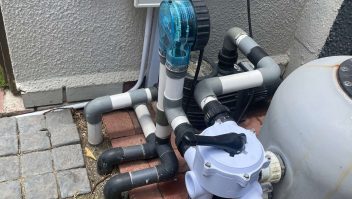
Yes, a solar pool pump works. It runs straight off solar panels during the day, with no batteries and nothing on your electricity bill for filtration. Whether it’s worth it for your pool comes down to three things: how much sun your garden gets, how big your pool is, and what you’re paying to run your current pump.
Our team fits and upgrades pool pumps across the Western Cape, and solar pumps come up more every summer. This guide covers how they work, what a solar pool pump kit costs right now, how they cope with a Cape winter, and the cases where we’d tell you to keep your money in your pocket.
Solar pool pumps at a glance (October 2026, including VAT)
- Solar pool pump on its own (0.5kW): from around R6,500 to R9,000
- Bigger DC pump (0.75kW to 0.9kW): from around R9,800 to R13,500
- Solar panels: from around R1,800 to R2,200 each, and most pools need 2 to 4
- Complete kit, fitted: usually from around R12,000 to R25,000, depending on pool size
- Works at night? Not on its own. A hybrid pump or a home solar system with batteries can fill the gap
How a Solar Pool Pump Works
A normal pool pump has an AC motor that runs off the mains at one fixed speed. A solar pool pump uses a brushless DC motor that takes power straight from the panels through a small controller. The controller tracks the sun and sets the motor speed to match.
So the pump starts slowly in the morning, runs at full speed around midday and slows down again in the late afternoon. On a clear summer day that’s easily enough to push the whole pool through the filter.
There are really three ways to run a pool on solar, and they’re not the same product:
| Option | How it works | Good for |
|---|---|---|
| DC solar pool pump kit | Panels feed a DC pump through a controller. No mains connection at all. | Pools with a sunny spot for panels and no need to filter at night |
| Hybrid AC/DC pump | Runs on the panels when the sun is out and switches to mains when it isn’t. | Homes that want solar savings without short winter days slowing the filtering |
| Normal pump on your home solar | Your existing pump runs off the home’s solar and inverter during the day. | Houses that already have rooftop solar with spare daytime capacity |
That last one is worth checking first. If you already have rooftop solar, setting your pool pump timer to run between about 10:00 and 15:00 may get you most of the saving without buying anything new.
Do Solar Pool Pumps Work in a Western Cape Winter?
In summer, no problem. Long days and strong sun give a solar pool pump far more hours than your pool needs. The real question is June and July, when a cold front can bring three or four grey days in a row.
Here’s what we tell clients:
- Your pool needs less filtering in winter. Cold water grows algae slowly, so four to five hours a day is usually plenty.
- Grey days still produce some power. The pump runs slower, but it runs. A long rainy spell can leave the water short of circulation.
- Rain and runoff still dirty the pool. Winter storms wash soil and leaves in, and the filter has to deal with it whether the sun is out or not.
- Shade moves in winter. A spot that’s sunny in December can sit in the shadow of a tree or a double-storey neighbour by June.
If your pool gets heavy use or lots of leaves in winter, a hybrid pump that falls back on the mains is the safer choice. On a coastal property, ask for marine-grade mounting hardware. Salt air eats cheap steel brackets in a couple of seasons.
Solar Pool Pump Price in South Africa
These ranges come from what South African pool and pump suppliers were asking in October 2026. They change with stock and the rand, so use them as a guide and ask our team for a current quote.
| Item | What it covers | Price range (incl. VAT) |
|---|---|---|
| DC solar pool pump, about 0.5kW | Small to medium pools, roughly up to 40,000 to 50,000 litres | From around R6,500 to R9,000 |
| DC solar pool pump, 0.75kW to 0.9kW | Most family pools up to about 60,000 litres | From around R9,800 to R13,500 |
| Hybrid or solar-ready variable-speed pump | Runs on panels and mains | From around R10,000 |
| Solar panels, 400W to 550W | Most pumps need 2 to 4 panels wired together | From around R1,800 to R2,200 each |
| Complete kit, supplied and fitted | Pump, controller, panels, mounting, cabling and plumbing | Usually from around R12,000 to R25,000 |
For comparison, a standard mains pump sells from around R2,600 to R5,600. Our guide to pool pump prices breaks those down and explains when a repair makes more sense than a new pump.
What Changes the Solar Pool Pump Kit Price
- Pump size. A bigger pool or a long pipe run needs a bigger motor, and that means more panels.
- Number of panels. Panels are often the biggest line on the quote. Skimping on them is the most common mistake we see.
- Where the panels go. A ground frame near the pump is simpler. A roof mount needs longer cable runs and safe roof access.
- Your filter. If the existing filter is old or the wrong size, it makes sense to replace it at the same time.
- Electrical work. Cable runs, isolators and the Certificate of Compliance all add to the fitted price.
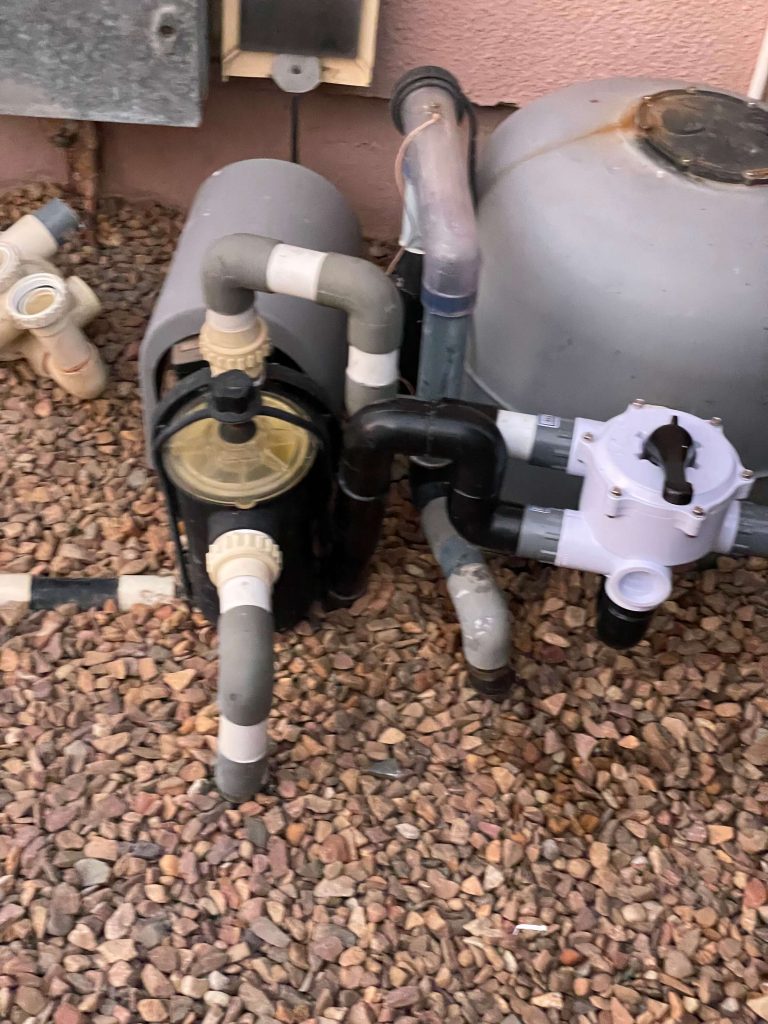
Is a Solar Powered Pool Pump Worth It?
Do the sum on your own pool before you buy. Here’s a simple example using a standard 0.75kW pump and about R4 a unit, which is where many Cape Town homes sit:
| 0.75kW mains pump | Solar pool pump | |
|---|---|---|
| Hours a day | 6 to 8 | Daylight hours |
| Electricity used a month | About 180 to 240 units | None from the grid |
| Running cost a month | About R720 to R960 | Close to nothing |
| Up-front cost, fitted | From around R4,000 to R8,000 | From around R12,000 to R25,000 |
On paper, the extra cost of a solar kit comes back in roughly one and a half to three years on a pool that runs a single-speed pump for long hours. In real life it’s a bit slower, because a Cape winter and a few cloudy weeks mean some topping up on mains if you have a hybrid.
The sum changes if you’re comparing against a variable-speed pump. Those cost about the same as a small solar kit and already use far less power on a low setting, so the saving from going solar is smaller.
A solar pool pump makes sense if
- Your garden has a sunny, unshaded spot for 2 to 4 panels
- You run a single-speed pump for long hours and the bill hurts
- Your old pump needs replacing anyway
- You don’t need the pump running at night
- The pool has no big water feature or long pipe runs
Think twice if
- The garden is shaded by trees or neighbours for much of the day
- You already have rooftop solar with spare daytime power
- The pool is big, or runs a water feature off the same pump
- You rely on a suction cleaner that needs steady flow all day
- Panels would be easy to steal from where they’d have to go
Solar Pool Pump Problems We Get Called Out For
Most solar pump complaints aren’t faults with the pump. They’re sizing and installation problems. These are the ones we see:
- Too few panels. The pump never reaches full speed, the filter pressure stays low and the water goes dull.
- Pump not matched to the filter. A solar pump still has to push water through the same filter and pipes. Check your pool pump sizes before you buy.
- The pool cleaner stops working. A suction pool cleaner needs strong, steady flow. Set it to run around midday, not first thing in the morning.
- Shade creeping in. A tree that grows over the panels or a new double storey next door can cut output in half.
- Dirty panels. Dust, bird droppings and salt spray build up. A rinse every month or two keeps them working.
If your solar pump hums but won’t turn, or it ran fine for years and has suddenly slowed down, book a pool pump repair visit before you blame the panels. Seals, bearings and blocked impellers fail on solar pumps too.
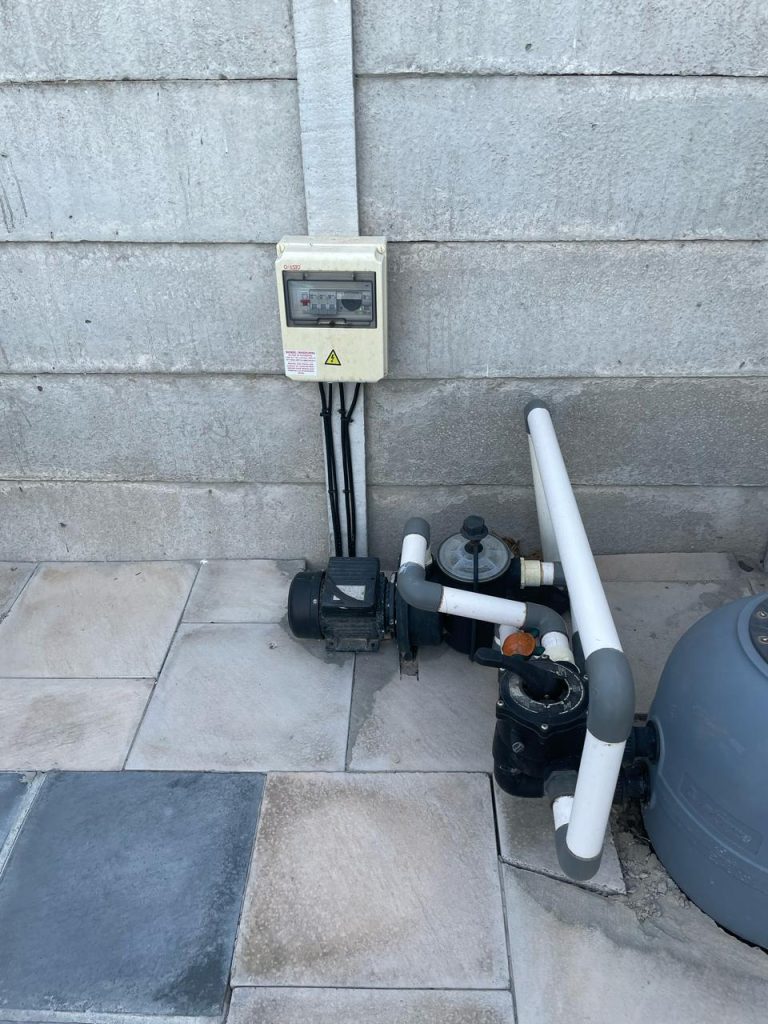
Getting a Solar Pool Pump Installed Properly
A solar pump only saves money if it’s sized for your pool, matched to your pool filter and fed by enough panels. Before we quote, our team checks:
- The pool’s volume and how many hours of filtering it needs in summer and winter
- The filter type and size, and whether it’s due for replacement
- The pipe run between pool, pump and filter, plus any water features
- Where the panels can go so they get full sun from mid-morning to mid-afternoon
- Whether a hybrid pump, a straight DC kit or your existing home solar is the better fit
Safety first
Solar panels produce live DC power whenever the sun is on them, even with the pump switched off. Don’t open the controller, cut cables or move panels yourself. The electrical side must be done by a qualified electrician or solar installer, who will issue a Certificate of Compliance. Our team handles the pump and plumbing, and the wiring is done by a qualified electrician.
If you’re replacing a pump anyway, our guide to pool pump installation explains what a proper fitting involves, from the base and plumbing to priming and the first run.
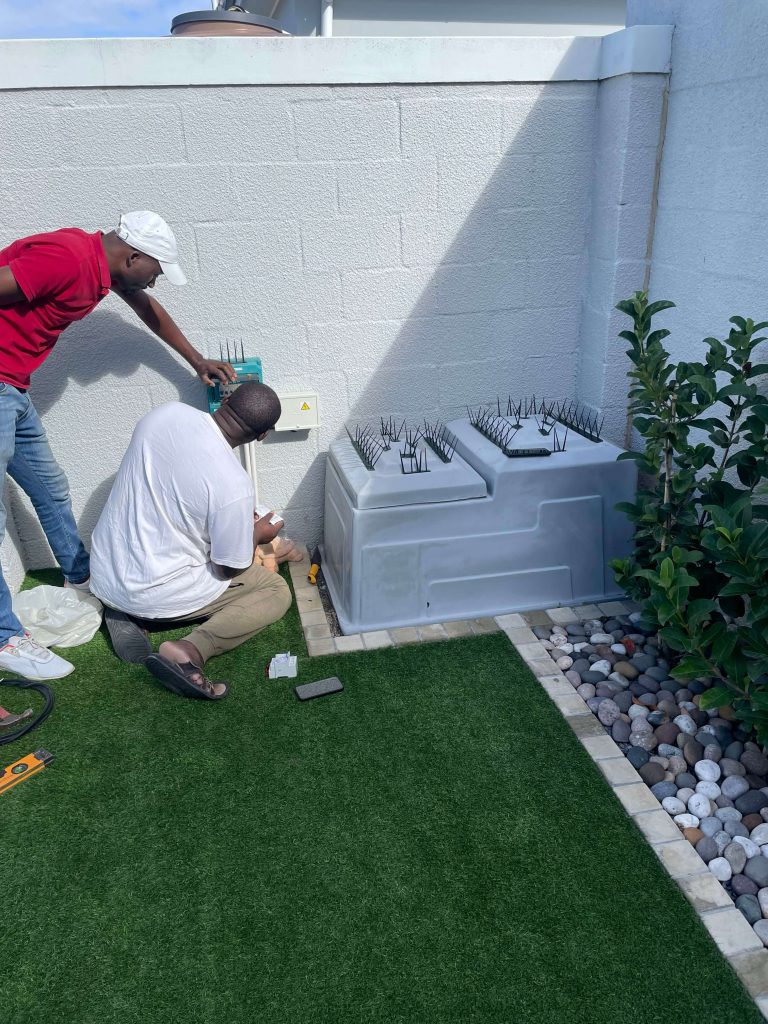
Thinking about a solar pool pump?
Tell us your pool size and send a photo of your pump area. We’ll tell you honestly whether solar makes sense for your pool, or whether a better-sized mains pump would save you more.
Call 074 378 6623, WhatsApp us, or email info@poolsreno.co.za. We also handle general swimming pool repair services.
Solar Pool Pumps: Frequently Asked Questions
Yes, but more slowly. The pump runs at whatever speed the panels can support, so a heavily overcast day may give you only part of a normal day’s filtering. A hybrid pump switches to mains power when the solar output drops too low.
Most home pool pumps need 2 to 4 panels of around 400W to 550W each. A 0.5kW pump usually runs on two, while a 0.75kW pump usually needs three or four wired together. The pump’s manual states the exact panel voltage and wattage it needs.
Not a straight DC pump, because it has no battery. A hybrid pump can switch to mains at night, and a normal pump can run off a home solar system with batteries. Most pools don’t need night-time filtering anyway.
At the time of writing, a DC solar pool pump on its own sells from around R6,500 for a small pump to about R13,500 for a bigger one. Panels, mounting, cabling and fitting come on top, so a complete installed kit is usually from around R12,000 to R25,000.
Usually yes, as long as the pump is sized to push water through that filter and your pipe run. If the filter is old or the wrong size, it’s worth replacing it at the same time so the pair is matched.